How Do You Keep a Hot Tub Clean Naturally Step by Step
Learn how do you keep a hot tub clean naturally with this step-by-step guide for UK owners. Achieve sparkling, safe water and effortless hot tub enjoyment.
Owning a hot tub in the United Kingdom means enjoying moments of relaxation, but keeping that water sparkling clean can quickly become a hassle. Many hot tub owners find that grime, cloudy water, and tricky chemical balances spoil the experience. Finding reliable cleaning routines and natural products matters not just for comfort, but for the life of your spa. Discover straightforward steps and time-saving tips to keep your hot tub inviting, with a focus on simple maintenance routines that safeguard your water quality year-round.
Table of Contents
- Step 1: Prepare Your Hot Tub For Cleaning
- Step 2: Add The Correct Natural Cleaning Agents
- Step 3: Brush And Wipe Down All Surfaces
- Step 4: Test And Balance Water Quality
- Step 5: Maintain Regular Cleaning Schedule
Quick Summary
| Key Point | Explanation |
|---|---|
| 1. Ensure proper hot tub preparation | Turn off power, flush plumbing, and balance water before cleaning to enhance performance and safety. |
| 2. Use eco-friendly cleaning agents | Select natural alternatives like white vinegar and enzymatic cleaners to sanitise without harsh chemicals impacting skin and environment. |
| 3. Regular surface cleaning is essential | Brush and wipe down surfaces meticulously to prevent grime buildup and maintain visual appeal and hygiene. |
| 4. Test and adjust water chemistry frequently | Regularly measure pH, alkalinity, and sanitiser levels to ensure safe water quality and protect hot tub components. |
| 5. Establish a consistent maintenance schedule | Create a structured cleaning routine to prolong hot tub life and prevent costly repairs through regular attention. |
Step 1: Prepare your hot tub for cleaning
Preparing your hot tub for a thorough cleaning is crucial to ensuring optimal water quality and equipment performance. This initial stage sets the foundation for a comprehensive maintenance routine that will keep your spa in pristine condition.
To begin, you’ll want to focus on several key preparatory actions. Turn off the power to your hot tub before starting any cleaning process to ensure electrical safety. The first critical step involves flushing the plumbing system to remove any accumulated biofilm and potential bacterial buildup.
Your preparation checklist should include:
- Gather all necessary cleaning supplies
- Test and balance current water chemistry
- Inspect filters for potential replacement
- Prepare drainage equipment
- Check manufacturer’s specific cleaning recommendations
Draining your hot tub requires careful attention. Every 3-4 months, you should completely empty the tub, which allows for a deep clean of both the shell and internal components. Ensure you’ve disconnected electrical power and have a proper drainage plan before beginning this process.
Proper preparation prevents poor performance: Taking time to methodically prepare your hot tub will save you significant effort in the long run.
Expert advice: Always wear waterproof gloves and have clean, absorbent towels ready before starting your hot tub cleaning process to manage unexpected water spillage efficiently.
Step 2: Add the correct natural cleaning agents
Natural cleaning agents offer an eco-friendly and gentle approach to maintaining your hot tub’s pristine condition without harsh chemical treatments. These environmentally conscious solutions can effectively sanitise and refresh your spa water while minimising potential skin irritation and environmental impact.
When selecting natural cleaning agents, focus on specific botanical-based products that are designed specifically for hot tub maintenance. White vinegar, for instance, serves as an excellent natural disinfectant that can help remove mineral deposits and light staining. Enzymatic cleaners derived from natural ingredients can break down organic contaminants effectively without introducing synthetic chemicals.
Your natural cleaning agent selection should include:
- White vinegar solution
- Enzymatic spa cleaners
- Citric acid-based treatments
- Hydrogen peroxide (food-grade)
- Baking soda for gentle scrubbing
Prepare your cleaning solution by diluting these agents according to manufacturer recommendations. Test small areas first to ensure compatibility with your hot tub’s surface materials. Some natural agents work brilliantly on specific surfaces, while others might require careful application.
Here’s a helpful comparison of common natural cleaning agents and their advantages for hot tub maintenance:
| Cleaning Agent | Main Purpose | Best Used For | Potential Precautions |
|---|---|---|---|
| White vinegar | Disinfects, removes scale | Mineral deposits, stains | May damage metal components |
| Enzymatic cleaner | Breaks down organics | Organic build-up, biofilm | Use as directed for safety |
| Citric acid | Tackles tough stains | Surface scale, discolouration | Avoid prolonged contact with seals |
| Hydrogen peroxide | Sanitises, oxidises | Water sanitisation | Test first for compatibility |
| Baking soda | Gentle scrubbing | Surface stains, waterline | Can increase pH if overused |
Natural doesn’t always mean gentle: Always verify the compatibility of your chosen cleaning agents with your specific hot tub manufacturer’s guidelines.
Expert advice: Mix your natural cleaning solution in a separate clean bucket and apply using soft, non-abrasive cloths to prevent potential surface scratching.
Step 3: Brush and wipe down all surfaces
Thoroughly brushing and wiping your hot tub surfaces is essential for maintaining a hygienic and visually appealing spa environment. This critical step removes accumulated grime, prevents bacterial growth, and ensures your hot tub remains in pristine condition.
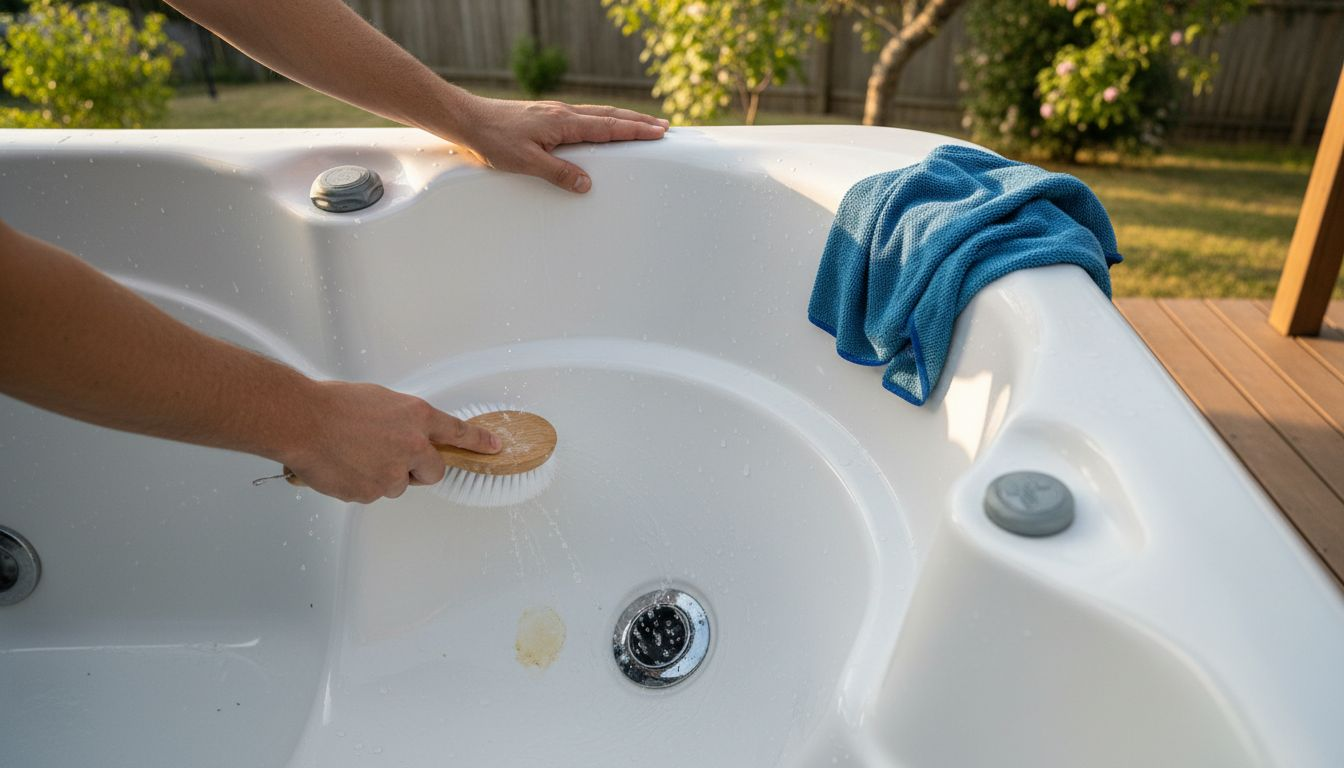
When cleaning hot tub surfaces, focus on using soft-bristled brushes and non-abrasive cloths to protect the delicate materials. Start with the waterline area, which typically accumulates the most significant buildup of oils, minerals, and potential bacterial residues. Pay special attention to jets, seating areas, and hard-to-reach corners where dirt and scum tend to collect.
Your surface cleaning toolkit should include:
- Soft-bristled spa brush
- Microfibre cleaning cloths
- Non-abrasive sponges
- Specialised spa surface cleaner
- Clean water for rinsing
Work methodically around the hot tub, ensuring you cover every surface systematically. Use gentle, circular motions when scrubbing to effectively lift dirt without causing surface damage. Rinse thoroughly after cleaning to remove any remaining cleaning solution and prevent potential chemical residue.
Consistent maintenance prevents extensive cleaning: Regular weekly wiping dramatically reduces the effort required during deep cleaning sessions.
Expert advice: Rotate your cleaning cloth frequently during the process to prevent redistributing dirt and ensure you’re always using a clean section of the cloth.
Step 4: Test and balance water quality
Testing and balancing your hot tub water is a critical maintenance step that ensures a safe, comfortable, and hygienic spa experience. Proper water chemistry prevents potential health risks and protects your valuable hot tub investment from potential damage caused by chemical imbalances.
Regular water testing helps you monitor and adjust key chemical parameters that maintain water quality. Use digital test strips or professional testing kits to accurately measure crucial indicators such as pH levels, alkalinity, sanitiser concentration, and calcium hardness. These measurements provide a comprehensive snapshot of your hot tub’s water condition.
Your water testing checklist should include:
- Digital or professional test strips
- Chlorine/bromine level testing
- pH balance measurement
- Alkalinity level verification
- Calcium hardness assessment
- Water colour and clarity check
Interpret test results carefully and make incremental adjustments to your water chemistry. Add appropriate chemicals in small quantities, allowing sufficient time between treatments for thorough mixing. Some chemicals require specific sequence and waiting periods to achieve optimal balance.
Water chemistry is a delicate balance: Overcorrection can be more problematic than minor fluctuations.
Expert advice: Keep a log of your water test results to track changes and identify patterns in your hot tub’s water chemistry over time.
Step 5: Maintain regular cleaning schedule
Establishing a consistent hot tub cleaning routine is fundamental to preserving water quality, equipment performance, and overall spa longevity. A well-structured maintenance schedule helps prevent potential issues before they become costly problems.
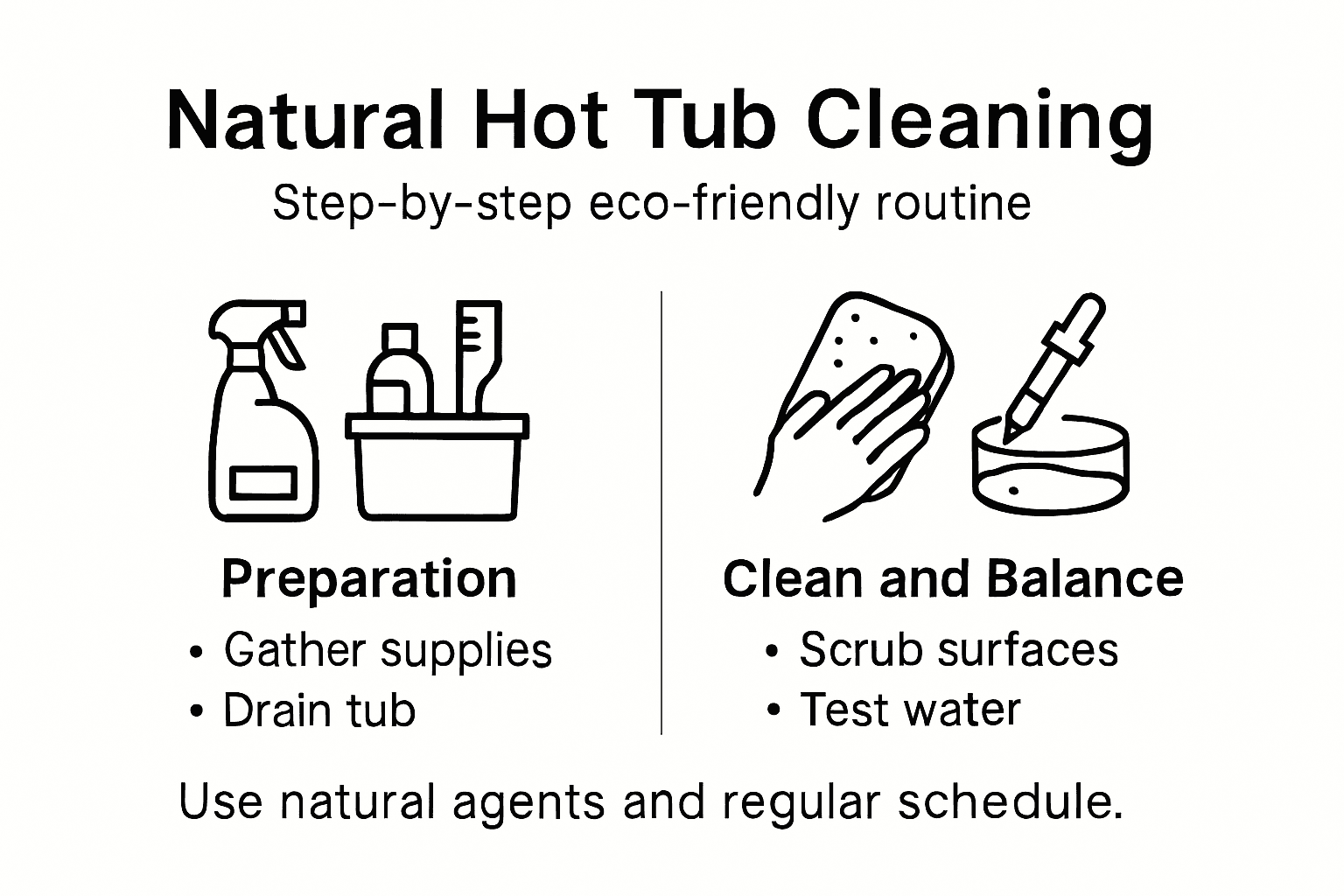
Regular cleaning routines require strategic planning across different timeframes. Break down your maintenance schedule into daily, weekly, monthly, and quarterly tasks to ensure comprehensive care. This systematic approach allows you to address both immediate and long-term hot tub maintenance needs.
Your comprehensive cleaning schedule should include:
- Daily tasks
- Test water chemistry
- Check water clarity
- Remove floating debris
- Weekly responsibilities
- Clean and rinse filters
- Wipe down hot tub surfaces
- Check and adjust chemical levels
- Monthly deep-cleaning actions
- Soak filters in chemical cleaner
- Inspect equipment thoroughly
- Deep clean hot tub shell
- Quarterly maintenance
- Flush plumbing system
- Comprehensive filter inspection
- Check equipment seals and connections
Consistency is key in hot tub maintenance. Set reminders or create a maintenance calendar to track your cleaning schedule and ensure no tasks are overlooked. Regular attention prevents complex issues and extends your hot tub’s operational life.
To make scheduling easier, here is a summary table of maintenance intervals and their impact:
| Task Frequency | Example Tasks | Benefits | Risks if Neglected |
|---|---|---|---|
| Daily | Water testing, debris removal | Immediate hygiene upkeep | Cloudy or unsafe water |
| Weekly | Filter rinse, surface wiping | Reduces deep cleaning needs | Filter clogging, build-up |
| Monthly | Equipment check, thorough clean | Prolongs equipment life | Expensive repairs possible |
| Quarterly | Plumbing flush, seal inspection | Maintains system integrity | Biofilm, leaks, breakdowns |
Preventative maintenance beats reactive repairs: A little effort regularly saves significant time and money in the long run.
Expert advice: Create a digital or physical maintenance log to track your cleaning schedule and record any observations about your hot tub’s condition.
Keep Your Hot Tub Naturally Clean with Trusted Solutions from ClearSpa
Maintaining a hot tub naturally requires careful attention to detail from preparing your spa to choosing the right natural cleaning agents. If you seek to avoid harsh chemicals while ensuring effective water sanitisation, balancing water quality, and protecting your spa surfaces, ClearSpa is here to support your goals. We understand the importance of using botanical-based products that work gently yet powerfully, helping you prevent common challenges such as mineral buildup, biofilm, and chemical imbalances.
Discover how our expertly tested water treatment products can elevate your hot tub care routine. Whether you need natural cleaning agents, reliable water balancers, or spa essentials that harmonise with eco-friendly methods, explore our range at ClearSpa. Take the next step toward a spotless and healthy hot tub experience with trusted solutions designed for your specific needs. Start your natural hot tub maintenance journey today and enjoy your spa at its best.
Frequently Asked Questions
How often should I clean my hot tub naturally?
To maintain a clean hot tub, perform a thorough clean every 3-4 months, and follow a regular schedule for daily, weekly, and monthly tasks. Establish a daily routine for testing water quality and removing floating debris, while dedicating time weekly to wipe down surfaces and rinse filters.
What natural cleaning agents can I use for my hot tub?
You can use natural cleaning agents such as white vinegar, enzymatic cleaners, and baking soda to keep your hot tub clean. Prepare a cleaning solution by diluting these agents as per their instructions, and test a small area before applying it to the entire surface.
How can I test and balance water quality in my hot tub?
Test your hot tub water at least once a week using digital test strips or professional testing kits to measure pH levels, alkalinity, and sanitiser concentration. Make incremental adjustments to the chemical levels as needed to ensure safe and balanced water for your spa experience.
What should I include in my hot tub cleaning toolkit?
Your hot tub cleaning toolkit should consist of soft-bristled brushes, non-abrasive sponges, and microfibre cloths, along with natural cleaning agents. Ensure you also have clean water for rinsing and specific spa surface cleaners to effectively maintain cleanliness.
Why is it important to drain my hot tub every few months?
Draining your hot tub every 3-4 months is important for deep cleaning the shell and internal components, preventing the buildup of biofilm and bacteria. After draining, remember to flush the plumbing system to ensure optimal water quality and equipment performance.
How can I establish a regular cleaning routine for my hot tub?
Create a structured cleaning routine by breaking down tasks into daily, weekly, monthly, and quarterly intervals. For example, daily tasks include testing water and checking clarity, while quarterly tasks encompass flushing the plumbing system and inspecting seals.