Hot Tub Benefits for Skin: Natural Radiance Unveiled
Hot tub benefits for skin explained, including hydration, improved circulation, and soothing effects. Learn about safe soaking and enhanced skincare routines.
Enjoying a relaxing soak in your garden hot tub promises more than just a moment of calm. For many health-conscious Britons, understanding how hot tubs affect skin health goes beyond surface appeal. As warm water immersion boosts circulation and opens pores, the body’s natural repair processes are supported, encouraging a healthier, more radiant complexion. Discover the balance between natural skincare benefits and mindful routines for glowing, resilient skin with every soak.
Table of Contents
- Hot Tubs And Skin Health Defined
- How Hot Tubs Improve Skin Hydration
- Boosting Circulation And Skin Radiance
- Comparing Hot Tub Soaks And Other Methods
- Safe Soaking And Skin Care Precautions
Key Takeaways
| Point | Details |
|---|---|
| Skin Health Dynamics | Hot tub use can enhance skin hydration and radiance through improved circulation and metabolic responses, but prolonged exposure may lead to dehydration. |
| Chemical Interactions | Chemical sanitisers in hot tubs can disrupt the skin’s barrier, necessitating careful management and post-soak moisturisation. |
| Safe Soaking Practices | Limit hot tub sessions to 15-20 minutes and maintain proper water sanitation to prevent skin irritation and promote health. |
| Individual Considerations | Individuals with sensitive skin or pre-existing conditions should consult a healthcare professional before using hot tubs. |
Hot Tubs and Skin Health Defined
Understanding the complex relationship between hot tub use and skin health requires a nuanced approach. Skin barrier dynamics play a critical role in determining how thermal water immersion impacts our body’s largest organ. Hot tub interactions with skin involve multiple physiological processes that can produce both beneficial and potentially challenging outcomes.
The primary mechanisms influencing skin health during hot tub sessions centre around three key factors:
- Elevated water temperature: Increases blood circulation and opens skin pores
- Prolonged water exposure: Can potentially disrupt natural skin moisture balance
- Chemical sanitiser interactions: May impact skin’s protective microbiome
Circulation improvement represents one of the most significant dermatological benefits. When skin is exposed to warm water, blood vessels dilate, allowing enhanced nutrient delivery and improved cellular metabolism. This process can contribute to a more radiant, healthy complexion by supporting natural skin regeneration mechanisms.
However, potential risks also demand careful consideration. Extended hot tub sessions might lead to skin dehydration, particularly if chemical sanitisation levels are not meticulously managed. The delicate balance between relaxation and skin protection requires strategic approach.
Maintaining optimal skin health during hot tub use demands understanding your individual skin’s unique responses and implementing proactive care strategies.
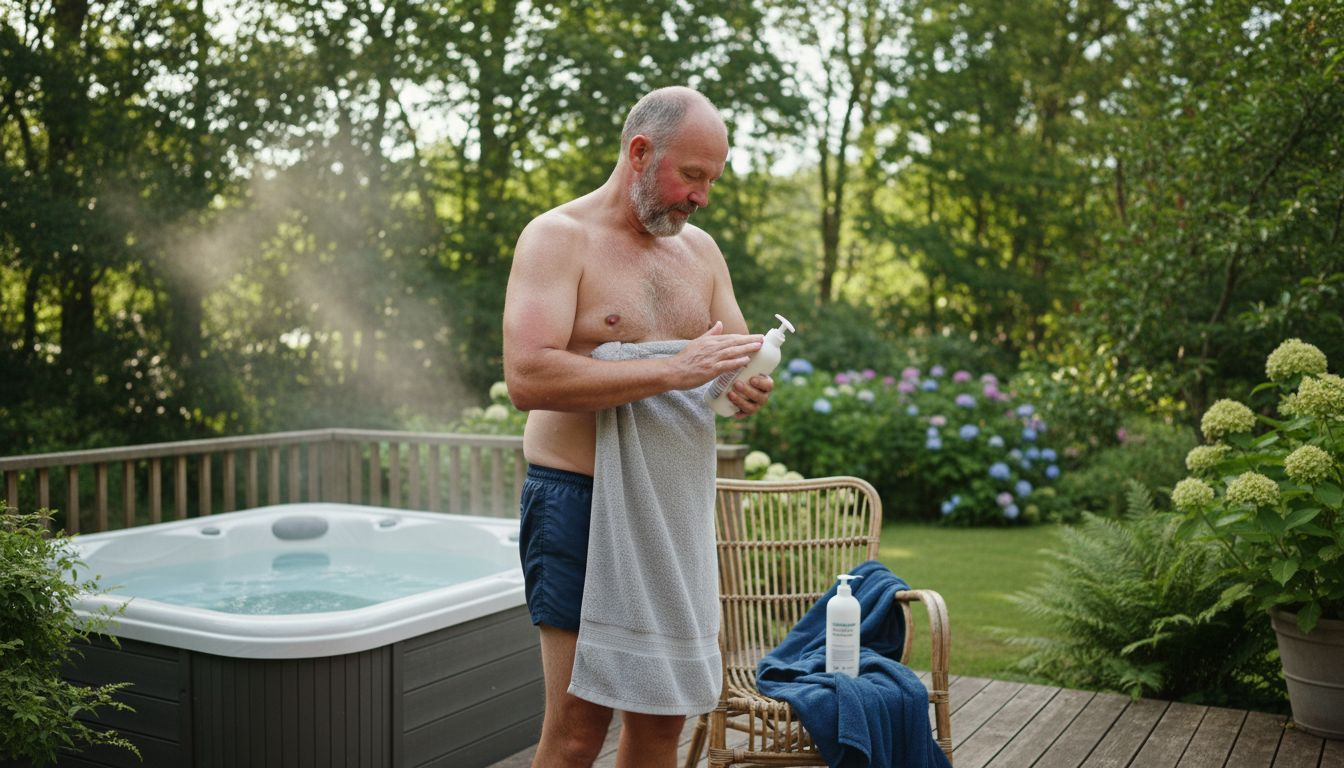
Pro tip: Monitor your skin’s hydration levels by applying a gentle, fragrance-free moisturiser immediately after hot tub sessions to restore the skin’s natural protective barrier.
How Hot Tubs Improve Skin Hydration
The intricate relationship between hot tub use and skin hydration reveals a nuanced physiological process that goes beyond simple water exposure. Skin hydration mechanisms involve a complex interplay of temperature, circulation, and moisture absorption that can significantly impact skin health when approached strategically.
Key factors contributing to enhanced skin hydration through hot tub use include:
- Improved blood circulation: Stimulates natural skin healing processes
- Pore opening: Allows deeper penetration of moisturising treatments
- Temperature-induced metabolic responses: Supports skin’s natural regeneration
- Increased nutrient delivery: Promotes healthier skin cell function
Warm water’s therapeutic effect on skin hydration stems from its ability to dilate blood vessels and increase metabolic activity. This physiological response triggers enhanced nutrient delivery to skin cells, supporting more efficient moisture retention and cellular repair mechanisms. The controlled heat environment creates an optimal condition for skin rejuvenation, helping to break down barriers that typically prevent deep moisturisation.
However, careful management remains crucial. Prolonged exposure can potentially counteract hydration benefits, leading to moisture loss if not balanced appropriately. Understanding the delicate equilibrium between thermal exposure and skin protection becomes paramount for maximising hydration potential.
Optimal skin hydration through hot tub use requires a balanced approach that considers individual skin characteristics and precise exposure duration.
Pro tip: Apply a hydrating, non-comedogenic moisturiser immediately after your hot tub session to lock in the enhanced moisture absorption and support your skin’s natural barrier.
Boosting Circulation and Skin Radiance
The physiological transformation of skin health through hot tub immersion represents a remarkable intersection of thermal therapy and biological response. Hot water circulation benefits demonstrate how strategic heat exposure can trigger profound vascular and dermatological changes that enhance overall skin radiance.
Key mechanisms of circulation enhancement include:
- Vasodilation: Expands blood vessels for improved blood flow
- Metabolic acceleration: Increases cellular nutrient exchange
- Thermal stress response: Stimulates natural healing processes
- Toxin elimination: Supports lymphatic system functionality
Understanding the nuanced interaction between heat and human physiology reveals why hot tubs provide such exceptional circulatory benefits. Water immersion creates a unique environment where sustained temperature elevation prevents rapid cooling, allowing consistent blood flow stimulation. This continuous thermal engagement promotes oxygen and nutrient delivery to skin cells, directly contributing to a more vibrant, healthy complexion.
Research indicates that hot tubs can generate more consistent circulatory responses compared to alternative heat therapies. The water’s enveloping nature ensures uniform heat distribution, triggering a comprehensive vascular response that goes beyond surface-level warmth. This holistic approach supports deeper tissue nourishment and more efficient metabolic processes.
Consistent, moderate hot tub use can transform skin radiance by creating a natural, physiologically-driven rejuvenation mechanism.
Pro tip: Limit hot tub sessions to 15-20 minutes and stay hydrated to maximise circulation benefits and prevent potential thermal stress.
Comparing Hot Tub Soaks and Other Methods
Navigating the landscape of thermal therapies reveals compelling evidence for hot tub superiority in skin health and physiological benefits. Comparative heat therapy research demonstrates how hot tub immersion uniquely outperforms traditional heat treatments through sustained, comprehensive physiological responses.
Key comparative advantages of hot tub soaks include:
- Water immersion: Prevents rapid body cooling
- Sustained temperature: Maintains consistent thermal stimulus
- Full-body engagement: Provides uniform heat distribution
- Reduced thermal stress: Creates more controlled environmental conditions
Unlike dry saunas or infrared treatments, hot tubs create a dynamic environment where body temperature rises more gradually and consistently. This controlled thermal experience allows for deeper, more nuanced physiological interactions. Water’s unique properties enable heat transfer that stimulates circulation more effectively than static dry heat environments, supporting enhanced skin cell nutrition and metabolic processes.
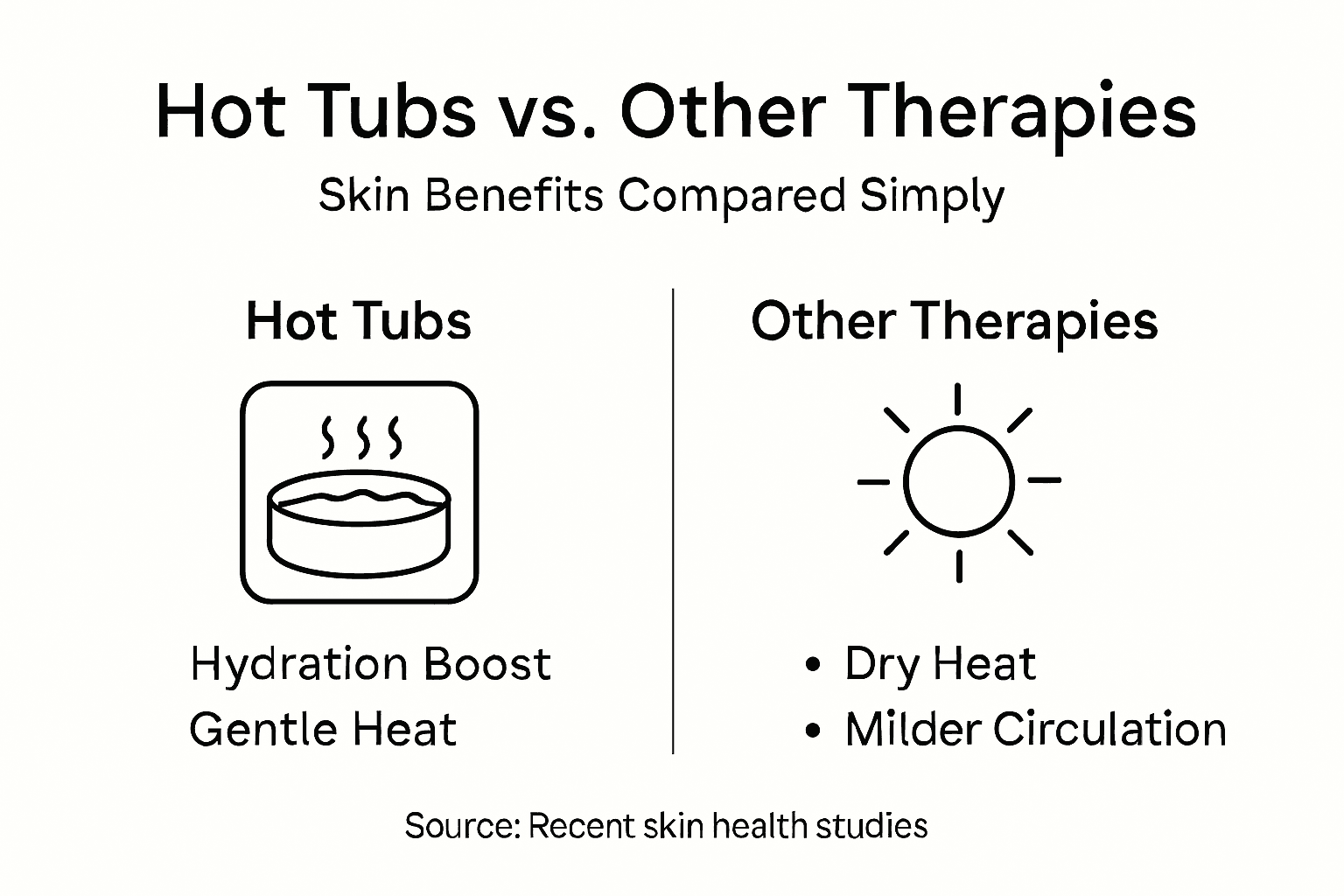
Research indicates hot tubs generate more profound vascular responses compared to alternative heat therapies. The enveloping nature of water ensures comprehensive thermal exposure, triggering immune system improvements and supporting more efficient toxin elimination. This holistic approach distinguishes hot tubs as a superior method for achieving systemic wellness and skin rejuvenation.
To clarify the distinct effects of different heat therapies on skin and wellness, see the comparison below:
| Aspect | Hot Tub Immersion | Dry Sauna | Infrared Sauna |
|---|---|---|---|
| Heat Distribution | Even, surrounds entire body | Primarily air, less even | Direct to tissue, localised |
| Moisture Impact | Promotes hydration but may cause dryness if prolonged | Often dehydrates skin quickly | Lower dehydration risk |
| Circulation Effect | Strong, consistent vasodilation | Rapid initial response, fades faster | Gentle, steady response |
| Skin Benefit Potential | Deep nourishment, enhanced absorption | Surface sweating, may irritate | Mild rejuvenation, subtle effects |
Hot tub therapy represents a more sophisticated, scientifically-validated approach to thermal health compared to traditional heat treatment methods.
Pro tip: Experiment with gradual temperature variations during hot tub sessions to maximise physiological benefits and minimise potential thermal stress.
Safe Soaking and Skin Care Precautions
Skin protection requires a strategic approach when enjoying hot tub therapies. Hot tub bacterial risks underscore the importance of understanding potential health challenges and implementing comprehensive safety protocols for optimal wellness.
Critical safety considerations for hot tub users include:
- Water sanitation: Maintain proper chemical balance
- Exposure duration: Limit soak time to prevent skin stress
- Hygiene practices: Shower before and after hot tub use
- Skin barrier protection: Apply moisturiser post-soak
- Personal health awareness: Avoid hot tubs with open wounds
Chemical sanitisers like chlorine and bromine play a crucial role in maintaining water safety, but they can simultaneously challenge skin health. These compounds may disrupt the skin’s natural protective oils, potentially causing dryness or irritation if not carefully managed. Understanding the delicate balance between necessary disinfection and skin preservation becomes paramount for responsible hot tub enthusiasts.
Pre-existing skin conditions demand extra caution. Individuals with sensitive skin, eczema, or dermatological vulnerabilities should consult healthcare professionals before incorporating hot tub sessions into their wellness routines. Careful monitoring of skin responses and maintaining stringent hygiene practices can help mitigate potential adverse reactions.
For guidance on maximising skin safety during hot tub use, review this summary of essential precautions:
| Safety Focus | Rationale | Best Practice |
|---|---|---|
| Water Sanitation | Prevents skin infections | Monitor chlorine/bromine levels regularly |
| Exposure Duration | Limits risk of dryness | Keep soaks to 15-20 minutes |
| Post-Soak Care | Restores skin barrier | Apply fragrance-free moisturiser |
| Health Screening | Avoids reactions | Assess skin condition before entering |
Responsible hot tub use requires a holistic approach that balances therapeutic benefits with proactive skin protection strategies.
Pro tip: Invest in a high-quality, fragrance-free moisturiser specifically designed for post-hot tub skin recovery to maintain optimal hydration and barrier function.
Elevate Your Hot Tub Experience for Radiant Skin Health
Enjoying the natural benefits of your hot tub means more than just relaxation. As highlighted in the article “Hot Tub Benefits for Skin Natural Radiance Unveiled” maintaining a balanced water treatment routine is essential to protect your skin’s hydration and barrier while maximising circulation and rejuvenation. Avoid dryness and irritation caused by chemical imbalances and long soak times with the right products designed specifically for your spa wellness.
ClearSpa offers a trusted range of premium water treatment products that help you maintain optimal sanitation and skin-friendly conditions. With our carefully formulated hot tub chemicals and spa essentials, you can confidently protect your skin’s natural moisture while enjoying every soak. Find exactly what you need to create a healthy, glowing complexion enhanced by safe and effective spa water care.

Discover the difference that expert water care can make for your hot tub and skin health. Visit ClearSpa today, explore our full selection of hot tub chemicals and spa essentials, and take the first step toward the perfect soak that nurtures your skin as much as your mind.
Frequently Asked Questions
How do hot tubs improve skin health?
Hot tubs enhance skin health primarily through improved blood circulation, which increases nutrient delivery to skin cells and supports natural regenerative processes. The warmth of the water helps to open pores, aiding deeper absorption of moisturisers.
What precautions should I take when using a hot tub for skin care?
To protect your skin, ensure proper water sanitation, limit soak durations to 15-20 minutes, shower before and after use, apply a fragrance-free moisturiser post-soak, and be cautious if you have pre-existing skin conditions.
Can hot tubs lead to skin dehydration?
Yes, prolonged exposure to hot tub water can disrupt the skin’s moisture balance and lead to dehydration, especially if chemical levels are not properly managed. It’s important to monitor soak times and hydrate the skin afterwards.
How does hot tub immersion compare to other heat therapies for skin benefits?
Hot tub immersion provides superior benefits due to even heat distribution, sustained temperature, and natural moisture retention, making it more effective than dry saunas or infrared saunas for skin nourishment and hydration.