Understanding Your Pool Maintenance Schedule Guide
Explore our pool maintenance schedule guide for comprehensive understanding of essential care, benefits, and management tips for your pool.
A sparkling swimming pool looks inviting, but keeping it that way takes more than the odd clean. Most owners are surprised that proactive pool maintenance schedules can cut long-term pool expenses by up to 40 percent. Proper planning does not just save money and time, it also protects your health and investment in unexpected ways.
Table of Contents
- What Is A Pool Maintenance Schedule?
- The Importance Of Regular Pool Maintenance
- Key Components Of A Pool Maintenance Schedule
- How Seasonal Changes Affect Pool Care
- Managing Costs And Time For Effective Pool Maintenance
Quick Summary
| Takeaway | Explanation |
|---|---|
| Regular maintenance is essential | A structured schedule prevents algae, equipment failure, and health hazards. |
| Chemical balancing is crucial | Maintaining pH and chlorine levels protects equipment and ensures swimmer safety. |
| Seasonal care adapts to challenges | Anticipate varying needs during summer and winter to safeguard your pool. |
| Proactive management saves costs | Preventative routines reduce long-term expenses and extend equipment lifespan. |
| Invest in quality equipment | Durable tools and regular inspections minimise repairs and maintain pool value. |
What is a Pool Maintenance Schedule?
A pool maintenance schedule represents a systematic approach to preserving your swimming pool’s health, functionality, and aesthetic quality through regular, planned interventions. Unlike random cleaning attempts, this strategic framework ensures comprehensive care that protects your investment and maintains optimal water conditions.
The table below outlines the core components of a comprehensive pool maintenance schedule, summarising each element alongside its primary purpose for clear understanding.
| Component | Description |
|---|---|
| Water chemistry management | Monitoring and balancing chemical levels to maintain safe and healthy water conditions |
| Filtration system maintenance | Cleaning and servicing filters to ensure effective removal of debris and contaminants |
| Surface cleaning and debris removal | Skimming and scrubbing pool surfaces to prevent algae and maintain cleanliness |
| Equipment inspection and servicing | Regular checks on pumps, lights, and valves to ensure equipment reliability |
| Seasonal preparation and winterisation | Adjusting maintenance routines to address changing environmental and usage conditions |
Understanding the Core Components
A robust pool maintenance schedule encompasses multiple interconnected elements designed to address different aspects of pool care. Our pool chemical guide highlights the critical components that require consistent attention.
The primary components typically include:
- Water chemistry monitoring and balancing
- Filtration system maintenance
- Surface cleaning and debris removal
- Equipment inspection and servicing
- Seasonal preparation and winterisation strategies
Why Regular Maintenance Matters
Maintaining a structured pool maintenance schedule isn’t merely about aesthetics. According to Pool and Spa Association research, consistent maintenance prevents:
- Algae growth
- Equipment deterioration
- Water contamination risks
- Expensive repair costs
- Potential health hazards
Professional pool managers recommend viewing your maintenance schedule as a proactive health plan for your aquatic environment. By implementing a consistent, well-designed routine, you transform pool care from a reactive chore into a strategic, efficient process that protects both your pool’s infrastructure and the swimmers’ wellbeing.
The Importance of Regular Pool Maintenance
Regular pool maintenance transcends simple cleanliness, representing a critical strategy for protecting your swimming environment, preserving equipment functionality, and ensuring swimmer safety. Ask An Expert - SPA Pool Maintenance provides deeper insights into professional maintenance protocols.
Economic and Health Protection Strategies
Pool maintenance is fundamentally an investment in long-term asset preservation. By implementing consistent care protocols, pool owners can prevent expensive equipment failures and potential health risks. According to Health and Safety Executive guidelines, regular maintenance is essential for meeting legal compliance standards and preventing potential public health incidents.
Key economic benefits include:
- Reducing unexpected repair costs
- Extending equipment lifespan
- Preventing major structural damages
- Maintaining property value
- Minimising potential legal liabilities
Water Quality and Safety Considerations
Consistent maintenance directly correlates with water quality and swimmer wellbeing. Unmanaged pools can quickly become breeding grounds for harmful bacteria, algae, and other microorganisms that pose significant health risks.
Comprehensive maintenance involves:
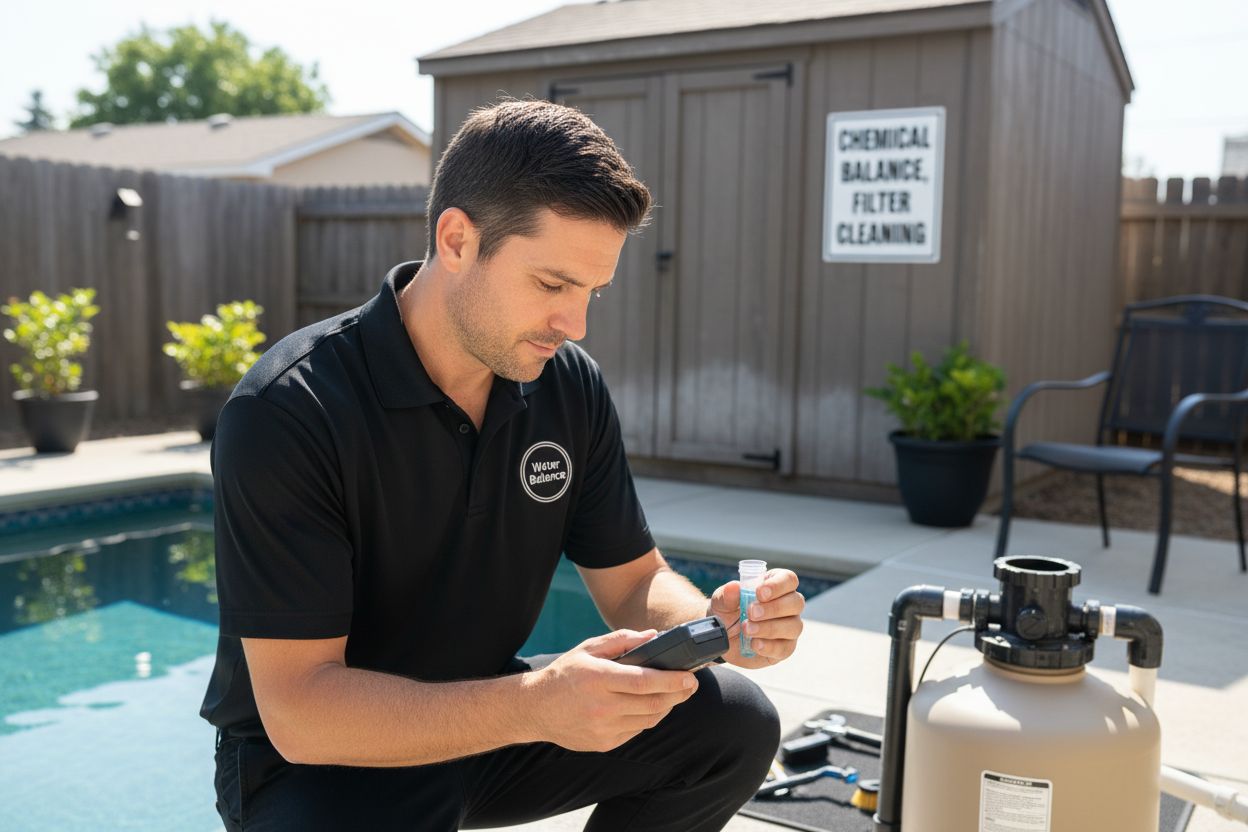
- Regular chemical balance testing
- Filtering system inspections
- Surface and water cleanliness monitoring
- Equipment functionality assessments
- Implementing preventative cleaning protocols
Professional pool managers emphasise that proactive maintenance is far more cost-effective and safer than reactive interventions. By establishing a systematic approach to pool care, owners can create a consistently clean, safe, and enjoyable aquatic environment that protects both the physical infrastructure and the health of its users.
Key Components of a Pool Maintenance Schedule
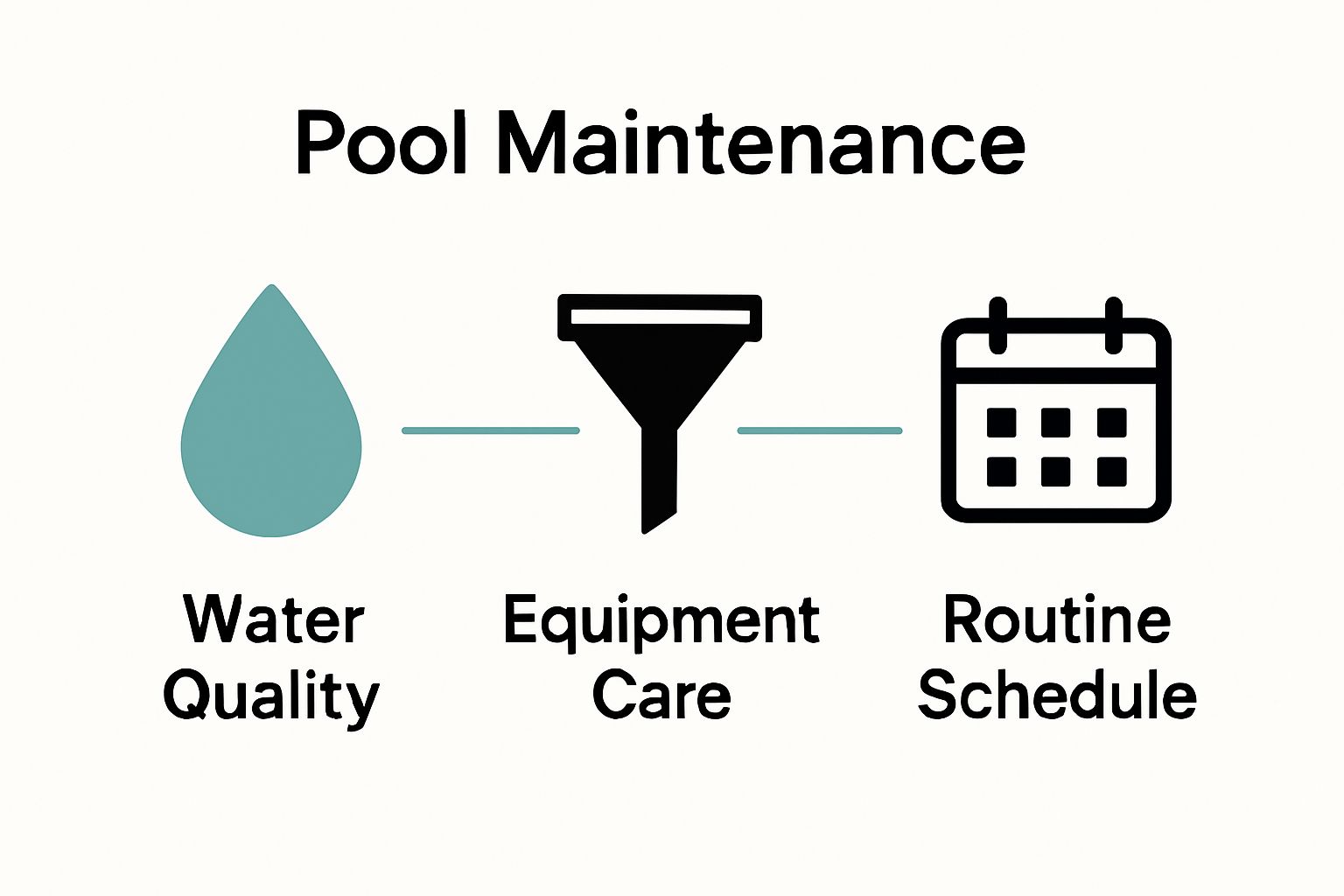
A comprehensive pool maintenance schedule comprises multiple interconnected systems and interventions designed to preserve water quality, equipment functionality, and overall pool health.
 What is the most critical pool chemical? provides additional context on one of the crucial elements of pool maintenance.
Chemical and Water Balance Management
Chemical management represents the cornerstone of effective pool maintenance. According to Water Quality Research Foundation, precise chemical balancing prevents equipment degradation and ensures swimmer safety. The core chemical parameters include:
- pH levels (ideal range 7.2 to 7.6)
- Chlorine concentration
- Alkalinity
- Calcium hardness
- Stabiliser levels
Mechanical and Structural Maintenance
Beyond chemical management, a robust maintenance schedule must address the physical infrastructure of the pool. This involves systematic inspections and interventions across multiple domains:
- Filter system cleaning and replacement
- Pump and circulation system evaluation
- Surface and tile inspection
- Structural integrity checks
- Seal and gasket maintenance
Seasonal and Preventative Strategies
Effective pool maintenance transcends routine cleaning, incorporating seasonal adaptations and anticipatory interventions. Professional pool managers recommend developing a dynamic schedule that responds to changing environmental conditions, usage patterns, and potential emerging issues. This approach transforms maintenance from a reactive task to a proactive management strategy, protecting both the pool’s physical infrastructure and the swimmer’s experience.
How Seasonal Changes Affect Pool Care
Seasonal variations significantly impact pool maintenance requirements, introducing unique challenges and necessary adaptations for pool owners. Ask An Expert - SPA Pool Maintenance provides valuable insights into managing these seasonal transitions.
Winter Preparation and Challenges
Winter represents the most complex period for pool maintenance. According to Royal Meteorological Society research, temperature fluctuations and precipitation patterns directly influence pool infrastructure and water chemistry. Pool owners must consider:
- Preventing water freezing and potential structural damage
- Protecting equipment from frost and moisture
- Reducing chemical degradation during low temperatures
- Managing potential algae and microbial growth
- Implementing appropriate winterisation protocols
Summer Maintenance Dynamics
Summer introduces unique maintenance challenges characterised by increased usage, higher temperatures, and environmental stressors. Critical considerations include:
- Accelerated chemical evaporation rates
- Higher risk of algae and bacterial proliferation
- Increased UV radiation impact on water chemistry
- Elevated debris accumulation from outdoor activities
- More frequent water quality monitoring requirements
Transitional Season Strategies
Spring and autumn represent critical transitional periods requiring nuanced maintenance approaches. These intermediate seasons demand flexible protocols that anticipate changing environmental conditions. Professional pool managers emphasise the importance of adaptive maintenance strategies that respond dynamically to shifting temperature, humidity, and precipitation patterns, ensuring consistent water quality and equipment protection throughout the year.
This table contrasts the specific challenges and required maintenance strategies for winter, summer, and transitional seasons, helping owners anticipate and adapt pool care throughout the year.
| Season | Unique Challenges | Key Maintenance Focus |
|---|---|---|
| Winter | Risk of water freezing, frost damage, chemical loss | Winterisation protocols, equipment protection |
| Summer | Increased usage, higher temperatures, more debris | Frequent cleaning, chemical monitoring, algae prevention |
| Spring/Autumn | Fluctuating weather, changing temperature and rainfall | Adaptive routines, flexible chemical adjustments, pre-season checks |
Managing Costs and Time for Effective Pool Maintenance
Effective pool maintenance requires strategic planning that balances financial investment with time management. What is the most critical pool chemical? offers insights into reducing long-term maintenance expenses through intelligent chemical management.
Cost-Effective Maintenance Strategies
Pool maintenance expenses can escalate quickly without proper planning. According to Consumer Savings Research Institute, proactive maintenance can reduce overall pool-related expenditures by up to 40% over a pool’s lifetime. Key cost-management approaches include:
- Implementing preventative maintenance routines
- Investing in high-quality, durable equipment
- Regularly calibrating chemical treatments
- Conducting periodic professional inspections
- Developing a comprehensive maintenance budget
Time Management Techniques
Successful pool maintenance requires efficient time allocation and systematic approaches. Pool owners can optimise their maintenance schedule by:
- Creating standardised weekly and monthly checklists
- Automating chemical testing and monitoring systems
- Scheduling routine maintenance during off-peak periods
- Developing efficient cleaning and inspection protocols
- Utilising technology for remote pool monitoring
Long-Term Financial Planning
Beyond immediate maintenance considerations, pool owners must adopt a holistic approach to financial planning. Professional pool managers recommend developing a comprehensive strategy that anticipates potential repairs, replacement costs, and seasonal variations. By treating pool maintenance as a strategic investment rather than a recurring expense, owners can protect their aquatic infrastructure while maintaining financial flexibility.
Simplify Your Pool Care with Proven Solutions from ClearSpa
Are you exhausted by the headache of sticking to a strict pool maintenance schedule? Many pool owners struggle to keep water chemistry balanced, equipment running smoothly and costly surprises at bay. This article has shown that a proactive plan can help, but the real key is having reliable products and expert support on hand. At ClearSpa, we understand your commitment to a healthy, beautiful pool. Our water treatment essentials are specially developed to support every step of your maintenance schedule, including top-rated pool chemicals and practical maintenance tools.
Take the guesswork out of pool care today. Visit clearspa.com and discover trusted solutions designed to prevent algae, reduce repairs and make each day in your pool safer and more enjoyable. Do not let another season pass without protecting your pool investment. Explore the full range of water management essentials and start building your perfect maintenance schedule now.
Frequently Asked Questions
What is a pool maintenance schedule?
A pool maintenance schedule is a systematic plan that outlines regular care routines for your swimming pool. Create a clear timeline for tasks such as water chemistry testing, cleaning, and equipment checks to maintain optimal pool health.
Why is regular pool maintenance essential for my pool?
Regular pool maintenance prevents issues like algae growth, water contamination, and equipment failure, ensuring a safe swimming environment. Schedule weekly and monthly tasks to keep your pool clean and functioning well, reducing potential repair costs by up to 40%.
How can I effectively balance my pool’s water chemistry?
Balancing your pool’s water chemistry involves regularly testing pH levels, chlorine concentration, and alkalinity. Test your water at least once a week and adjust the chemicals accordingly to keep pH levels between 7.2 and 7.6, ensuring swimmer safety and equipment longevity.
What key tasks should be included in my pool maintenance schedule?
Your pool maintenance schedule should include monitoring water chemistry, cleaning surfaces, inspecting equipment, and preparing for seasonal changes. Organise these tasks into weekly, monthly, and seasonal checklists to ensure comprehensive and timely maintenance.
How do seasonal changes affect my pool maintenance schedule?
Seasonal changes introduce unique challenges, such as water freezing in winter or increased debris in summer. Adjust your maintenance schedule by implementing winterisation protocols in the colder months and increasing cleaning and chemical testing frequency during summer to maintain optimal water quality.
What steps can I take to manage costs related to pool maintenance?
To manage costs effectively, adopt preventative maintenance routines and invest in durable equipment. Create a maintenance budget that accounts for periodic professional inspections and necessary repairs, enabling you to reduce unexpected expenses and extend your pool’s lifespan.