Spa Water Recycling: Sustainable Hot Tub Solutions UK
Spa water recycling explained: learn the process, eco-friendly benefits in the UK, risks, costs, and comparison to traditional spa water care.
Over 60 percent of British hot tub owners are looking for ways to reduce water waste and environmental impact. Sustainable water management is quickly becoming a priority as awareness grows about the pressures on local resources in the United Kingdom. Spa water recycling offers more than just a green reputation. It gives homeowners real solutions to conserve water, reduce costs, and stay ahead of evolving regulations.
Table of Contents
- Spa Water Recycling Defined And Debunked
- Methods Of Recycling Spa Water In The UK
- How Spa Water Recycling Systems Operate
- Legal And Environmental Guidelines For Recycling
- Risks, Costs, And Mistakes To Avoid
- Comparing Recycling To Standard Water Changes
Key Takeaways
| Point | Details |
|---|---|
| Sustainability Focus | Spa water recycling minimises environmental impact and conserves water by treating and reusing spa wastewater. |
| Advanced Treatment Stages | Effective recycling involves multiple stages, including collection, filtration, and disinfection, to ensure water quality. |
| Regulatory Compliance | Adhering to local regulations is crucial for safe and effective water recycling practices in spa environments. |
| Long-term Cost Efficiency | Implementing recycling systems can significantly reduce water costs compared to traditional water change methods. |
Spa Water Recycling Defined and Debunked
Spa water recycling represents an innovative approach to water management within hot tub environments, focusing on sustainable treatment and potential reuse strategies. Unlike traditional water disposal methods, this process involves carefully treating and potentially repurposing spa wastewater to minimise environmental impact.
The concept of water recycling is grounded in advanced filtration techniques that transform potentially contaminated water into a reusable resource. According to the Drinking Water Inspectorate, water recycling involves sophisticated treatments like membrane filtration to remove contaminants and ensure safety standards are rigorously maintained. These processes enable water to be purified and potentially redirected for alternative applications, reducing overall water consumption.
The UK Water Reuse Association highlights several critical stages in water recycling that are particularly relevant to spa environments. These stages typically include:
- Collection: Gathering used spa water from the primary source
- Filtration: Removing physical and chemical contaminants
- Treatment: Applying advanced purification techniques
- Storage: Safely holding treated water for potential future use
- Distribution: Redirecting treated water to appropriate secondary applications
While spa water recycling presents an attractive sustainability solution, it is not without challenges. Rigorous testing, comprehensive filtration systems, and adherence to strict water quality standards are essential to ensure the safety and effectiveness of any recycling approach. Hot tub owners must carefully evaluate their specific circumstances, water chemistry, and local regulations before implementing any water recycling strategy.
Methods of Recycling Spa Water in the UK
Recycling spa water in the United Kingdom involves sophisticated techniques designed to maximise water conservation and minimise environmental impact. These methods go beyond simple water disposal, transforming potentially wasted resources into valuable reusable solutions for hot tub and swimming pool owners.
The UK Water Reuse Association highlights several comprehensive approaches to water recycling that are particularly relevant to spa environments. Typically, these systems involve multiple intricate stages such as:
- Collection: Gathering used spa water systematically
- Sedimentation: Allowing particulates to settle
- Filtration: Removing physical and chemical contaminants
- Disinfection: Eliminating harmful microorganisms
- Storage: Preserving treated water safely
- Redistribution: Redirecting water to appropriate secondary applications
Advanced water recycling techniques, as noted by the Drinking Water Inspectorate, incorporate cutting-edge membrane filtration technologies that effectively remove contaminants. These sophisticated treatments transform potentially unusable wastewater into a clean, sustainable resource. Membrane filtration works by pushing water through microscopic barriers, capturing impurities and ensuring that recycled water meets stringent safety standards.
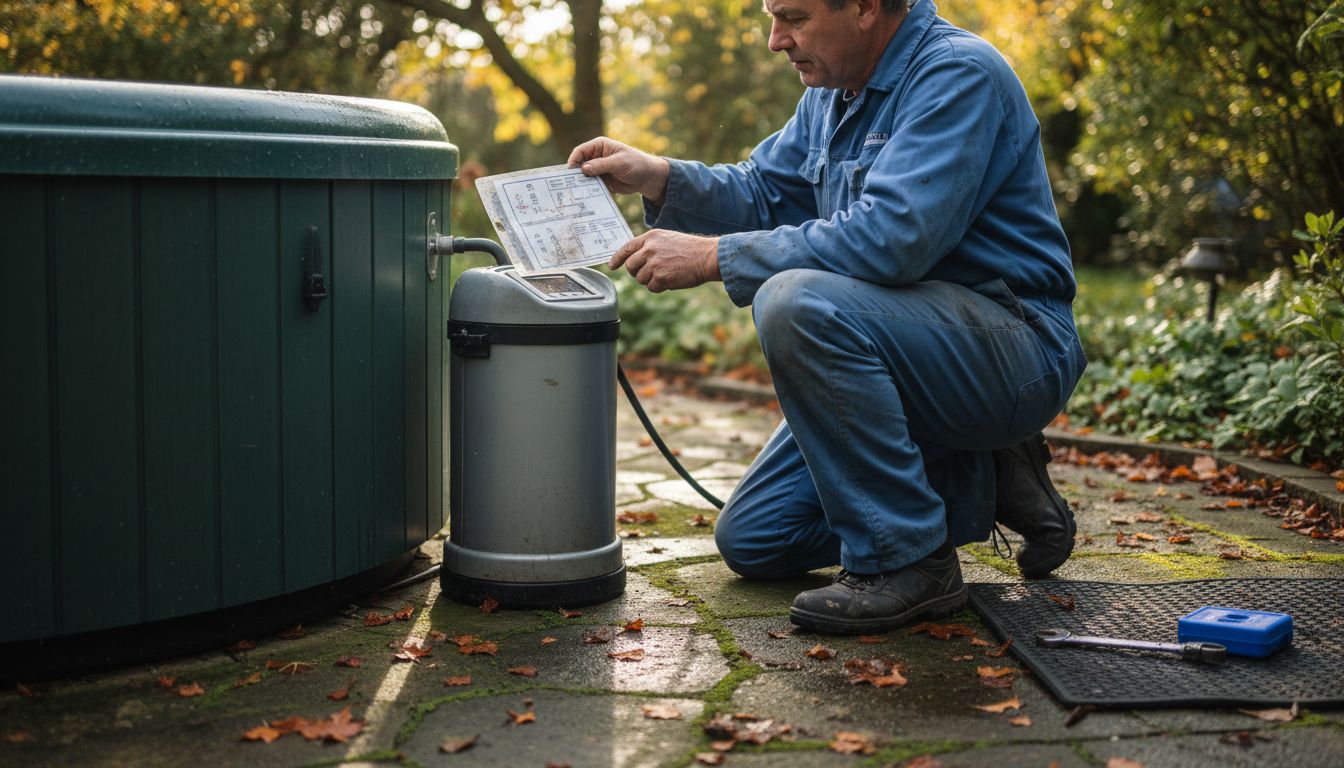
However, successful spa water recycling requires careful consideration of several critical factors. Water chemistry, treatment frequency, filtration system quality, and local regulatory requirements all play pivotal roles in determining the effectiveness and safety of any recycling approach. Hot tub owners must invest in high-quality filtration equipment, conduct regular water quality tests, and stay informed about the latest water treatment technologies to implement successful recycling strategies.
How Spa Water Recycling Systems Operate
Spa water recycling systems represent a sophisticated technological approach to water management, transforming what was once considered waste into a valuable sustainable resource. These intricate systems leverage advanced engineering principles to capture, treat, and repurpose water from hot tubs and similar aquatic environments.
According to the UK Water Reuse Association, the operational process involves several critical stages of water treatment:
- Collection: Systematically gathering used spa water
- Preliminary Screening: Removing large particulate matter
- Sedimentation: Allowing heavier particles to settle
- Chemical Treatment: Neutralising potential contaminants
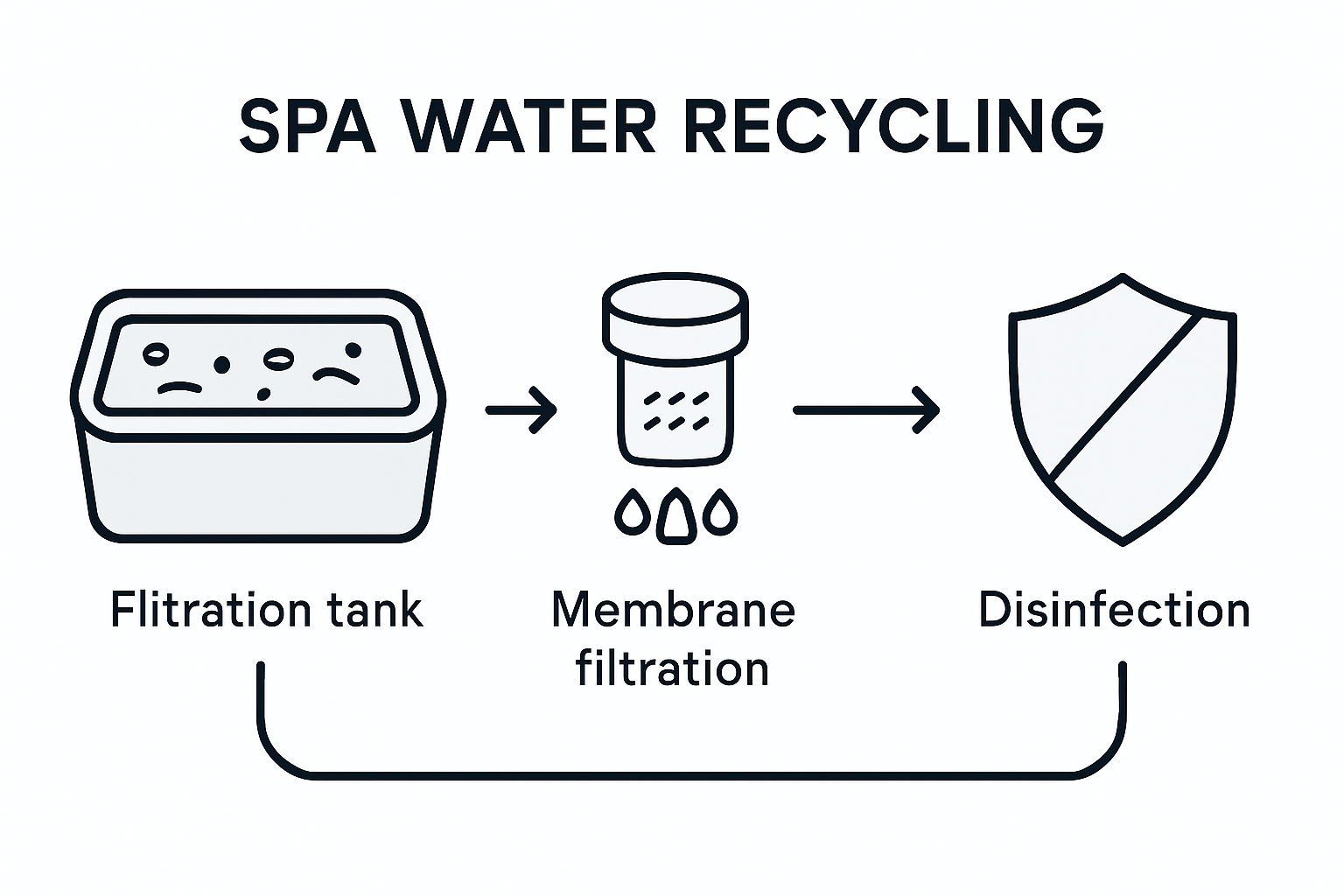
- Membrane Filtration: Extracting microscopic impurities
- Disinfection: Eliminating harmful microorganisms
- Quality Testing: Ensuring water meets safety standards
The Drinking Water Inspectorate explains that advanced membrane filtration technologies play a pivotal role in these recycling systems. These microscopic barriers effectively push water through complex filtration membranes, capturing contaminants as small as bacteria and chemical residues, thereby transforming potentially hazardous wastewater into a clean, reusable resource.
Successful spa water recycling demands meticulous attention to multiple technical and environmental factors. Water chemistry analysis, precise filtration techniques, regular maintenance, and compliance with stringent environmental regulations are crucial. Hot tub owners must invest in high-quality filtration equipment, conduct frequent water quality assessments, and remain adaptable to evolving water treatment technologies to ensure optimal recycling performance.
Legal and Environmental Guidelines for Recycling
Recycling spa water in the United Kingdom is governed by a complex framework of environmental regulations designed to protect public health and ecological systems. These guidelines ensure that water recycling processes meet stringent safety and sustainability standards across residential and commercial settings.
Scottish Environment Protection Agency guidelines provide critical insights into the regulatory landscape for hot tub and swimming pool water management. Key regulatory requirements include:
- Discharge Authorisation: Obtaining official permission for water disposal
- Treatment Standards: Meeting specific water quality criteria
- Environmental Impact Assessment: Evaluating potential ecological consequences
- Contamination Prevention: Implementing robust filtration mechanisms
- Reporting Obligations: Maintaining detailed documentation of water treatment processes
The Drinking Water Inspectorate emphasises that water recycling operations must rigorously comply with drinking water quality legislation. This involves comprehensive testing for microorganisms, chemical contaminants, and metal concentrations to guarantee the safety and wholesomeness of recycled water resources.
Navigating these legal requirements demands a proactive approach from hot tub owners and water management professionals. Successful compliance involves staying informed about evolving environmental regulations, investing in advanced water treatment technologies, and maintaining meticulous records of water quality assessments. Regular consultations with environmental regulatory bodies and professional water treatment experts can help ensure full adherence to the complex legal and environmental guidelines governing water recycling practices.
Risks, Costs, and Mistakes to Avoid
Implementing spa water recycling systems requires careful consideration of potential risks and financial implications. Hot tub owners must approach water recycling with a strategic mindset, understanding the complex challenges that can undermine their sustainability efforts.
The UK Water Reuse Association warns that improper water recycling can lead to significant challenges, including:
- Water Stagnation: Risk of bacterial growth in unused systems
- Odour Development: Potential for unpleasant smells if water is not correctly treated
- Contamination Risks: Potential for harmful microorganism proliferation
- System Inefficiency: Increased maintenance costs from poor design
- Regulatory Non-Compliance: Financial penalties for inadequate water management
The Drinking Water Inspectorate emphasises the critical importance of implementing multiple treatment barriers and comprehensive risk assessments. Successful water recycling demands meticulous planning, including detailed analysis of potential contamination pathways and robust filtration mechanisms.
Financial considerations extend beyond initial installation costs. Hot tub owners must budget for ongoing maintenance, regular water quality testing, and potential system upgrades. Cutting corners can result in significantly higher long-term expenses, including equipment replacement, health risks, and potential legal complications. Professional consultation and investment in high-quality filtration technologies are essential strategies for mitigating risks and ensuring a sustainable, cost-effective water recycling approach.
Comparing Recycling to Standard Water Changes
Comparing water recycling with traditional spa water replacement reveals significant differences in sustainability, resource management, and long-term environmental impact. Hot tub owners increasingly recognise the potential advantages of moving beyond conventional water change practices towards more innovative recycling approaches.
The Drinking Water Inspectorate highlights that water recycling offers a continuous and sustainable water source with remarkable advantages over standard replacement methods. Key comparative aspects include:
- Water Consumption: Recycling dramatically reduces overall water usage
- Resource Efficiency: Minimises reliance on fresh mains water supplies
- Environmental Impact: Significantly lowers ecological footprint
- Cost Management: Reduces long-term water replacement expenses
- Water Quality: Enables more consistent water treatment standards
The UK Water Reuse Association emphasises that greywater recycling systems can potentially reduce mains water consumption by up to 40% compared to traditional water change methods. This substantial reduction represents not just an economic benefit, but a meaningful contribution to water conservation efforts.
Transitioning from standard water changes to recycling requires initial investment in sophisticated filtration technologies and systematic water treatment processes. However, the long-term benefits include reduced water bills, enhanced environmental stewardship, and a more sustainable approach to hot tub maintenance. Hot tub owners must carefully evaluate their specific requirements, local water regulations, and technological capabilities to implement an effective recycling strategy.
Enhance Spa Water Recycling with Expert Treatment Solutions
Managing spa water recycling effectively involves overcoming challenges such as contamination risks, strict water quality standards, and maintenance of filtration systems. This article highlights critical steps like membrane filtration and chemical treatment that ensure safe, sustainable water reuse. If you are striving to reduce water consumption and maintain crystal clear water, ClearSpa offers premium products designed for precise water chemistry control and reliable filtration support.
Experience the difference with ClearSpa and safeguard your hot tub against contamination while embracing eco-friendly practices. Visit ClearSpa to explore our full range of specialised hot tub chemicals and spa essentials that align perfectly with advanced recycling systems. Don’t delay your move towards sustainable spa care - equip your tub with expert water treatment products today and ensure safety and efficiency in every cycle.
Frequently Asked Questions
What is spa water recycling?
Spa water recycling is a process that involves treating and repurposing used hot tub water to minimise environmental impact. It includes advanced filtration and purification techniques that transform potentially contaminated water into a reusable resource.
What methods are used for recycling spa water?
Common methods for recycling spa water include collection, sedimentation, filtration, disinfection, storage, and redistribution. Each stage is designed to ensure that the reclaimed water meets safety and quality standards.
What are the legal guidelines for recycling spa water?
Legal guidelines for recycling spa water involve obtaining discharge authorisations, meeting treatment standards, conducting environmental impact assessments, and ensuring compliance with drinking water quality legislation to protect public health and the environment.
What are the benefits of recycling spa water compared to standard water changes?
Recycling spa water significantly reduces overall water consumption, minimises reliance on fresh water supplies, lowers environmental impact, and decreases long-term maintenance costs compared to traditional water change methods.