Safe Spa Chemistry Explained: Complete UK Guide
Safe spa chemistry explained in this complete UK guide: learn core principles, key chemicals, safe use practices, and common pitfalls for your hot tub.
Safe spa chemistry comes down to four numbers: hold free chlorine at 3-5 ppm (or bromine at 4-6 ppm), keep pH between 7.2 and 7.6, total alkalinity at 80-120 ppm, and test the water at least weekly. Hit those targets consistently and your hot tub water stays hygienic, comfortable and safe.
Did you know that improper spa water management can lead to outbreaks of serious illnesses such as Legionnaires’ disease, with the UK reporting cases every year? Clean and well-balanced spa water is not just about clear bubbles, but about protecting health and preventing hidden dangers. Understanding how to achieve the right chemical balance makes the difference between a relaxing soak and a potential health risk. Discover how careful maintenance ensures your spa pool is both safe and enjoyable.
Table of Contents
- Defining Safe Spa Chemistry in the UK
- Essential Chemicals and Their Functions
- Maintaining Balanced Water Chemistry
- Health Risks and Safety Best Practices
- Common Mistakes and How to Avoid Them
Key Takeaways
| Point | Details |
|---|---|
| Safe Spa Chemistry | Essential for preventing health risks, particularly Legionella bacteria, through effective water treatment and management. |
| Regular Monitoring | Consistent testing and adjustment of water chemistry parameters are crucial for maintaining user safety and spa functionality. |
| Health Risks | Inadequate spa management can lead to serious health issues, necessitating strict adherence to sanitisation and hygiene protocols. |
| Common Mistakes | Avoiding chemical imbalances and irregular maintenance is vital for preventing both safety hazards and equipment damage. |
Defining Safe Spa Chemistry in the UK
Safe spa chemistry represents a critical approach to maintaining hygienic and healthy water environments in hot tubs and spa pools. According to the Health and Safety Executive (HSE), safe spa chemistry involves the comprehensive management of water quality to prevent potential health risks, particularly focusing on controlling infectious agents like Legionella pneumophila.
The core principles of safe spa chemistry centre around three fundamental aspects: water treatment, microbial control, and balanced chemical composition. HSE guidelines emphasise the importance of maintaining precise water parameters that inhibit bacterial growth while ensuring user safety. This means carefully monitoring and adjusting factors such as:
- pH levels
- Sanitiser concentrations
- Total dissolved solids
- Water hardness
- Chlorine or bromine levels
Professional spa maintenance requires a systematic approach that goes beyond simple chemical addition. It involves regular testing, understanding water chemistry interactions, and implementing preventative protocols. Spa owners must develop a comprehensive strategy that addresses potential contamination risks, ensures water clarity, and protects user health through meticulous chemical management. As our comprehensive water care guide explains, consistent monitoring and proactive treatment are key to maintaining a safe and enjoyable spa experience.
Essential Chemicals and Their Functions
Managing spa water chemistry requires a strategic approach to chemical selection and application. Health and Safety Executive (HSE) research highlights three primary categories of essential chemicals critical for maintaining safe and hygienic spa environments: disinfectants, pH adjusters, and algaecides.
Disinfectants form the first line of defence in spa water management. Chlorine and bromine are the most commonly used sanitising agents, each with unique properties for eliminating harmful bacteria and preventing pathogen growth. HSE guidelines emphasise the critical importance of maintaining appropriate disinfectant levels to ensure water safety and prevent bacterial proliferation.
The chemical arsenal for spa maintenance extends beyond basic sanitisation. Key chemicals include:
Here’s a summary of essential spa chemicals and their primary functions:
| Chemical Type | Examples | Main Function |
|---|---|---|
| Disinfectants | Chlorine Bromine |
Kill bacteria Prevent pathogens |
| pH Adjusters | pH Increaser pH Reducer |
Adjust pH balance |
| Alkalinity Adjusters | Sodium bicarbonate | Stabilise water chemistry |
| Shock Treatments | Chlorine shock Non-chlorine shock |
Deep clean Eliminate build-up |
| Algaecides | Quaternary ammonium Copper sulphate |
Prevent algae Remove algae |
- Chlorine-based sanitisers: Rapid-acting pathogen eliminators
- Bromine products: More stable at higher temperatures
- pH increasers and decreasers: Maintain water balance
- Alkalinity adjusters: Stabilise water chemistry
- Shock treatments: Periodic deep cleaning of water
- Algaecides: Prevent and eliminate algae growth
Successful spa chemistry management requires more than simply adding chemicals. As our spa water care guide explains, it demands understanding the intricate interactions between different chemical components, regular testing, and a proactive approach to water maintenance. Each chemical plays a specific role in creating a safe, clean, and enjoyable spa experience.
Maintaining Balanced Water Chemistry
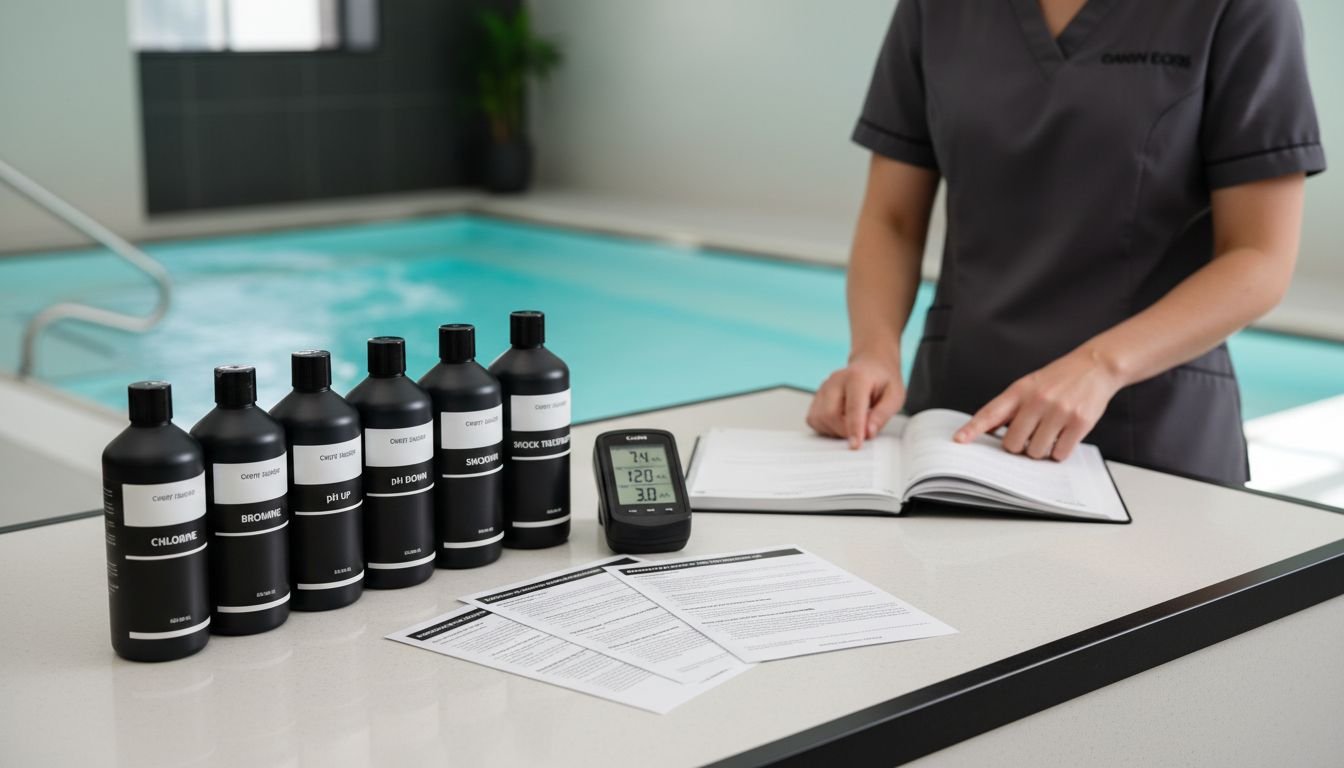
Balanced water chemistry is the cornerstone of safe and enjoyable spa experiences. Health and Safety Executive (HSE) guidelines emphasise the critical importance of regular monitoring and precise adjustment of water parameters to prevent microbial contamination and ensure optimal spa performance.
The process of maintaining water balance involves a delicate interplay of multiple chemical components. Total dissolved solids, pH levels, alkalinity, and sanitiser concentrations must be carefully managed to create a stable water environment. This requires more than occasional testing - it demands a systematic approach to water management.
Key strategies for maintaining balanced water chemistry include:
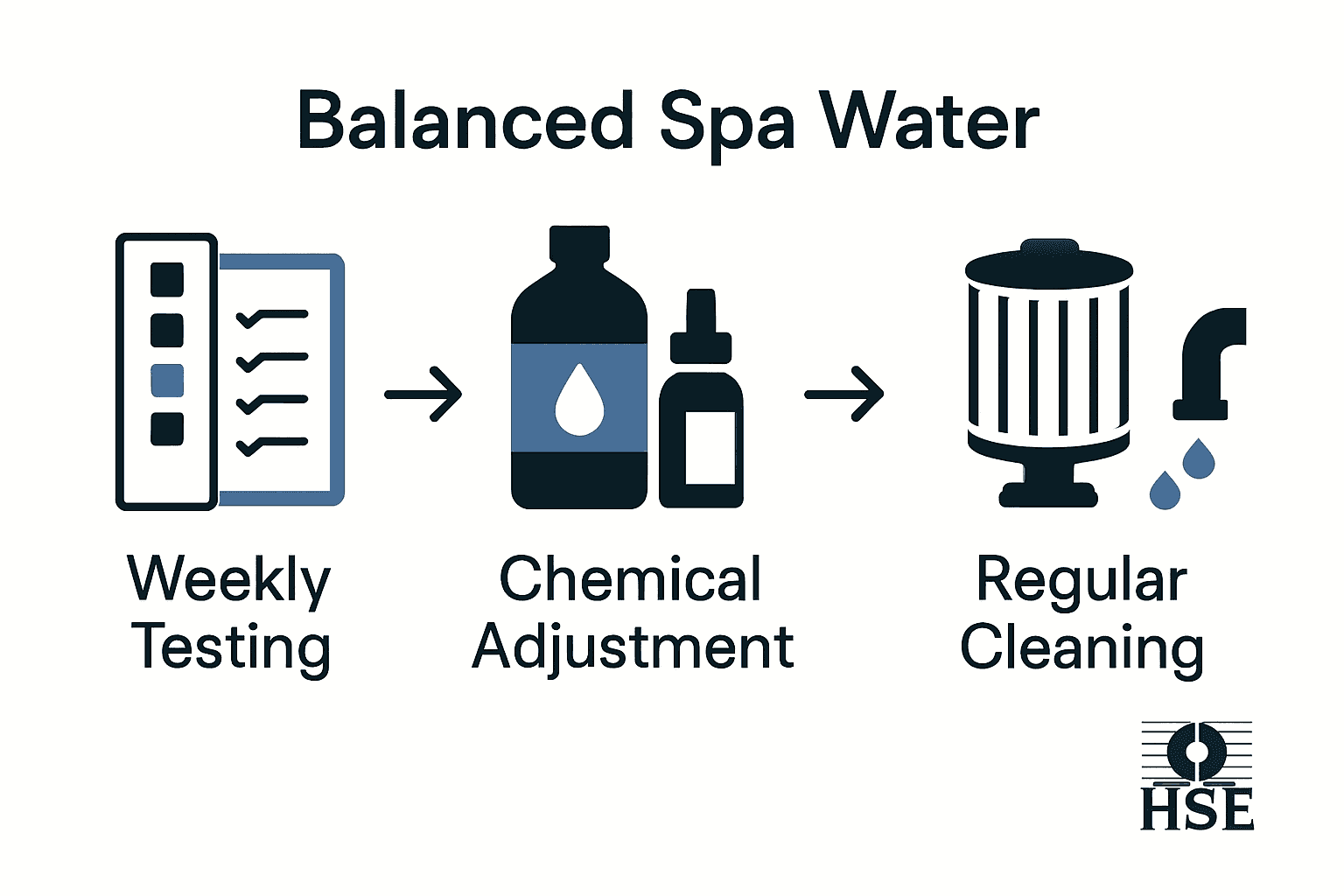
- Conduct weekly comprehensive water tests
- Use reliable testing strips or digital testing equipment
- Adjust chemical levels incrementally
- Maintain consistent sanitiser concentrations
- Monitor water hardness and total alkalinity
- Clean filters regularly
- Drain and refill spa every 3-4 months
Top tips for balancing chemical levels suggest that understanding the specific interactions between different chemicals is crucial. HSE guidelines reinforce the importance of consistent testing and maintenance to ensure water safety and prevent potential health risks. Professional spa owners understand that balanced water chemistry is not just about adding chemicals, but creating a harmonious aquatic environment that protects both equipment and users.
Health Risks and Safety Best Practices
Health and Safety Executive (HSE) research highlights the critical importance of understanding potential health risks associated with improper spa water management. Legionnaires’ disease stands out as the most significant threat, a potentially fatal respiratory condition caused by Legionella bacteria that can proliferate in poorly maintained spa environments.
The risks extend beyond Legionnaires’ disease. Inadequate water chemistry can lead to multiple health complications, including skin infections, respiratory issues, and exposure to harmful bacterial and fungal organisms. HSE guidelines emphasise the necessity of implementing comprehensive safety protocols to mitigate these potential health hazards.
Critical safety best practices for spa owners include:
- Maintain consistent water sanitisation
- Regularly test and balance chemical levels
- Clean and replace filters every 3-4 months
- Drain and deep clean the spa quarterly
- Monitor water temperature (keep below 35°C)
- Limit maximum daily usage time
- Enforce personal hygiene rules for spa users
- Prevent water stagnation
Professional spa management requires a proactive approach to health and safety. Understanding what is critical in water sanitisation involves recognising that prevention is always more effective than treating potential health issues after they emerge. By following rigorous maintenance protocols and maintaining vigilant water quality standards, spa owners can create safe, enjoyable environments that minimise health risks and maximise user experience.
Common Mistakes and How to Avoid Them
Spa water chemistry management is fraught with potential pitfalls that can compromise both user safety and equipment longevity. Health and Safety Executive (HSE) research identifies several critical mistakes that spa owners frequently make, emphasising the importance of understanding and preventing these common errors.
Chemical imbalance represents the most significant risk in spa maintenance. Many owners either under or over-dose chemicals, creating environments that are either ineffectively sanitised or potentially harmful to users. The delicate balance of pH levels, sanitiser concentrations, and total alkalinity requires precise and consistent monitoring.
The most common mistakes spa owners make include:
- Neglecting regular water testing
- Inconsistent chemical application
- Ignoring filter maintenance
- Overlooking total dissolved solids
- Using incorrect chemical quantities
- Failing to monitor water temperature
- Skipping periodic deep cleaning
- Mixing incompatible chemicals
Top tips for balancing chemical levels suggest that prevention is always more effective than correction. HSE guidelines reinforce the necessity of routine water quality assessments and proper chemical dosing. Professional spa owners understand that meticulous attention to detail and consistent maintenance are the keys to avoiding potentially costly and dangerous mistakes in water chemistry management.
Take Control of Your Spa Water for a Safer Experience
Maintaining safe spa chemistry is no easy task. The challenge of balancing pH levels, sanitiser concentrations, and preventing harmful bacteria like Legionella can feel overwhelming. If you want to protect your health while enjoying your hot tub, it is essential to stay on top of chemical dosing and regular water testing. ClearSpa understands these concerns and offers a trusted range of premium water treatment products designed specifically for the challenges highlighted in the Safe Spa Chemistry Explained: Complete UK Guide.
Make your spa water care simple and effective with our expertly formulated hot tub chemicals and spa essentials. Start your journey to pristine, balanced water today by visiting ClearSpa. Explore our comprehensive product range and equip yourself with the tools you need to maintain a safe, enjoyable spa environment now.
Frequently Asked Questions
What are the essential chemicals needed for safe spa chemistry?
Managing spa water chemistry requires disinfectants like chlorine and bromine, pH adjusters, alkalinity adjusters, shock treatments, and algaecides. Each plays a key role in maintaining a safe and hygienic spa environment.
How often should I test my spa water for chemical balance?
It is recommended to conduct comprehensive water tests weekly to ensure that chemical levels, including pH and sanitiser concentrations, are balanced and safe for users.
What are the health risks associated with improper spa water management?
Improper spa water management can lead to significant health risks, including Legionnaires’ disease, skin infections, and respiratory issues due to the proliferation of harmful bacteria and fungi in poorly maintained water.
How can I avoid common mistakes in spa water chemistry management?
To avoid common mistakes, ensure consistent regular testing, precise chemical application, maintenance of filters, and periodic deep cleaning of the spa. It’s important to follow all safety protocols and monitor water temperature closely.
Recommended
- Spa Chemicals Explained - ClearSpa™
- Understanding Spa Water Care: A Comprehensive Guide - ClearSpa™
- ClearSpa Chemicals - ClearSpa™
- Ask An Expert - SPA Pool Maintenance - ClearSpa™
Sources and further reading
- HSE, HSG282: The control of legionella and other infectious agents in spa-pool systems
- Pool Water Treatment Advisory Group (PWTAG) - UK technical guidance on pool and spa water treatment
This guide is written and maintained under the ClearSpa editorial policy. Dose rates and target ranges mirror the product labels current at the time of the last review.