Understanding the Hot Tub Water Softening Process
Hot tub water softening swaps calcium and magnesium for sodium via ion exchange, preventing the scale that damages heaters, pumps and pipes. How it works.
The hot tub water softening process replaces the calcium and magnesium ions that make water hard with sodium ions, using an ion exchange resin – preventing the scale that damages heaters, pumps and pipes, and reducing mineral content to as low as 1 grain per gallon. The trade-offs are periodic maintenance – topping up the salt reservoir and regenerating the resin bed – and increased sodium content, so the water chemistry still needs regular testing.
Table of Contents
- What Is The Hot Tub Water Softening Process?
- Why Is Water Softening Important For Hot Tubs?
- How Does The Hot Tub Water Softening Process Work?
- Key Concepts In Hot Tub Water Softening
- Practical Implications Of Soft Water In Hot Tubs
Quick Summary
| Takeaway | Explanation |
|---|---|
| Softening protects hot tub equipment | Reducing mineral buildup prevents damage to heating elements, pumps, and pipes, ensuring longevity. |
| Improves water quality for users | Soft water enhances comfort, reduces irritations, and offers clearer, more aesthetically pleasing water. |
| Regular maintenance is essential | Periodic regeneration and salt replenishment are crucial for optimal softening performance and water chemistry balance. |
| Understand water hardness measurement | Knowing hardness levels helps tailor the softening process to specific hot tub needs and conditions. |
What is the Hot Tub Water Softening Process?
The hot tub water softening process is a critical maintenance technique designed to transform hard water into a more manageable and spa-friendly solution. This sophisticated water treatment method addresses the fundamental challenges posed by mineral-rich water, ensuring your hot tub remains in optimal condition.
Understanding Water Hardness
Water hardness results from high concentrations of calcium and magnesium ions, which can create significant problems for hot tub owners. These minerals accumulate over time, forming scale deposits that can damage heating elements, clog pipes, and reduce the overall efficiency of your spa system. Water treatment experts confirm that untreated hard water can significantly shorten the lifespan of hot tub components.
The Ion Exchange Mechanism
The hot tub water softening process primarily operates through an ion exchange mechanism. This advanced technique involves passing water through a specialized resin bed containing sodium ions. As water moves through the system, calcium and magnesium ions are effectively replaced with sodium ions, dramatically reducing water hardness. Key aspects of this process include:
- Removal of problematic mineral ions that cause scaling
- Transformation of water chemistry to prevent equipment damage
- Improvement of overall water quality and spa performance
By implementing water softening, hot tub owners can protect their investment and enjoy a more pleasant spa experience. If you want to learn more about maintaining your hot tub’s water quality, read our comprehensive guide on water management.
Why is Water Softening Important for Hot Tubs?
Water softening is not merely a technical process but a crucial maintenance strategy for preserving the longevity and performance of your hot tub. Understanding its importance goes beyond simple water treatment and directly impacts the overall spa experience and equipment functionality.
Preventing Equipment Damage
Hard water contains high concentrations of calcium and magnesium minerals that can wreak havoc on hot tub components. These minerals create scale deposits that progressively damage critical systems. Heating elements, pumps, and pipes are particularly vulnerable to mineral buildup, which can lead to reduced efficiency and potentially costly repairs. Research from water treatment experts confirms that untreated hard water can significantly accelerate equipment deterioration.
Enhancing Water Quality and User Experience
Beyond mechanical preservation, water softening dramatically improves the hot tub experience. Softened water offers several compelling advantages:
- Smoother, more comfortable water texture
- Reduced skin irritation and potential mineral-related allergic reactions
- Clearer water with improved aesthetic appeal
- More effective chemical treatments and sanitisation
The mineral reduction process ensures that your hot tub water remains pristine, providing a more enjoyable and hygienic environment. If you want to explore more about maintaining optimal water conditions, check out our comprehensive water management guide.
By implementing a robust water softening strategy, hot tub owners can protect their investment, extend equipment lifespan, and ensure a consistently high-quality spa experience.
How Does the Hot Tub Water Softening Process Work?
The hot tub water softening process is a sophisticated chemical treatment that transforms hard water into a more spa-friendly solution through precise ion exchange technology. Understanding the intricate mechanisms behind this process reveals the remarkable science that protects your hot tub’s infrastructure and enhances water quality.
The Ion Exchange Resin System
At the heart of water softening lies the ion exchange resin, a specialized medium designed to capture and replace problematic mineral ions. This system contains thousands of microscopic resin beads charged with sodium ions. As hard water passes through the resin bed, calcium and magnesium ions are attracted to and trapped by these beads, while sodium ions are simultaneously released into the water. Water treatment experts confirm this mechanism effectively reduces water hardness.
Regeneration and Maintenance Cycle
The ion exchange process requires periodic regeneration to maintain its effectiveness. This critical maintenance stage involves several key steps:
- Flushing the resin bed with a concentrated salt solution
- Removing accumulated calcium and magnesium mineral deposits
- Recharging the resin beads with fresh sodium ions
- Preparing the system for continued water softening
Understanding this cycle is crucial for maintaining optimal hot tub water quality. If you want to explore more about maintaining your hot tub’s water management system, check out our comprehensive water treatment guide.
By comprehending these sophisticated chemical interactions, hot tub owners can appreciate the complex yet elegant process that transforms hard, potentially damaging water into a pristine, equipment-friendly solution.
Key Concepts in Hot Tub Water Softening
Water softening is a nuanced process that involves understanding several critical scientific and practical principles. Mastering these fundamental concepts enables hot tub owners to effectively manage water quality and protect their valuable spa investment.
Understanding Water Hardness Measurement
Water hardness is quantified by measuring the concentration of dissolved calcium and magnesium minerals. Hardness levels are typically expressed in grains per gallon (gpg) or parts per million (ppm), providing a precise scientific metric for water mineral content. These measurements help determine the appropriate water softening strategy for your specific hot tub setup.
Essential Water Softening Components
Successful water softening relies on several critical components and chemical interactions:
- Ion exchange resin beads with sodium charge
- Salt reservoir for system regeneration
- Mineral tank for water processing
- Control valve managing water flow and regeneration cycles
Each component plays a pivotal role in transforming hard water into a spa-friendly solution.
The following table breaks down the essential components involved in the hot tub water softening process, offering a clear comparison of each part and its primary function.
| Component | Description | Function |
|---|---|---|
| Ion exchange resin beads | Small beads charged with sodium ions | Replace calcium and magnesium with sodium ions |
| Salt reservoir | Holds the salt used for regeneration | Supplies salt solution to recharge resin beads |
| Mineral tank | Contains the resin for water processing | Water passes through for softening |
| Control valve | Regulates water flow and regeneration cycles | Automates switching between service and cleaning |
| For comprehensive insights into maintaining optimal water conditions, explore our detailed spa water care guide. |
Practical Considerations and Limitations
Water treatment experts emphasise that while water softening is crucial, it is not a universal solution. Hot tub owners must understand potential trade-offs, such as increased sodium content and the need for periodic system maintenance. Proper water chemistry management remains essential for ensuring long-term hot tub performance and user comfort.
Practical Implications of Soft Water in Hot Tubs
Soft water fundamentally transforms the hot tub experience, offering numerous practical benefits that extend far beyond simple mineral reduction. Understanding these implications helps hot tub owners make informed decisions about water treatment and maintenance strategies.
Equipment Performance and Longevity
Soft water dramatically reduces scale buildup in critical hot tub components, directly impacting equipment performance and operational efficiency. By minimising mineral deposits, soft water prevents premature wear on heating elements, pumps, and internal plumbing. This reduction in mineral accumulation translates to fewer maintenance requirements, extended equipment lifespan, and potentially significant long-term cost savings for hot tub owners.
This table summarises the key differences in user experience and hot tub performance when comparing hard water to softened water, to support your understanding of the practical benefits.
| Aspect | Hard Water | Softened Water |
|---|---|---|
| Scale build-up | High likelihood, affects equipment | Significantly reduced |
| Water clarity | May appear cloudy over time | Typically much clearer |
| Skin sensation | Can cause irritation, feels less smooth | Smoother, gentler on skin |
| Maintenance required | Frequent descaling and cleaning needed | Maintenance less frequent, simpler |
| Equipment longevity | Shortened due to mineral deposits | Extended due to reduced scaling |
| Effectiveness of chemicals | Hampered by mineral interference | Improved, requires less product |
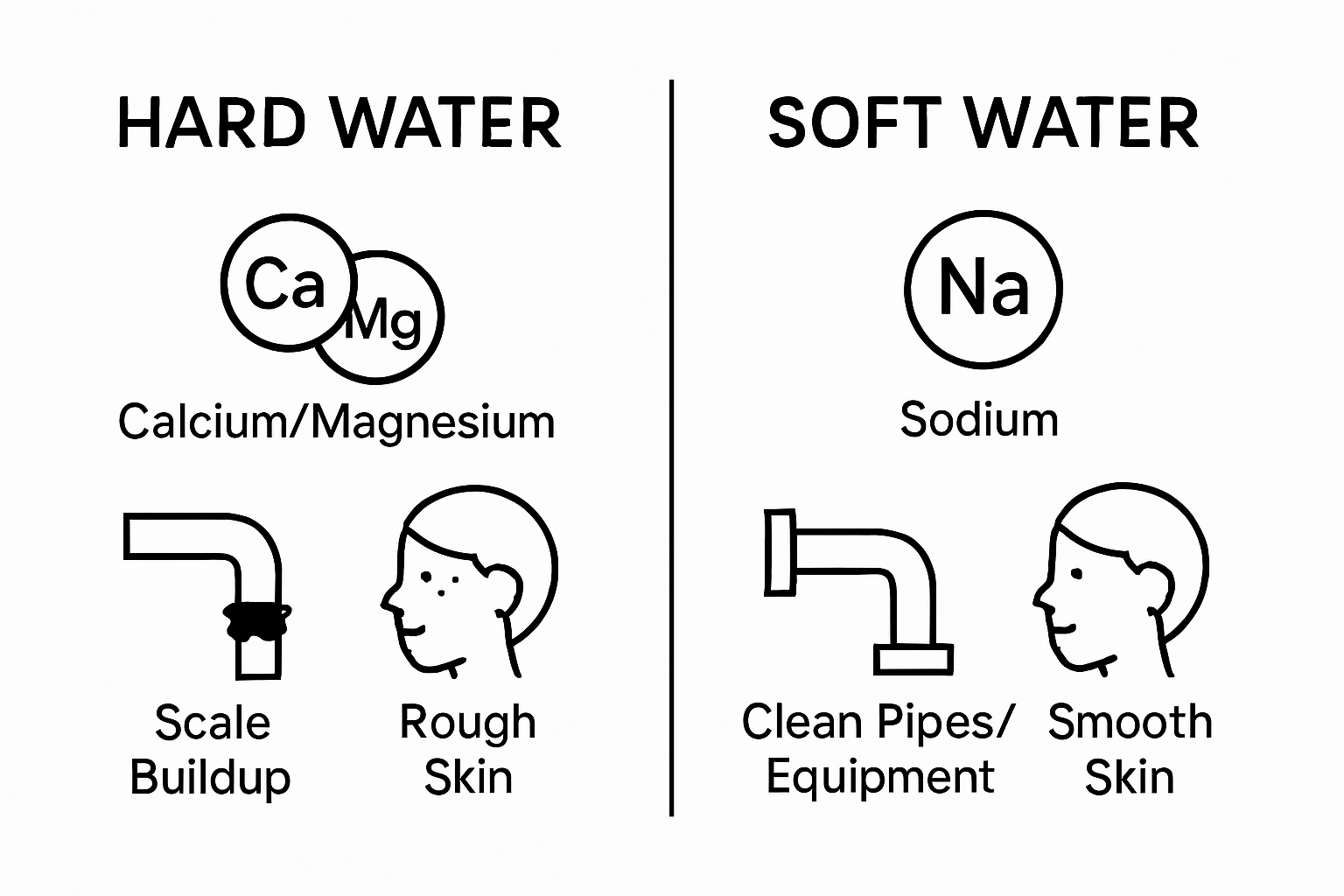
Water Quality and User Experience
The transition to soft water introduces several noticeable improvements in hot tub usability and comfort:
- Smoother, silkier water texture
- Reduced soap and chemical consumption
- Enhanced skin and hair feel after bathing
- Clearer water with improved aesthetic appeal
- Minimised potential for mineral-related skin irritations
Maintenance and Cost Considerations
Water treatment experts emphasise that while soft water offers substantial benefits, hot tub owners must carefully manage the water softening process. Periodic system maintenance remains crucial, including regular salt reservoir replenishment and periodic resin bed regeneration. Owners should also monitor sodium levels and understand potential trade-offs in water chemistry to ensure optimal hot tub performance and user comfort.
Take Control of Your Hot Tub Water Quality Today
Frustrated by unsightly scale, lacklustre water clarity, or the constant battle to maintain perfect water chemistry in your hot tub? Learning about the water softening process is just the beginning. Hard water, with its persistent calcium and magnesium, poses a real threat to your hot tub’s performance and your comfort. The pain points of scale buildup and demanding maintenance routines are not just inconvenient - they can also lead to costly damage and reduce the lifespan of your beloved spa.

Experience the benefits of professional water management with ClearSpa’s trusted water treatment range. See what a difference science-backed solutions can make to your daily relaxation and your hot tub’s long-term health. Visit clearspa.com now and start protecting your investment before hard water problems get worse. Make a real change today and enjoy your hot tub exactly as it should be - crystal clear, gentle and hassle-free.
Frequently Asked Questions
What is the hot tub water softening process?
The hot tub water softening process involves treating hard water to replace calcium and magnesium ions with sodium ions, improving water quality and protecting equipment from scale buildup.
Why is water softening important for hot tubs?
Water softening is crucial for preventing equipment damage caused by mineral deposits, enhancing water quality, and providing a more comfortable bathing experience with smoother, less irritating water.
How does the ion exchange resin system work in water softening?
The ion exchange resin system uses microscopic resin beads charged with sodium ions to attract and capture calcium and magnesium ions. As hard water passes through the resin, these problematic minerals are replaced, resulting in softened water.
What maintenance is required for the hot tub water softening system?
Maintenance for the water softening system includes periodic regeneration of the ion exchange resin, which involves flushing it with a salt solution to remove accumulated minerals and recharge the resin beads with sodium ions.