What Is a Pool Skimmer and Why It Matters
What is a pool skimmer? Learn about types, how it works, benefits for hot tub water quality, and common mistakes to avoid for UK homes.
A pool skimmer is the intake that draws water off the surface, catching leaves, insects and oils in a basket or sock before they sink or reach the filter. It’s the first line of defence for clear water: a well-chosen, regularly emptied skimmer keeps debris out of circulation and takes real load off your filtration system.
Finding reliable ways to keep your hot tub water clear can feel challenging, especially with leaves and debris from British gardens constantly settling on the surface. Clean, balanced water matters not just for appearance but for your family’s health and the longevity of your equipment. This guide dispels common myths about pool skimmers and outlines how the right skimmer selection and maintenance keep your water sparkling all year in the UK.
Table of Contents
- Pool Skimmers Defined And Common Myths
- Types Of Pool Skimmer For UK Hot Tubs
- How Pool Skimmers Improve Water Quality
- Essential Maintenance And Troubleshooting Tips
- Mistakes To Avoid With Pool Skimmers
Key Takeaways
| Point | Details |
|---|---|
| Importance of Skimmers | Skimmers are essential for maintaining water quality by removing surface debris, which helps prevent algae growth and keeps pool chemistry stable. |
| Regular Maintenance | Routine checks and cleaning of the skimmer basket are crucial to ensure efficient operation and prevent issues such as weak suction and cloudy water. |
| Types of Skimmers | Choosing between manual and automatic skimmers depends on your pool size and debris levels; automatic skimmers offer convenience, while manual skimmers provide control and lower costs. |
| Common Mistakes | Neglecting skimmer maintenance, ignoring visible damage, and failing to adjust for seasonal debris can lead to costly repairs and reduced water clarity. |
Pool Skimmers Defined and Common Myths
A pool skimmer is the hardworking surface collector of your hot tub or pool. It removes floating debris, leaves, insects, and contaminants before they sink and cause problems. Think of it as your water’s first line of defence against unwanted materials.
Skimmers attach to the side of your pool and pull water across the surface through an intake port. This action creates a gentle current that guides leaves and debris towards the skimmer basket. The basket then catches these materials before they can break down and damage your water chemistry.
Why Skimmers Matter for Water Quality
Surface contaminants act as the first line of defence by trapping debris before it sinks. When leaves and insects remain in your water, they decompose and create organic matter that encourages algae growth and clouds your clarity.
Without regular skimming, your water chemistry becomes harder to balance. Decaying materials consume chlorine and disrupt pH levels, forcing you to add more chemicals than necessary. A functioning skimmer prevents this waste and keeps your water cleaner longer.
Key benefits of proper skimming:
- Removes leaves, insects, and surface debris within hours, not days
- Reduces strain on your filtration system by catching large particles first
- Prevents algae blooms triggered by decomposing organic matter
- Saves money on chemicals by keeping water chemistry stable
- Extends the life of your pump and filter
Common Myths About Pool Skimmers
Myth 1: “Skimmers only catch visible leaves.” False. They trap pollen, dust, insects, body care products, and sunscreen residue that you cannot see. These invisible contaminants are often more damaging than leaves because they dissolve into your water.
Myth 2: “You only need to use your skimmer in autumn.” Wrong. Skimmers work year-round, even indoors. Dust settles on water constantly, and people add contaminants daily through sweat and products. Regular skimming in every season keeps water crystal clear.
Myth 3: “A skimmer replaces your filter system.” Not quite. Skimmers catch surface debris while filters remove microscopic particles. You need both working together for optimal water quality. Each handles different sized contaminants.
Myth 4: “Emptying the skimmer basket weekly is excessive.” Actually, checking it twice weekly is standard practice. A full basket reduces suction and forces your pump to work harder, wasting energy and shortening equipment life.
Regular skimming prevents the buildup of organic matter that clouds water and requires expensive chemical corrections later.
Pro tip: Empty your skimmer basket before it reaches full capacity - aim for twice weekly during peak use and once weekly during quieter periods to maintain maximum efficiency and water clarity.
Types of Pool Skimmer for UK Hot Tubs
Not all skimmers work the same way. UK hot tub owners have several options depending on pool size, debris levels, and maintenance preferences. Choosing the right type saves time and keeps your water clearer.
The main division comes down to how much effort you want to invest. Manual skimmers require hands-on work but cost less. Automatic skimmers connect to your pump system and work continuously without effort.
Manual Skimmers
Skimmer nets are the simplest choice for hot tub owners. These consist of a fine mesh net attached to a telescopic pole, allowing you to reach across your water and scoop up surface debris by hand.
They work brilliantly for small to medium hot tubs and indoor spas. You control exactly what gets removed and can clean your tub in minutes. The downside is that you must do this regularly - ideally daily during peak use.
Key advantages:
- Low cost (typically £15-40)
- No installation required
- Complete control over debris removal
- Perfect for hot tubs with consistent use
- Easy to store and maintain
Automatic and Canister Skimmers
Canister-type skimmers connect directly to your pool pump and work continuously throughout the day. Water flows through a basket that catches debris whilst the pump circulates your water. This automated approach requires less daily effort from you.
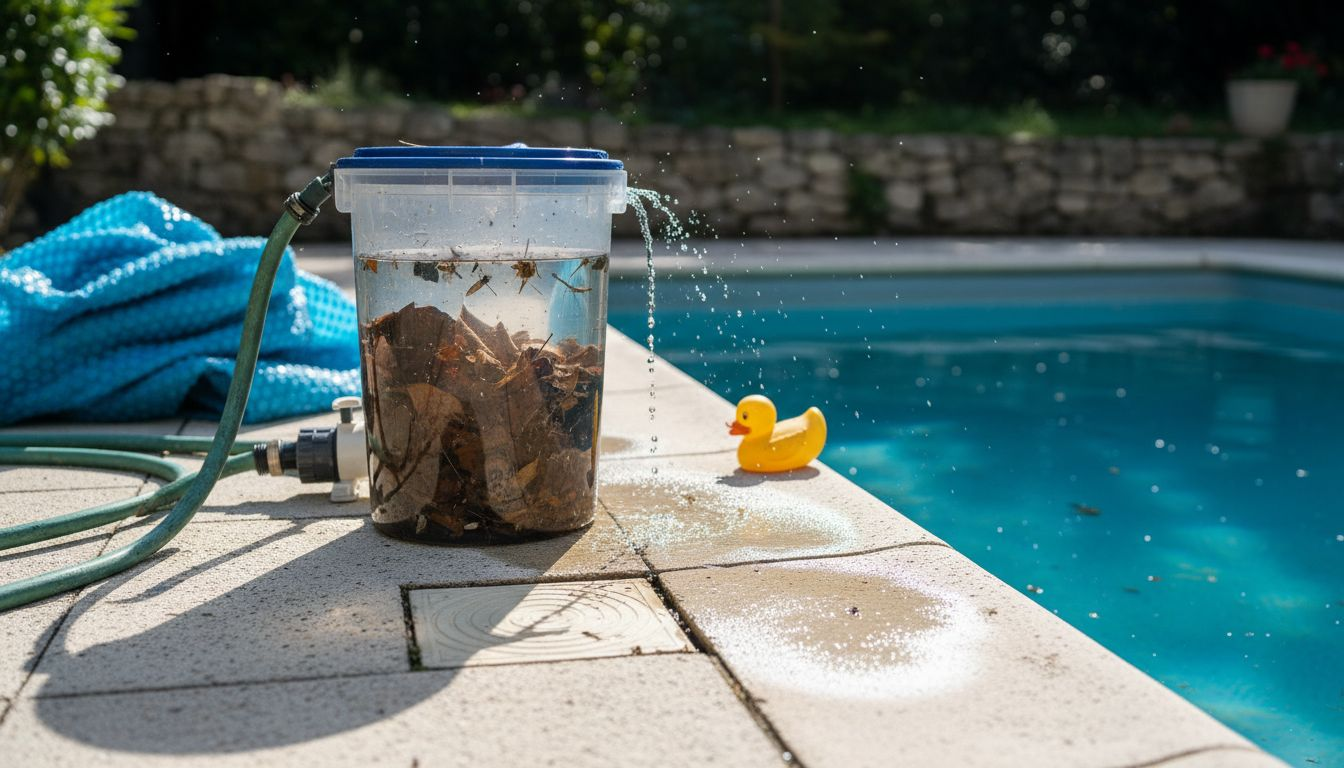
Canister skimmers suit larger pools and situations where debris accumulates heavily. British gardens produce constant leaf fall and pollen, making automatic skimming invaluable during autumn and spring. Once installed, they work in the background without intervention.
What makes them effective:
- Runs automatically whilst your pump operates
- Catches debris before it sinks and decomposes
- Reduces strain on main filters by pre-filtering large particles
- Ideal for high-debris environments like gardens
- Saves time compared to daily manual skimming
Choosing Your Skimmer Type
For small hot tubs: A manual skimmer net handles daily debris collection perfectly.
For larger pools with heavy debris: A canister skimmer attached to your pump system provides continuous protection.
For mixed usage: Combine both - use a net for quick daily clean-ups and let a canister system handle the deeper work.
Here is a comparison of manual versus automatic (canister) skimmers to help you choose the best fit for your pool or hot tub:
| Skimmer Type | User Effort Required | Ideal Pool Size | Typical Upfront Investment |
|---|---|---|---|
| Manual Skimmer Net | Frequent hand skimming | Small to medium, indoor | £15-£40 |
| Automatic Canister | Minimal once installed | Medium to large, outdoor | £80-£250+ |
Automatic skimmers prevent organic buildup that forces you to spend more on chemicals later, making them cost-effective despite higher upfront investment.
Pro tip: Select a skimmer net with a lightweight aluminium telescopic pole if you prefer manual skimming - this reduces arm fatigue during regular use and lasts for years without corrosion.
How Pool Skimmers Improve Water Quality
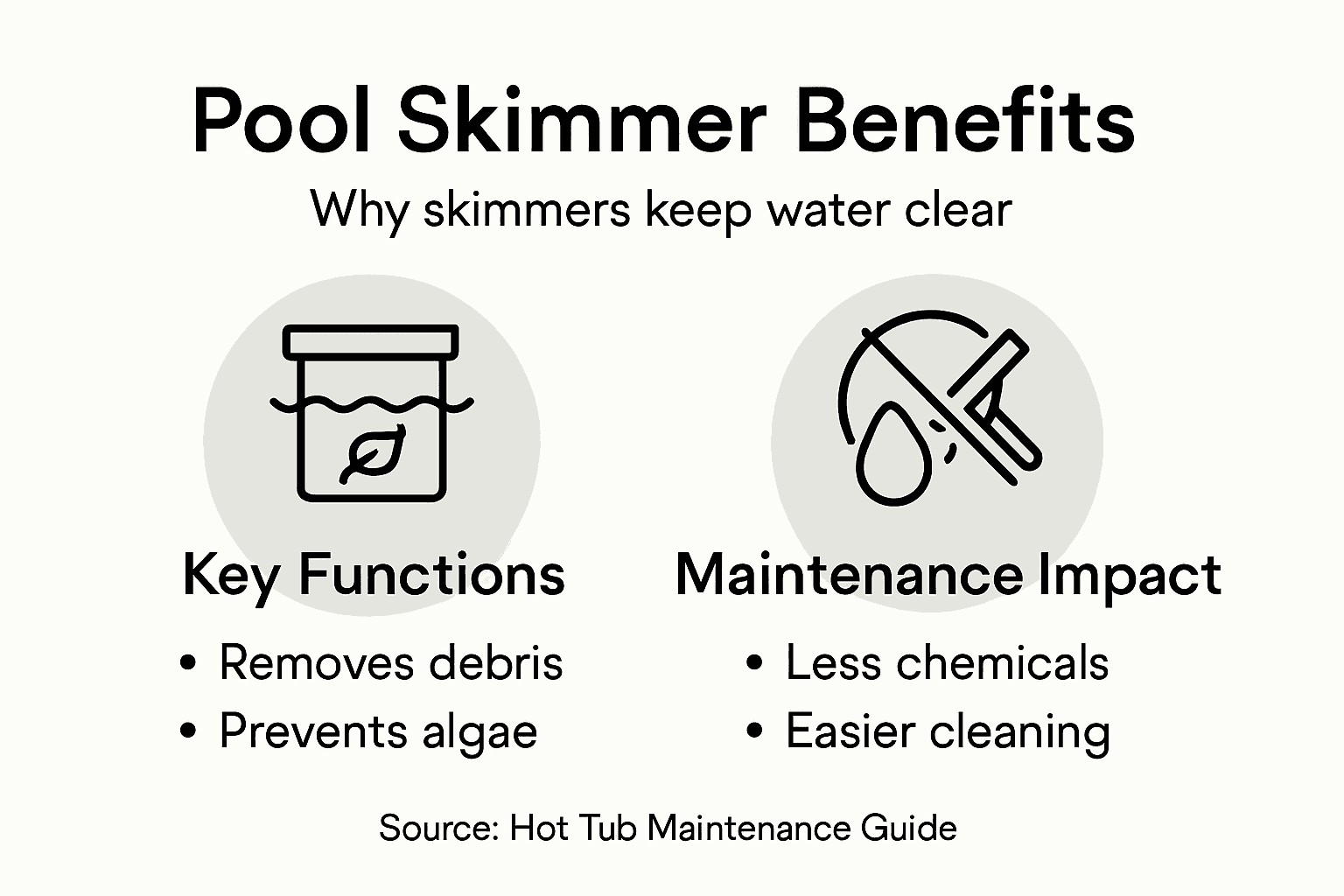
A working skimmer transforms your water quality by stopping problems before they start. Rather than letting debris sink and cause chaos below the surface, skimmers catch contaminants at the source - the water’s surface.
This simple action has dramatic effects on your entire maintenance routine. Less debris means fewer chemical imbalances, clearer water, and lower long-term costs. Think of your skimmer as prevention medicine for your hot tub.
Stopping Algae Growth Before It Starts
Organic debris sinks and decomposes, creating conditions that encourage algae. Leaves, pollen, dead insects, and body oils break down into nutrient-rich sludge. Algae feeds on these nutrients and spreads rapidly through warm water.
When your skimmer removes this debris within hours, you prevent the decomposition cycle entirely. No decaying matter means no algae food source. Your water stays clear and your chemical treatments work more efficiently.
Reducing Strain on Your Main Filter
Your filtration system handles microscopic particles that skimmers miss. But when large debris reaches your filter, it clogs the media and forces your pump to work harder. This wastes energy and shortens filter life.
Skimmers act as a pre-filtration stage by catching leaves, insects, and visible particles first. Your main filter then deals only with fine particles it was designed to handle. The result is faster water circulation, better filtration, and equipment that lasts longer.
How this saves you money:
- Filter media stays cleaner, requiring fewer backwashes
- Pump runs more efficiently, reducing electricity bills
- Filter cartridges last longer before replacement
- Fewer blockages mean less maintenance headache
- System operates at peak performance year-round
Maintaining Chemical Balance
Decaying organic matter consumes chlorine rapidly. When you have constant debris decomposition, you need more chemicals to maintain proper sanitisation levels. This becomes expensive and difficult to manage.
With regular skimming, organic buildup stays minimal. Your chlorine and other treatments last longer and work more effectively. You maintain stable pH and alkalinity more easily because contaminants aren’t constantly disrupting your chemistry.
Crystal Clear Water Throughout the Year
Proper skimmer installation optimises efficiency and water clarity. Surface debris creates a hazy appearance even when water chemistry is perfect. Removing this visible material immediately improves clarity and appeal.
UK hot tub owners benefit particularly during autumn and spring when garden debris falls constantly. A functioning skimmer handles this seasonal challenge, keeping your water inviting regardless of what’s happening outside.
Skimmers prevent organic buildup before it becomes a chemical problem, making water treatment easier and more cost-effective overall.
Pro tip: Check your skimmer basket every two days during seasons with heavy debris - full baskets reduce suction and force your pump to overwork, wasting energy and reducing skimming effectiveness.
Essential Maintenance and Troubleshooting Tips
Your skimmer requires regular attention to function properly. Simple maintenance tasks take minutes but prevent expensive repairs and keep your water quality high. Neglecting these tasks leads to reduced effectiveness and eventual breakdowns.
Most problems start small and become serious when ignored. Catching issues early saves time and money. Here’s what you need to do.
Weekly Maintenance Tasks
Clean the skimmer basket at least twice weekly during peak use. Empty accumulated debris, leaves, and fine particles that reduce suction. A clogged basket forces your pump to work harder and reduces water circulation.
Rinse the basket with clean water to remove algae or biofilm buildup. Inspect it for cracks or damage whilst cleaning. Replace damaged baskets immediately to maintain proper filtration.
Check water level regularly. Your skimmer weir (the floating door inside) needs proper water contact to function. If water drops too low, the weir cannot move freely and debris escapes collection.
Monthly Inspection Checklist
Inspect the skimmer weir and door for cracks or warping to maintain efficient operation. These moving parts wear over time and can become brittle. A damaged weir allows debris to bypass the basket.
Check all visible connections and fittings for leaks. Look for water spraying or dripping around the skimmer housing. Loose fittings develop slowly but cause significant water loss over weeks.
Monthly maintenance points:
- Examine basket for cracks, holes, or missing sections
- Test weir movement - it should move freely and seal against the housing
- Verify pump suction by placing your hand near the intake
- Clean skimmer walls and housing interior with a brush
- Check for debris buildup around the intake port
Common Problems and Solutions
Problem: Weak suction or poor debris collection. Check if the basket is full or clogged. Empty it completely and rinse thoroughly. If suction remains weak, inspect the pump intake line for blockages. Trapped leaves in the line prevent water flow.
Problem: Water leaking from the skimmer. Tighten all visible fittings with a wrench. If leaking continues, the housing may be cracked and require replacement. Do not ignore leaks - they waste water and reduce system efficiency.
Problem: Skimmer basket won’t stay in place. Check that the basket tab aligns correctly with the housing slot. Over time, baskets warp slightly and may need repositioning. If it still won’t seat properly, the basket is damaged and needs replacing.
Use this quick reference for resolving common pool skimmer problems:
| Issue | Likely Cause | Immediate Solution |
|---|---|---|
| Weak suction | Blocked basket or intake | Empty and clean basket, check pump line |
| Persistent leaking | Loose fittings or cracks | Tighten connections, replace housing if cracked |
| Basket not staying in place | Warped or damaged basket | Check alignment, replace if necessary |
Regular inspection and basket cleaning prevent most skimmer problems from developing into costly repairs.
Pro tip: Keep a spare skimmer basket on hand - when yours needs cleaning, swap in the replacement so your system keeps running, then clean the dirty basket at your convenience without downtime.
Mistakes to Avoid with Pool Skimmers
Skimmer problems rarely develop overnight. Most issues stem from overlooked maintenance or ignoring small warning signs. These mistakes cost money, damage your equipment, and degrade water quality.
Understanding what goes wrong helps you avoid expensive repairs. Here are the pitfalls that catch most UK hot tub owners off guard.
Neglecting the Skimmer Basket
Failing to empty your basket regularly is the most common mistake. When full, the basket reduces suction and forces your pump to overwork. This wastes electricity and puts stress on filter media.
A full basket also allows debris to bypass collection, sinking to the bottom. Once sunken, debris decomposes and clouds your water. Daily checks take two minutes but prevent hours of chemical balancing.
Basket neglect consequences:
- Reduced water circulation and poor debris capture
- Increased strain on pump motor, shortening its lifespan
- Clogged main filter requiring frequent cleaning
- Higher energy bills from pump overworking
- Cloudy water from decomposing organic matter
Ignoring Visible Damage
Overlooking damage or cracks in the skimmer housing leads to water loss and reduced efficiency. Small cracks expand over time and eventually require housing replacement. What costs £30 to fix today becomes a £300 problem next month.
Check your basket for cracks weekly. Inspect the housing for visible damage during monthly maintenance. A cracked weir (the floating door) allows debris to escape and wastes suction power.
Delaying Repairs
Damaged components don’t repair themselves. A leaking connection, loose fitting, or cracked basket worsens gradually. Homeowners often hope issues will resolve on their own, but they never do.
Water leaks waste resources and reduce system efficiency. A slow leak can waste thousands of litres annually. Fix problems immediately when you notice them.
Common issues that worsen without repair:
- Loose pump connections causing spraying water
- Cracks in the basket allowing debris escape
- Worn weir seals reducing suction effectiveness
- Blocked intake ports restricting water flow
- Cracked housing causing internal leakage
Missing Seasonal Adjustments
Autumn brings leaf fall that overwhelms unprepared skimmers. Spring pollen creates constant surface debris. Many owners skip regular basket emptying during peak seasons, making problems worse.
Common pool maintenance mistakes compound during high-debris seasons. Plan to check your basket daily from September through November. Adjust your routine based on debris levels in your garden.
Improper Water Level Management
Your skimmer needs proper water level to function. Too low and the weir cannot seal. Too high and surface debris skips collection. Maintaining the correct level - usually marked on your skimmer housing - keeps everything working optimally.
Preventing skimmer problems costs a fraction of replacing damaged equipment or treating cloudy water chemically.
Pro tip: Create a phone reminder to check your skimmer basket twice weekly and inspect for damage monthly - automate these habits so you never forget them, preventing 90% of common skimmer problems.
Keep Your Hot Tub Crystal Clear with ClearSpa
The article highlights how crucial a properly functioning pool skimmer is for preventing debris and organic buildup that can wreak havoc on water quality and chemical balance. If you want to effortlessly maintain clean, clear water and avoid the costly cycle of chemical overuse and equipment strain, targeting surface contaminants is essential. With the right tools and chemicals designed specifically for your hot tub, you can protect your water’s clarity and extend your equipment’s lifespan.

Explore ClearSpa’s extensive selection of premium hot tub chemicals and maintenance essentials at ClearSpa to complement your pool skimmer efforts. Our products are meticulously tested to work in harmony with your filtration and skimming systems. Act now to safeguard your investment and enjoy sparkling water every season. Visit ClearSpa Chemicals and discover how easy maintaining your hot tub can be with the right support.
Frequently Asked Questions
What is a pool skimmer and how does it work?
A pool skimmer is a device that collects floating debris from the surface of your pool or hot tub. It attaches to the side and pulls water through an intake port, creating a current that guides debris into a skimmer basket.
Why are skimmers important for water quality?
Skimmers are crucial for maintaining water quality as they remove organic debris before it can sink and decompose. This helps prevent algae growth, keeps the water clearer, and reduces the need for additional chemicals for water treatment.
How often should I empty my skimmer basket?
It is recommended to check and empty your skimmer basket at least twice a week, especially during high usage periods. A full basket can reduce suction, strain your pump, and allow debris to escape collection.
What are the differences between manual and automatic skimmers?
Manual skimmers require hands-on operation to remove debris with a net, making them low-cost but labour-intensive. Automatic skimmers connect to your pump system and operate continuously, reducing effort but involving a higher initial investment.