Understanding Chlorine Tablets for Spas: What They Are
Discover what is chlorine tablets for spas, their importance, how they work, and key concepts for effective spa maintenance.
Chlorine tablets for spas are slow-dissolving discs of stabilised chlorine that sit in a floating dispenser or feeder and steadily sanitise your water. Dosed to the product label and checked with regular testing, they keep free chlorine in the safe 3-5 ppm band without daily granule dosing — always test rather than relying on tablet count alone. This guide explains what they are, how they work and the water-quality risks they protect you from — if you want dosing steps instead, see our how to add chlorine to a hot tub guide.
Chlorine tablets might seem like a small, ordinary addition to your spa routine. Yet these compact discs are vital for water hygiene and keep users safe from harmful bacteria. Even a single tablet can deliver consistent sanitisation for up to a week, allowing spa owners to relax without constant worry. People think the smell of chlorine means danger or irritation. In reality, proper use is not just safe but the very thing that protects you from serious health risks you cannot see.
Table of Contents
- What Are Chlorine Tablets And Their Purpose?
- The Importance Of Chlorine Tablets In Spa Water Care
- How Chlorine Tablets Maintain Spa Water Quality
- Key Concepts Behind Chlorine Tablets And Their Use
- Common Misconceptions About Chlorine In Spas
Quick Summary
| Takeaway | Explanation |
|---|---|
| Chlorine tablets efficiently sanitise spa water | These tablets release active chlorine, eliminating harmful microorganisms and preventing bacterial growth in spa environments. |
| Maintain optimal chlorine levels for safety | Appropriate chlorine levels are crucial in preventing health risks like Legionella and E. coli in warm water settings. |
| Chlorine tablets contribute to water clarity | Besides disinfecting, they stabilise water chemistry and prevent organic buildup, ensuring clear and safe spa water. |
| Understand chemical interactions to enhance effectiveness | Knowledge of water chemistry, including pH and temperature, influences the performance of chlorine tablets significantly. |
| Debunk common myths about chlorine use | Many misunderstandings exist about chlorine’s safety; properly managed levels are essential for effective sanitisation and health protection. |
What Are Chlorine Tablets and Their Purpose?
Chlorine tablets represent a crucial water treatment solution specifically designed for maintaining spa and hot tub water quality. These compact, concentrated chemical discs are engineered to sanitise water effectively, eliminating harmful microorganisms and preventing bacterial growth. Learn more about water sanitization techniques to understand their critical role in water maintenance.
The Science Behind Chlorine Tablets
Chlorine tablets work through a precise chemical mechanism that releases controlled amounts of chlorine when dissolved in water. When placed in spa water, these tablets gradually break down, releasing active chlorine compounds that neutralise contaminants. The primary active ingredient, typically sodium dichloroisocyanuric acid, ensures a consistent and stable chlorine release that maintains water hygiene standards.
The dissolution process is carefully calibrated to provide sustained protection. Key characteristics include:
- Consistent chlorine concentration
- Controlled release mechanism
- Predictable water treatment performance
Practical Applications in Spa Maintenance
In spa environments, chlorine tablets serve multiple critical functions. According to the UK Health Security Agency, chlorine is fundamental in water disinfection. These tablets effectively combat potential health risks by:
- Eliminating harmful bacteria
- Preventing algae growth
- Neutralising organic contaminants
- Maintaining water clarity
Users benefit from a simple, efficient water treatment method that requires minimal intervention while ensuring optimal spa water quality and safety.
The Importance of Chlorine Tablets in Spa Water Care
Chlorine tablets play a pivotal role in maintaining optimal spa water hygiene, representing a sophisticated approach to water treatment that goes beyond simple cleaning. These specialised chemical compounds provide comprehensive protection against microbial contamination, ensuring safe and enjoyable spa experiences. Explore our range of chlorine mini tablets to understand their specific application in water management.
Health and Safety Protection
The fundamental purpose of chlorine tablets extends far beyond surface-level cleaning. According to the East Renfrewshire Council, maintaining appropriate chlorine levels is crucial for preventing serious health risks. Specifically, chlorine tablets combat dangerous microorganisms that can thrive in warm water environments, including:
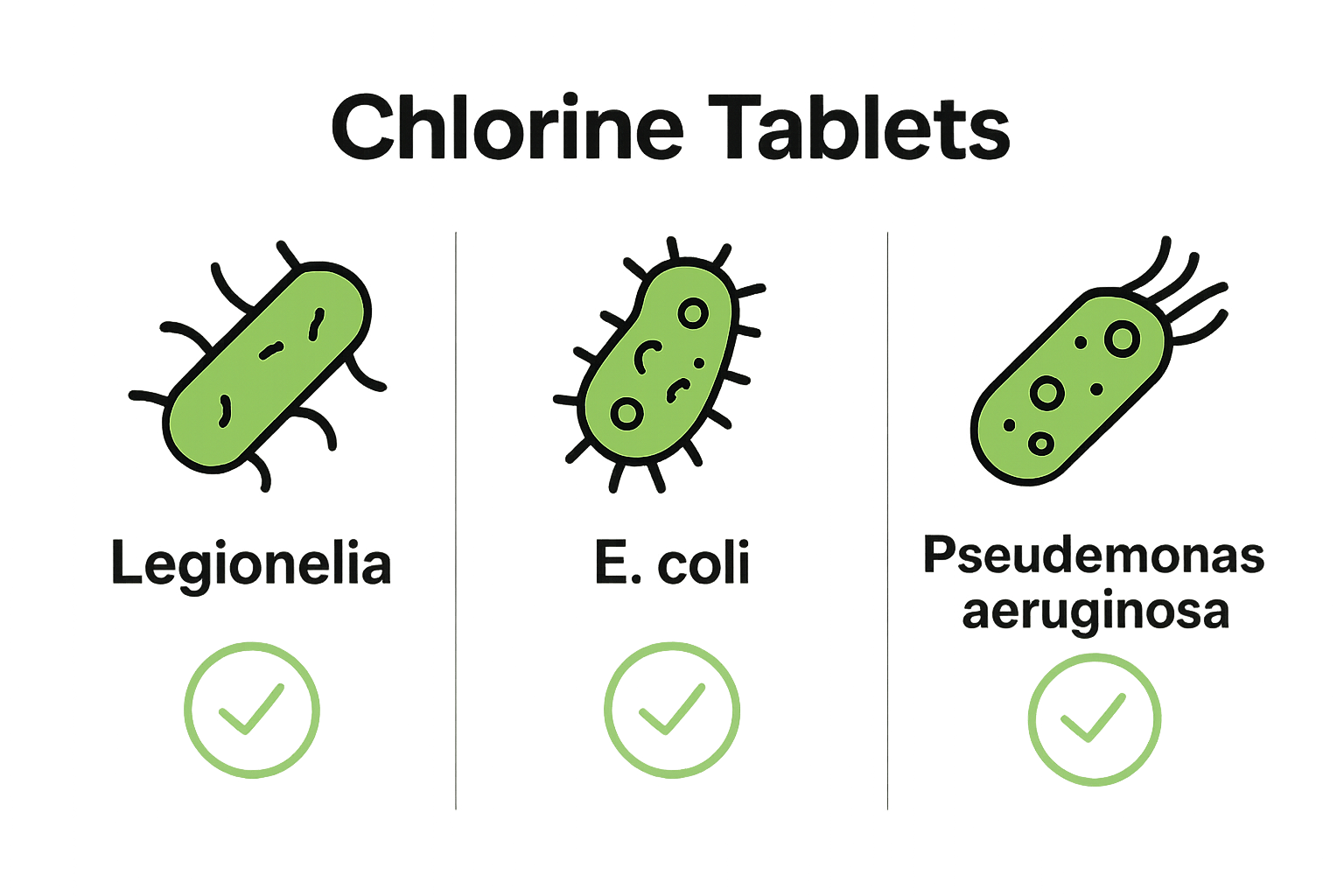
- Legionella bacteria
- E. coli
- Pseudomonas aeruginosa
- Various fungal organisms
Water Quality Maintenance
Beyond pathogen elimination, chlorine tablets contribute significantly to overall water quality. They stabilise water chemistry, prevent organic material buildup, and maintain crystal-clear water appearance. The controlled chlorine release mechanism ensures consistent sanitisation, reducing the likelihood of waterborne illnesses and maintaining a hygienic spa environment.
The chemical interaction between chlorine and water contaminants creates a robust defence mechanism. By oxidising organic matter and neutralising potential infection sources, these tablets provide a comprehensive water treatment solution that protects both human health and equipment integrity.
How Chlorine Tablets Maintain Spa Water Quality
Chlorine tablets operate through a sophisticated chemical mechanism that ensures comprehensive spa water maintenance. By releasing controlled chlorine compounds, these tablets create a robust defence system against multiple water quality challenges. Learn more about chlorine dioxide treatments to understand advanced water sanitisation techniques.
Chemical Disinfection Process
The water treatment process initiated by chlorine tablets involves complex oxidation and neutralisation reactions. According to the Drinking Water Inspectorate, chlorine forms hypochlorous acid and hypochlorite ions upon dissolution, which actively destroy harmful microorganisms. These chemical compounds target and eliminate potential contaminants through several critical mechanisms:
- Disrupting cellular membranes of microorganisms
- Interfering with protein structures
- Preventing bacterial reproduction
- Neutralising organic matter
Continuous Water Protection
Chlorine tablets provide sustained water quality management by establishing a consistent sanitisation environment. The gradual dissolution mechanism ensures a steady release of active chlorine, which maintains an optimal protective barrier against microbial growth. This continuous protection helps prevent:
-
Bacterial proliferation
-
Algae development
-
Biofilm formation
-
Unpleasant odours and discolouration
By maintaining precise chemical balance and implementing a proactive sanitisation strategy, chlorine tablets effectively preserve spa water clarity, safety, and overall hygienic standards.
Key Concepts Behind Chlorine Tablets and Their Use
Chlorine tablets represent a sophisticated water treatment technology designed to address complex spa water management challenges. These compact chemical solutions encapsulate multiple scientific principles to deliver precise and effective water sanitisation. Explore advanced chlorine dioxide solutions to understand the broader spectrum of water treatment technologies.
Chemical Composition and Mechanism
The fundamental effectiveness of chlorine tablets stems from their intricate chemical composition. According to the Pool Water Treatment Advisory Group, these tablets typically contain sodium dichloroisocyanuric acid, a compound engineered to provide controlled chlorine release. The chemical structure ensures predictable and consistent water treatment through several key characteristics:
- Slow and uniform dissolution rate
- Stable chlorine compound formation
- Balanced pH interaction
- Minimised chlorine degradation
Performance and Efficacy Parameters
Chlorine tablets operate within a complex framework of water chemistry principles. Their effectiveness depends on multiple interrelated factors that determine optimal performance. Critical parameters influencing chlorine tablet efficacy include:
- Water temperature
- pH levels
- Total dissolved solids
- Organic matter concentration
- Frequency of tablet replacement
Professional spa maintenance requires understanding these nuanced interactions to ensure consistent water quality and user safety. By comprehending the scientific principles underlying chlorine tablet functionality, spa owners can implement more strategic and effective water treatment protocols.
Common Misconceptions About Chlorine in Spas
Chlorine treatment in spas is surrounded by numerous misunderstandings that can compromise water safety and user experience. Understanding the scientific reality behind these myths is crucial for proper spa maintenance.
Below is a table summarising some of the most persistent myths about chlorine in spas compared to the scientific reality, as discussed in the article.
| Myth about Chlorine Use | Scientific Reality |
|---|---|
| Chlorine is always harmful to human health | Properly managed chlorine levels are safe and essential for health. |
| Any chlorine smell indicates danger | Smell does not always reflect dangerous or excessive chlorine. |
| Natural alternatives fully replace chlorine | Chlorine is still necessary for effective sanitisation. |
| Causes significant skin/eye irritation | Correct dosing minimises irritation for most users. |
Safety and Health Myths
According to the NHS Employers guidance, many misconceptions exist about chlorine’s health implications. Contrary to popular belief, professionally managed chlorine levels are safe and essential for preventing waterborne diseases. Key misconceptions include:
- Chlorine is always harmful to human health
- Any chlorine smell indicates dangerous chemical levels
- Natural alternatives completely eliminate the need for chlorine
- Chlorine causes significant skin and eye irritation
Chemical Interaction Misunderstandings
Spa owners often misinterpret chlorine’s chemical properties, leading to potentially dangerous practices. Critical misunderstandings involve chemical interactions and treatment protocols:
- Mixing different chemical treatments without understanding potential reactions
- Believing more chlorine always means better sanitisation
- Assuming chlorine tablets work identically in all water conditions
- Thinking pH levels do not significantly impact chlorine effectiveness
Professional spa maintenance requires scientific understanding and precise chemical management. By dispelling these misconceptions, spa owners can ensure a safe, hygienic, and enjoyable water environment.
Ready for Safer, Crystal-Clear Spa Water? Discover the ClearSpa Difference
You have learned how chlorine tablets are essential for combatting bacteria, balancing water chemistry, and ensuring healthy spa environments. If you are still struggling with unclear water or uncertain about safe chemical levels, you are not alone. Many spa owners worry about keeping their water sparkling clean without risking irritation or ineffective sanitising. This is where ClearSpa provides reassurance and reliable solutions, built on trust and scientific precision.
Do not leave your spa care to guesswork. Visit ClearSpa today and explore our premium selection of expertly tested chlorine mini tablets for proven water quality, or discover innovative chlorine dioxide treatments for added peace of mind. Choose quality products now and enjoy your spa knowing your water is cared for by specialists.
Frequently Asked Questions
What are chlorine tablets and their purpose?
Chlorine tablets are compact, concentrated chemical discs designed for maintaining spa and hot tub water quality. They sanitise water by eliminating harmful microorganisms and preventing bacterial growth.
How do chlorine tablets work in spa water treatment?
Chlorine tablets dissolve in water to release controlled amounts of chlorine, primarily in the form of sodium dichloroisocyanuric acid. This process helps neutralise contaminants and maintain a consistent chlorine concentration in the spa water.
What health and safety risks do chlorine tablets address in spas?
Chlorine tablets help eliminate harmful bacteria such as Legionella, E. coli, and Pseudomonas aeruginosa, reducing the risk of waterborne illnesses associated with warm water environments.
How do I maintain optimal water quality using chlorine tablets?
To maintain water quality, ensure you regularly monitor chlorine levels, adjust pH as needed, and replace chlorine tablets according to the manufacturer’s guidelines. Proper understanding of water chemistry is essential for effective spa maintenance.