Understanding the Pool Chemical Dosing Process
Explore the pool chemical dosing process for effective water balance and safety. Learn its significance and how it works.
Pool chemical dosing might sound like routine pool maintenance yet the science behind it is anything but ordinary. Think about this. Precise dosing can cut chemical use by up to 30 percent while still keeping the water sparkling and safe. What surprises most people is that the real magic is not simply about adding chlorine and walking away but mastering the delicate chemistry that protects both swimmers and your pool system for years to come.
Table of Contents
- What Is Pool Chemical Dosing?
- Why Is Pool Chemical Dosing Important?
- How The Pool Chemical Dosing Process Works
- Key Components Of Pool Water Chemistry
- Practical Considerations For Effective Dosing
Quick Summary
| Takeaway | Explanation |
|---|---|
| Chemical dosing maintains safe pool water. | It prevents harmful bacteria, ensuring a hygienic environment for swimmers. |
| Balanced chemistry protects pool infrastructure. | Proper dosing prevents corrosion and scaling, extending the lifespan of pool components. |
| Automated systems enhance dosing precision. | These systems continuously monitor water quality, minimising human error in chemical adjustments. |
| Understanding interactions improves water quality. | Different chemical components affect each other; thus, precise management is crucial for effective sanitation. |
| Regular testing is essential for effectiveness. | Comprehensive water testing guides dosing strategies, ensuring optimal chemical balance and swimmer comfort. |
What is Pool Chemical Dosing?
Pool chemical dosing represents a systematic approach to maintaining water quality and safety in swimming pools by precisely controlling the introduction of chemical treatments. This process involves calculating and administering specific quantities of chemicals to achieve balanced water chemistry, ensuring optimal conditions for swimmers and equipment.
The Fundamental Purpose of Chemical Dosing
At its core, the pool chemical dosing process aims to address multiple critical water management objectives. Water chemistry balance is paramount, involving careful regulation of pH levels, sanitisation, and overall water composition. Effective dosing prevents harmful bacterial growth, controls algae development, and protects pool infrastructure from potential damage.
Key objectives of pool chemical dosing include:
- Maintaining safe and hygienic water conditions
- Protecting pool equipment from corrosion or scale buildup
- Ensuring swimmer comfort and health
- Extending the operational lifespan of the pool
Chemical Interaction and Precision
Successful pool chemical dosing requires understanding complex chemical interactions. Professionals and pool managers must consider multiple factors such as water volume, existing chemical concentrations, environmental conditions, and usage patterns. According to Water Quality Research Foundation, precise chemical dosing can reduce chemical consumption by up to 30% while maintaining superior water quality.
The process involves sophisticated calculations that determine exact chemical quantities needed to achieve desired water parameters. This scientific approach goes beyond simple adding of chemicals, representing a nuanced methodology of water treatment that balances technical expertise with practical application.
Learn more about essential pool chemical selection in our comprehensive guide on pool water management.
Why is Pool Chemical Dosing Important?
Pool chemical dosing transcends routine maintenance, serving as a critical strategy for protecting human health, preserving pool infrastructure, and ensuring optimal swimming environments. Understanding its profound importance requires examining multiple interconnected aspects of water management and safety.
Health and Safety Protection
Water quality directly impacts human wellbeing, making chemical dosing a fundamental public health measure. Improperly maintained pools can become breeding grounds for harmful microorganisms such as bacteria, viruses, and parasites. These pathogens can cause serious health issues ranging from skin irritations to potentially life-threatening infections.
Key health risks mitigated through proper chemical dosing include:
- Prevention of waterborne diseases
- Elimination of harmful bacterial growth
- Neutralisation of potentially infectious microorganisms
- Reduction of skin and eye irritation
Infrastructure and Equipment Preservation
Beyond health considerations, chemical dosing plays a crucial role in protecting expensive pool infrastructure. Unbalanced water chemistry can cause significant damage to pool surfaces, filtration systems, and mechanical components. According to Pool Water Treatment Advisory Group, inappropriate chemical management can lead to accelerated equipment deterioration and costly repairs.
Precise chemical dosing prevents corrosive and scaling processes that compromise pool systems. By maintaining optimal pH levels and chemical balance, pool owners can extend the operational lifespan of their facilities, reducing long-term maintenance expenses and potential structural damage.
Learn more about the most critical pool chemicals to understand how strategic chemical selection contributes to comprehensive water management.
How the Pool Chemical Dosing Process Works
The pool chemical dosing process is a sophisticated, scientific approach that transforms water management from a basic maintenance task into a precise, data-driven methodology. This intricate system combines technological measurement, chemical understanding, and systematic application to maintain optimal water quality.
Chemical Analysis and Measurement
Water chemistry analysis forms the critical foundation of effective chemical dosing. Professional pool managers and technicians begin by conducting comprehensive water testing that goes far beyond simple visual inspection. These tests measure multiple critical parameters including pH levels, chlorine concentration, alkalinity, calcium hardness, and potential contaminant levels.
The following table compares key testing methods for pool water analysis described in the article, highlighting their features and typical use.
| Testing Method | Features | Typical Use |
|---|---|---|
| Digital Electronic Testing Meters | Provides instant digital readings | Routine monitoring by professionals |
| Spectrophotometric Analysis | Measures chemical concentration with high accuracy | Laboratory or advanced pool environments |
| Chemical Reagent Test Kits | Colour-based, manual testing method | Domestic or smaller commercial pools |
| Automated Water Quality Monitoring Systems | Continuous real-time monitoring | Large or high-use pools, automated systems |
Key measurement techniques include:
- Digital electronic testing meters
- Spectrophotometric analysis
- Chemical reagent test kits
- Automated water quality monitoring systems
Calculation and Precise Chemical Introduction
Once water parameters are precisely determined, sophisticated calculations guide chemical dosing. According to International Swimming Pool and Spa Association, effective dosing requires understanding complex interactions between different chemical compounds and existing water conditions.
Dosing involves calculating exact chemical quantities tailored to specific pool volumes and current water chemistry. Automated dosing systems can continuously monitor and adjust chemical levels, ensuring consistent water quality. These systems use advanced sensors and computerised controllers that make real-time adjustments, significantly reducing human error and maintaining more stable water conditions.
Learn more about the power of chlorine in maintaining clean water and its crucial role in the chemical dosing process.
Key Components of Pool Water Chemistry
Pool water chemistry represents a complex ecosystem of interconnected chemical components that require precise balance and understanding. Each chemical parameter plays a crucial role in maintaining water quality, safety, and overall pool environment sustainability.
Primary Chemical Parameters
The fundamental chemical components of pool water chemistry create a delicate balance that determines water safety and swimmer comfort. These parameters interact dynamically, requiring continuous monitoring and strategic management.
Below is a table summarising the primary chemical parameters essential for maintaining balanced pool water, along with their function and importance.
| Chemical Parameter | Function | Importance |
|---|---|---|
| pH Levels | Regulates acidity and alkalinity of pool water | Affects effectiveness of sanitisation agents |
| Total Alkalinity | Buffers pH changes | Prevents sudden shifts in water chemistry |
| Chlorine Concentration | Disinfects and sanitises pool water | Controls bacteria and algae growth |
| Calcium Hardness | Prevents water corrosion and scaling | Protects pool surfaces and equipment |
| Cyanuric Acid Levels | Stabilises chlorine against UV degradation | Maintains longer-lasting sanitiser efficacy |
Key primary chemical parameters include:
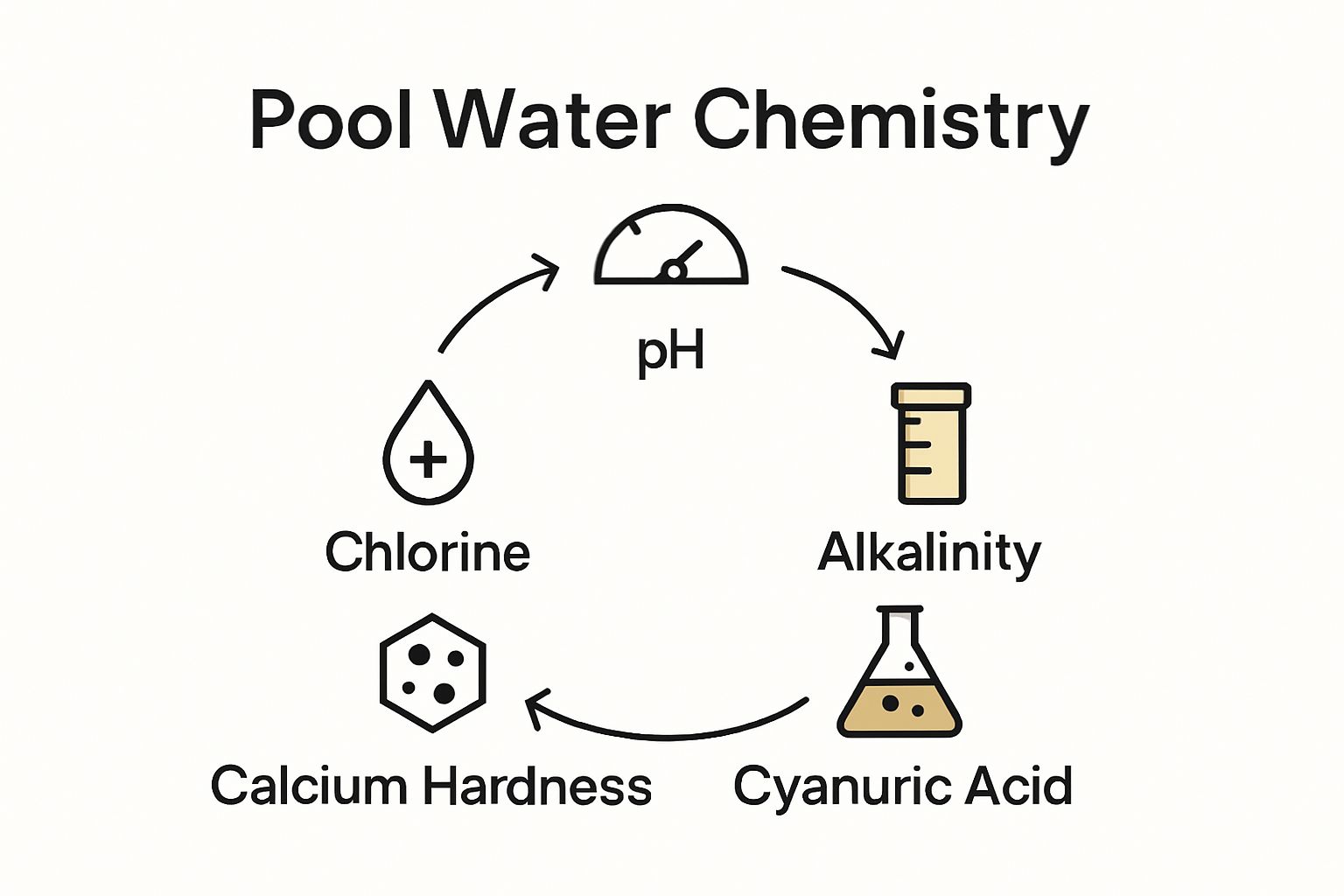
- pH levels
- Total alkalinity
- Chlorine concentration
- Calcium hardness
- Cyanuric acid levels
Chemical Interactions and Balance
Water chemistry is not about individual chemicals, but their intricate interactions. Different chemical components influence each other, creating a complex system that requires sophisticated understanding. According to Royal Society of Chemistry, maintaining proper chemical balance involves understanding how each component affects overall water quality.
Chlorine, for instance, functions differently at various pH levels. When pH becomes too high or low, chlorine’s effectiveness dramatically changes, potentially compromising water sanitisation. This demonstrates why comprehensive chemical management goes beyond simple addition of treatments.
Learn more about the most critical pool chemicals and their specific roles in maintaining water quality.
Practical Considerations for Effective Dosing
Effective pool chemical dosing extends far beyond simple measurement and application. Professional pool management requires a comprehensive approach that integrates technical knowledge, safety protocols, and strategic planning to ensure optimal water quality and swimmer safety.
Safety and Environmental Considerations
Chemical dosing involves complex interactions that demand meticulous attention to safety and environmental impact. Pool managers must consider not just immediate water treatment requirements but also potential long-term consequences of chemical interventions.
Key safety considerations include:
- Proper chemical storage and handling procedures
- Personal protective equipment requirements
- Potential chemical interaction risks
- Environmental disposal protocols
- Minimising potential human health exposure
Dosing Method and Distribution Strategies
Precise chemical distribution is crucial for effective water treatment. According to Health and Safety Executive, chemicals should be added at specific intake or return points to ensure even distribution and prevent localised chemical concentration that could potentially damage pool infrastructure or compromise water quality.
Advanced dosing strategies involve understanding pool hydraulics, understanding water circulation patterns, and selecting appropriate injection points.
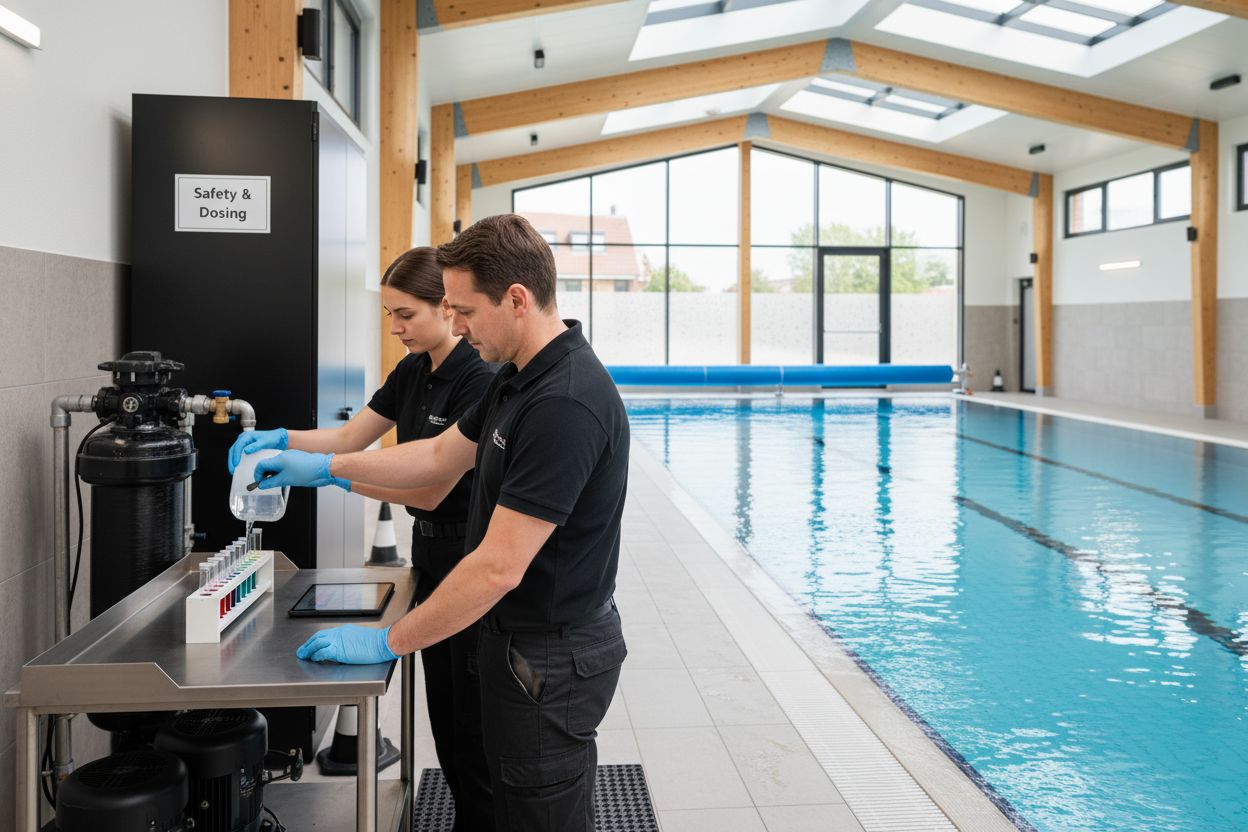 Automated dosing systems with sophisticated sensors can provide real-time monitoring and adjustment, significantly reducing human error and maintaining consistent water chemistry.
Learn more about the most critical pool chemicals to enhance your understanding of strategic chemical management.
Transform Pool Chemical Dosing From Stressful Guesswork to Confident Care
Tired of worrying about unsafe water or unpredictable chemical levels in your pool? As highlighted in our article, understanding and managing pool chemical dosing is crucial for protecting both your health and your investment. You deserve peace of mind knowing your water is safe, your equipment is secure, and your pool chemistry is balanced with precision every time.
Turn knowledge into action with ClearSpa. Our expertly formulated pool chemicals and spa solutions are engineered to take the uncertainty out of dosing and maintenance. Explore practical tips in our guide on the most critical pool chemicals and discover products trusted by professionals. Visit ClearSpa now to simplify your pool and hot tub care and experience the confidence that only rigorous water management tools can provide.
Frequently Asked Questions
What is pool chemical dosing?
Pool chemical dosing is the precise introduction of chemicals into swimming pools to maintain balanced water chemistry. To ensure optimal water quality, regularly monitor and adjust the chemicals based on readings from water testing.
Why is pool chemical dosing important for safety?
Pool chemical dosing is crucial for preventing the growth of harmful microorganisms, ensuring the safety and health of swimmers. Conduct regular water tests to identify and address any imbalances in water chemistry promptly.
How do I conduct water chemistry analysis for dosing?
To conduct water chemistry analysis, use testing methods like electronic meters and reagent test kits. Perform these tests at least once a week to track pH levels, chlorine concentration, and other key parameters for consistent water quality.
What are the primary chemical parameters to monitor?
The primary chemical parameters include pH levels, total alkalinity, chlorine concentration, calcium hardness, and cyanuric acid levels. Regularly check and maintain these parameters within recommended ranges to ensure effective chemical dosing and swimmer comfort.
How can I ensure proper chemical distribution in my pool?
To ensure effective chemical distribution, add chemicals at strategic intake or return points to promote even mixing. Use automated dosing systems where possible to continuously monitor and adjust chemical levels, thereby reducing the risk of localised concentrations.
What safety precautions should I take during chemical dosing?
Adhere to safety protocols by using personal protective equipment and following proper chemical handling procedures. Always label chemicals clearly and store them safely to minimise risks during the dosing process.