Understanding the Pool Chemical Balancing Process
Explore the pool chemical balancing process for clear insights. Learn its importance and how it keeps your pool safe and enjoyable.
Pool chemical balancing sounds like a chore for fussy perfectionists and yet it holds the key to safe swimming for everyone. Believe it or not, improperly balanced pool water can become a breeding ground for bacteria and cause serious health risks. Most people think sparkling blue water means all is well but the real danger is invisible and only the right chemical balance keeps it at bay.
Table of Contents
- What Is Pool Chemical Balancing?
- Why Is Chemical Balance Important For Pools?
- Key Components Of Pool Chemistry
- How Water Testing Determines Chemical Needs
- Real-World Impact Of Proper Pool Chemical Balance
Quick Summary
| Takeaway | Explanation |
|---|---|
| Maintain proper chemical balance | Keeping pH, alkalinity, calcium hardness, and chlorine levels in check is crucial for pool safety and cleanliness. |
| Regular water testing is essential | Frequent testing reveals the current chemical state, guiding necessary adjustments to keep water safe and pleasant. |
| Chemical imbalance harms health | Unbalanced water can lead to health issues, including infections and irritations, affecting swimmers directly. |
| Protect your pool equipment | Proper chemical management prevents corrosion and damage to pool infrastructure, saving costly repairs in the long run. |
| Understand chemical interactions | Recognising how different chemicals affect each other helps optimise water quality and ensures effective sanitation. |
What is Pool Chemical Balancing?
Pool chemical balancing is a precise scientific process of maintaining optimal water chemistry to ensure safe, clean, and comfortable swimming conditions. The process involves carefully adjusting and monitoring various chemical parameters within your pool water to create a stable, healthy aquatic environment.
Understanding Chemical Parameters
Chemical balancing goes beyond simple cleaning. At its core, this process involves regulating several critical water chemistry components. These key parameters include pH levels, alkalinity, calcium hardness, and sanitiser concentration. Each parameter plays a crucial role in creating water that is safe for swimmers and equipment.
Below is a table defining the primary pool chemical parameters and summarising their key functions in pool water management.
| Chemical Parameter | Definition | Primary Function |
|---|---|---|
| pH Level | Measures acidity or alkalinity of the water | Influences comfort and effectiveness of sanitisation |
| Total Alkalinity | Indicates the water’s ability to resist pH changes | Maintains pH stability, prevents rapid fluctuations |
| Calcium Hardness | Amount of dissolved calcium present in water | Prevents corrosion and scaling of pool surfaces |
| Chlorine Concentration | Level of active sanitiser in the water | Destroys harmful microorganisms, keeps water sanitary |
The primary goal of pool chemical balancing is to prevent potential problems such as:
- Bacterial growth
- Algae proliferation
- Corrosion of pool equipment
- Skin and eye irritation for swimmers
- Potential damage to pool surfaces
Why Chemical Balance Matters
Maintaining proper chemical balance is not just about water aesthetics. Research from the Water Quality and Health Council indicates that improperly balanced pool water can become a breeding ground for harmful microorganisms. Unbalanced water creates an environment where pathogens can thrive, potentially leading to health risks for swimmers.
Moreover, chemical imbalance can cause significant damage to your pool infrastructure. Highly acidic or alkaline water can corrode metal fixtures, erode pool linings, and degrade expensive pool equipment. By understanding and implementing the pool chemical balancing process, you protect both your health and your investment.
Chemical balancing requires consistent monitoring and precise adjustments. It is a dynamic process that responds to various factors including swimmer load, environmental conditions, and water source, making it a critical aspect of responsible pool maintenance.
Why is Chemical Balance Important for Pools?
Chemical balance is not merely a technical requirement but a fundamental aspect of pool maintenance that directly impacts swimmer safety, equipment longevity, and overall water quality. Understanding the significance of maintaining proper chemical equilibrium helps pool owners create a healthy, enjoyable swimming environment.
Health and Safety Considerations
Imbalanced pool water can pose significant health risks. Research from the Centers for Disease Control and Prevention highlights that improperly treated water can become a breeding ground for harmful microorganisms. Pathogens like bacteria, viruses, and parasites can quickly multiply in water with incorrect chemical composition, potentially causing serious illnesses such as:
- Gastrointestinal infections
- Skin rashes
- Respiratory problems
- Eye and ear infections
Maintaining proper chemical balance ensures that sanitisers like chlorine effectively neutralize these harmful microorganisms, creating a safe swimming environment for everyone.
Equipment and Infrastructure Protection
Chemical imbalance extends beyond health concerns. Unstable water chemistry can cause substantial damage to pool infrastructure and equipment. Learn more about protecting your pool equipment with our comprehensive water management guide.
Acidic or alkaline water can accelerate equipment deterioration. Metal fixtures corrode, pool liners degrade, and filtration systems suffer premature wear when chemical levels are not carefully regulated. This not only reduces the aesthetic appeal of your pool but also leads to costly repairs and replacements.
Long-Term Pool Performance
Consistent chemical balance contributes to the overall performance and longevity of your pool. Properly maintained water ensures optimal water clarity, prevents algae growth, and maintains the structural integrity of pool surfaces. By understanding and implementing precise chemical management, pool owners can enjoy a pristine swimming environment while minimising long-term maintenance costs.
Key Components of Pool Chemistry
Pool chemistry is a complex system involving multiple interconnected parameters that work together to maintain water quality and safety. Understanding these key components is crucial for effective pool maintenance and ensuring a healthy swimming environment.
Primary Chemical Parameters
The foundation of pool chemistry revolves around several critical measurements. Research from the National Swimming Pool Foundation demonstrates that these parameters must be carefully monitored and adjusted to maintain optimal water conditions.
The most essential chemical components include:
- pH Level: Measures water acidity or alkalinity
- Total Alkalinity: Stabilises pH and prevents rapid chemical fluctuations
- Calcium Hardness: Prevents corrosion and scaling of pool surfaces
- Chlorine Concentration: Sanitises water and eliminates harmful microorganisms
Understanding Chemical Interactions
Chemical parameters do not exist in isolation but interact dynamically. For instance, pH levels directly impact chlorine effectiveness. When pH strays outside the recommended range, chlorine becomes less efficient at neutralising contaminants. Learn more about the critical role of pool chemicals to understand these intricate relationships.
Each chemical component plays a specific role in maintaining water quality.
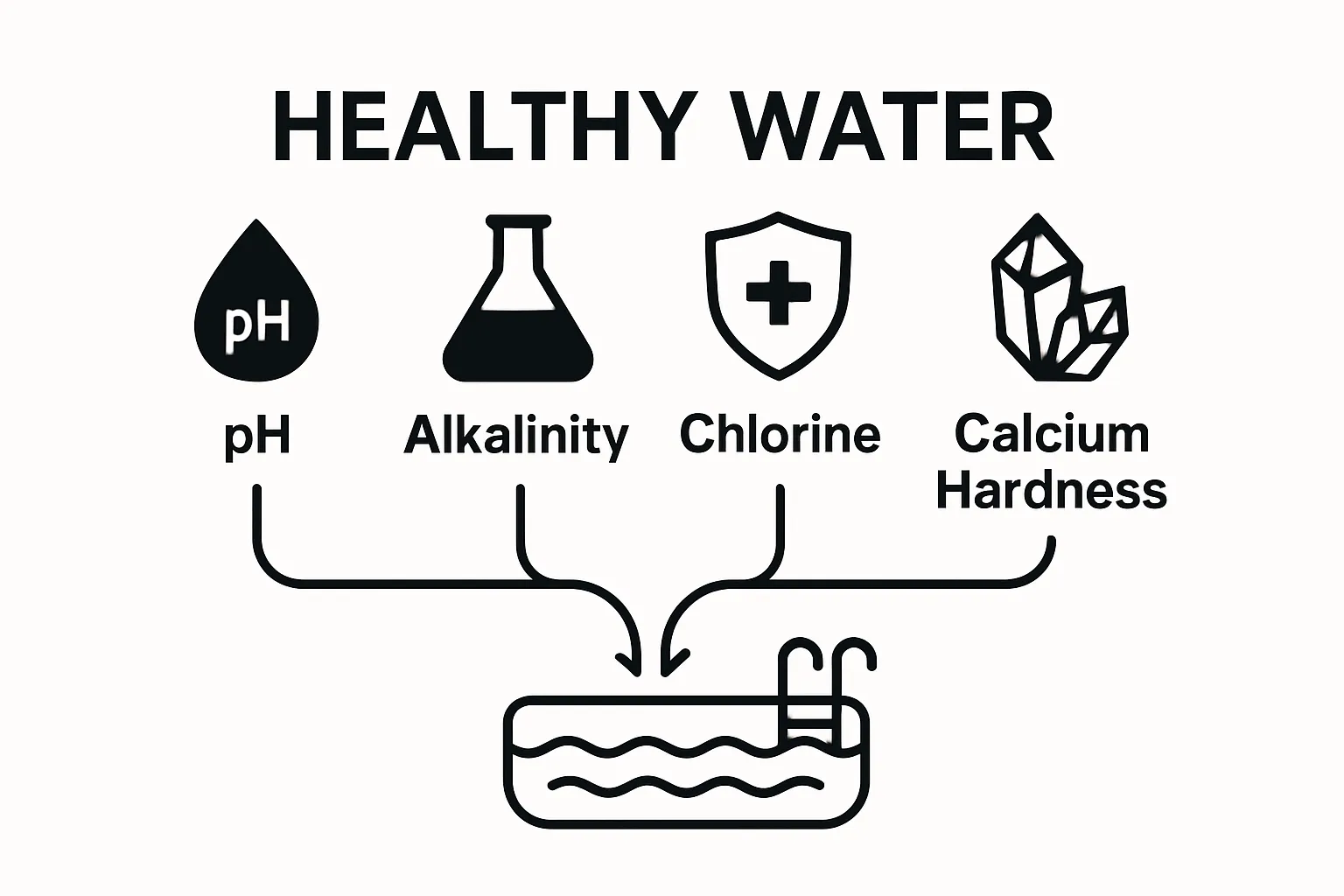 pH levels determine water comfort and equipment longevity, while alkalinity acts as a buffer against sudden chemical changes. Calcium hardness prevents structural damage, and chlorine remains the primary defence against waterborne pathogens.
Maintaining Chemical Equilibrium
Achieving perfect pool chemistry requires consistent monitoring and precise adjustments. Environmental factors such as temperature, swimmer load, and rainfall can rapidly alter chemical compositions. Pool owners must regularly test water parameters and make incremental corrections to maintain a stable, safe swimming environment.
By understanding these key components and their interactions, swimmers can ensure their pool remains a clean, comfortable, and healthy recreational space.

How Water Testing Determines Chemical Needs
Water testing is the cornerstone of effective pool chemical management, providing precise insights into the current state of pool water chemistry. This scientific approach transforms guesswork into a systematic process of maintaining optimal water quality and swimmer safety.
The Science of Water Analysis
Research from the Water Quality Association demonstrates that comprehensive water testing reveals critical information about chemical composition and potential imbalances. Professional pool maintenance relies on sophisticated testing methods that go far beyond simple visual assessment.
Modern water testing typically evaluates multiple critical parameters:
- pH Levels: Indicating water acidity or alkalinity
- Total Alkalinity: Measuring buffering capacity
- Chlorine Concentration: Assessing sanitisation effectiveness
- Calcium Hardness: Evaluating potential mineral buildup
Interpreting Testing Results
Reading test results requires understanding the intricate relationships between different chemical components. Each parameter provides specific insights into water chemistry, helping pool owners make precise chemical adjustments. Learn more about water chemical treatment techniques to enhance your understanding of these complex interactions.
For instance, high pH levels might indicate the need for acid addition, while low chlorine concentration suggests the requirement for additional sanitiser. These nuanced interpretations prevent overcompensation and ensure targeted chemical treatments.
Frequency and Methodology
Professional pool maintenance recommends regular water testing, with frequency depending on pool usage, environmental conditions, and specific pool characteristics. Digital testing kits and professional laboratory analyses offer increasingly sophisticated methods for obtaining accurate chemical readings.
By transforming abstract chemical data into actionable insights, water testing empowers pool owners to maintain a safe, balanced, and enjoyable swimming environment through precise, informed chemical management.
Real-World Impact of Proper Pool Chemical Balance
Pool chemical balance extends far beyond technical measurements, directly influencing swimmer health, equipment performance, and overall recreational safety. Understanding the tangible consequences of proper water chemistry reveals its critical importance in maintaining a safe and enjoyable swimming environment.
Health and Safety Implications
Research from the Health and Safety Executive highlights that improper pool chemical management can create significant public health risks. Waterborne pathogens can proliferate rapidly in poorly maintained pools, leading to potential disease transmission.
The real-world health consequences of chemical imbalance include:
- Increased risk of bacterial infections
- Potential respiratory complications
- Higher likelihood of skin and eye irritations
- Enhanced transmission of waterborne diseases
- Compromised immune system responses
Economic and Infrastructural Consequences
Chemical balance directly impacts the financial sustainability of pool maintenance. Improperly managed water chemistry accelerates equipment deterioration, resulting in substantial replacement and repair expenses. Discover more about maintaining pool water quality to understand these long-term economic implications.
Metal fixtures corrode, pool liners degrade, and filtration systems experience premature wear when chemical levels remain unchecked. These structural damages translate into significant monetary investments for pool owners, far exceeding the cost of regular chemical maintenance.
Environmental and Recreational Considerations
Proper chemical balance contributes to broader environmental stewardship. Well-maintained pools minimise chemical waste, reduce unnecessary water replacement, and ensure a sustainable approach to recreational water management. By maintaining precise chemical equilibrium, pool owners create a safer, more enjoyable swimming experience while simultaneously protecting both human health and infrastructural investments.
This table highlights common consequences of improper pool chemical balance, helping pool owners understand the real-world impact of lapses in water chemistry management.
| Area Affected | Consequence of Imbalance | Example(s) |
|---|---|---|
| Health & Safety | Increased risk of infections and irritation | Bacterial outbreaks, eye and skin irritation |
| Equipment & Structure | Accelerated damage to fixtures, linings, and filtration | Metal corrosion, liner degradation, pump wear |
| Water Quality | Algae and bacteria growth; cloudy or uninviting appearance | Algae blooms, cloudy water |
| Financial | Higher maintenance and repair costs | Frequent replacements, expensive repairs |
| Environmental | Greater chemical and water wastage | More frequent water changes, inefficient chemical use |
Ready for Effortless Pool Chemical Balancing?
Staying on top of your pool’s chemical balance can feel overwhelming. The article revealed how easily water chemistry can shift, bringing risks like bacteria growth, damage to pool equipment, and discomfort for swimmers. Trying to keep pH, alkalinity, and sanitiser levels in check is vital but also challenging without the right products and support.
Trust ClearSpa to remove the guesswork from your pool care routine. Our high-quality water treatment products are crafted for people who want reliable results and peace of mind. If you want sparkling water and fewer maintenance worries, visit our website now and explore our range. Make your next swim safe and enjoyable with powerful solutions from ClearSpa.
Frequently Asked Questions
What is pool chemical balancing?
Pool chemical balancing is the process of adjusting and monitoring various chemical parameters in pool water to ensure a safe, clean, and comfortable swimming environment.
Why is maintaining chemical balance important for a pool?
Chemical balance is crucial for swimmer safety, equipment longevity, and overall water quality. It helps prevent health risks associated with pathogens and protects the pool infrastructure from damage.
What are the key components involved in pool chemistry?
The key components include pH level, total alkalinity, calcium hardness, and chlorine concentration. Each plays a specific role in maintaining safe and clean water conditions.
How often should I test my pool water for chemical balance?
The frequency of testing depends on factors such as pool usage, environmental conditions, and specific pool characteristics. Regular testing is recommended to ensure optimal water quality and safety.