Spa Water Balancing: The Essential Guide
Spa water balancing for beginners in the UK: what pH, alkalinity and hardness are, the proper ranges, adjustment tips and common mistakes.
Nearly four out of five british spa owners struggle with maintaining clear, safe water in their hot tubs. Water balance is not only about aesthetics but also about protecting your health and investment. With the right knowledge and practical tips, anyone can manage spa water chemistry to avoid irritation, equipment problems, and bacterial growth for a truly relaxing experience.
Table of Contents
- What Is Spa Water Balancing?
- Key Water Parameters And Their Functions
- How To Adjust Water Levels Safely
- Common Mistakes And Troubleshooting
- Choosing UK‑Suitable Water Testing Tools
Key Takeaways
| Point | Details |
|---|---|
| Water Balancing is Essential | Maintaining proper pH, alkalinity, sanitiser levels, and calcium hardness is critical for user safety and equipment longevity. |
| Regular Testing is Crucial | Consistent monitoring of water parameters helps prevent issues such as equipment damage and user irritation. |
| Safe Chemical Adjustments | Chemical adjustments should be made gradually, with thorough testing to avoid hazardous conditions for users and equipment. |
| Avoid Common Mistakes | Inconsistent testing and improper chemical handling can lead to costly complications; always follow systematic troubleshooting protocols. |
What Is Spa Water Balancing?
Spa water balancing is a precise process of maintaining optimal chemical conditions in your hot tub or spa to ensure water quality, user safety, and equipment longevity. At its core, it involves carefully monitoring and adjusting key chemical parameters to create a stable, hygienic aquatic environment. Water management principles require a delicate equilibrium of pH, alkalinity, sanitiser levels, and mineral content.
The primary goal of water balancing is protecting both spa users and the spa infrastructure itself. Unbalanced water can lead to significant problems: corrosive conditions that damage equipment, skin and eye irritation for users, and potential breeding grounds for harmful microorganisms. By understanding the essential role of water chemistry, spa owners can prevent these issues and maintain a safe, comfortable experience.
Key elements of spa water balancing include:
- pH Levels: Maintaining water between 7.2 and 7.6 to prevent equipment damage and ensure user comfort
- Total Alkalinity: Stabilising alkalinity between 80 and 120 parts per million to buffer pH changes
- Sanitiser Concentration: Keeping appropriate chlorine or bromine levels to eliminate bacteria
- Calcium Hardness: Managing calcium levels to prevent scaling or corrosive water conditions
Regular testing and precise chemical adjustments form the foundation of effective spa water management, protecting both your investment and the wellness of those enjoying your spa.
Key Water Parameters And Their Functions
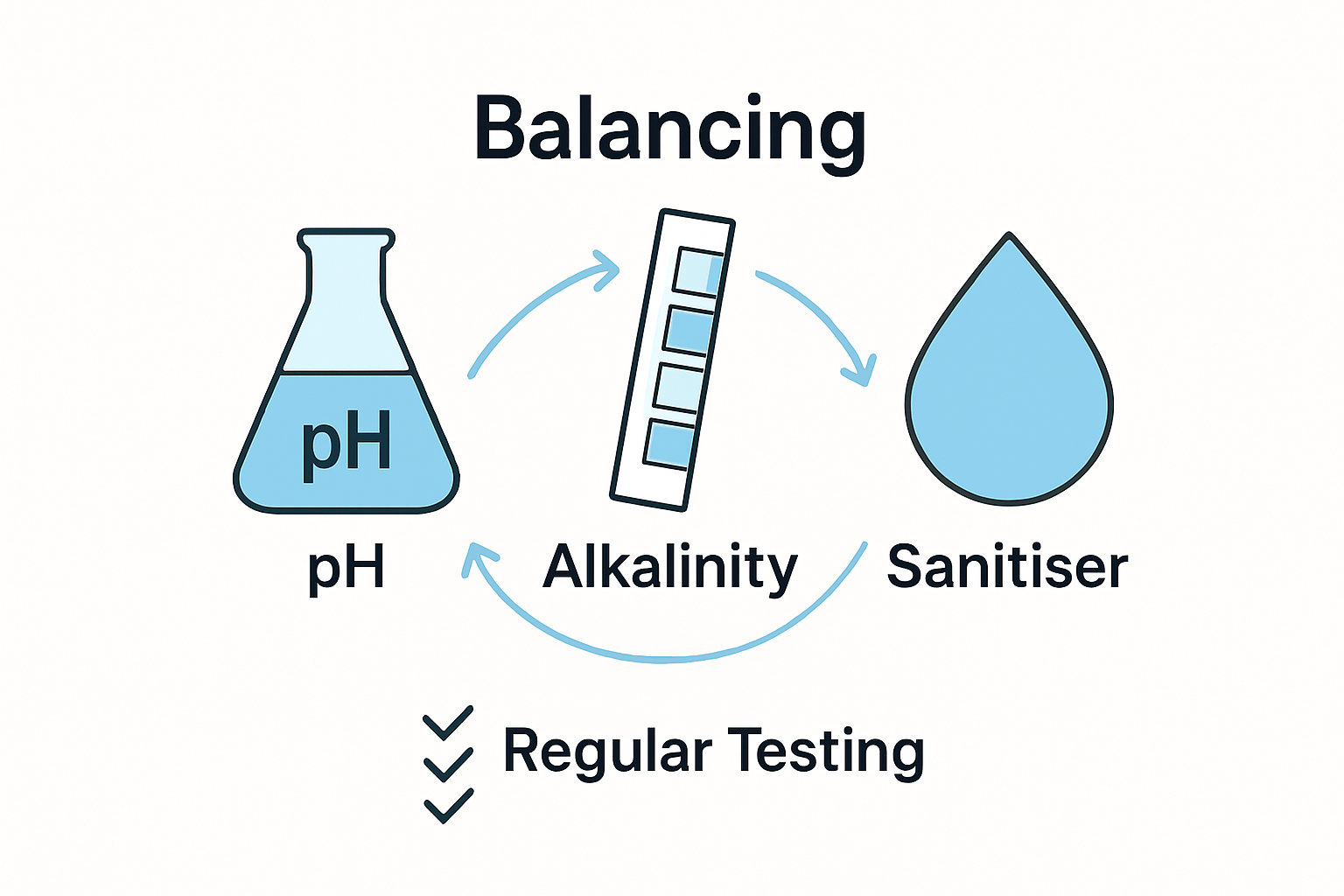
Understanding the key water parameters is crucial for maintaining a safe and hygienic spa environment. Technical water management standards highlight four critical parameters that directly impact water quality and user experience: pH, total alkalinity, sanitiser concentration, and calcium hardness.
The pH level serves as the foundational parameter, indicating the water’s acidity or alkalinity. When pH falls outside the recommended range of 7.2 to 7.6, it can cause significant problems. Monitoring water quality guidelines emphasise that improper pH can lead to equipment corrosion, skin irritation, and reduced effectiveness of sanitising chemicals. Extreme pH levels can also compromise the protective mechanisms of chlorine or bromine, leaving your spa vulnerable to bacterial growth.
Other critical water parameters include:
- Total Alkalinity: Acts as a pH buffer, preventing sudden chemical shifts
- Calcium Hardness: Prevents water from becoming corrosive or causing scale buildup
- Sanitiser Concentration: Ensures elimination of harmful bacteria and microorganisms
Regular testing and precise adjustment of these parameters are essential. Water chemistry is dynamic, requiring consistent monitoring to maintain a balanced, safe spa environment that protects both your equipment and the health of spa users.
How To Adjust Water Levels Safely
Chemical balancing requires precision and careful methodology. Technical water management guidelines emphasise the importance of systematic, gradual adjustments when modifying spa water chemistry. Safety begins with understanding that abrupt chemical changes can create potentially hazardous conditions for both equipment and users.
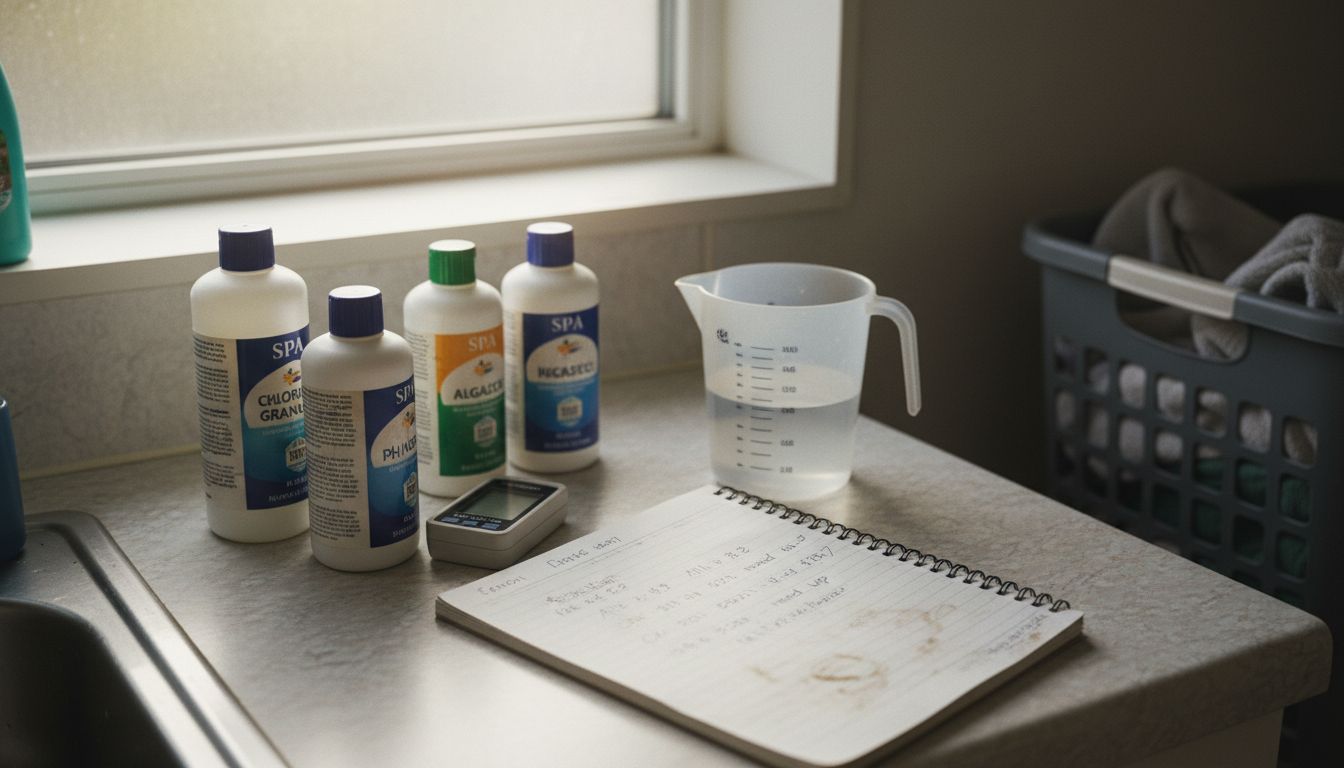
Before making any adjustments, comprehensive water testing is crucial. Safe chemical handling protocols recommend using reliable test strips or digital testing equipment to obtain accurate readings of pH, alkalinity, and sanitiser levels. Always wear protective gloves and eyewear, and ensure proper ventilation when handling spa chemicals. The general approach involves:
- Measuring current water parameters precisely
- Identifying specific imbalances
- Adding chemicals in small, incremental amounts
- Retesting after each adjustment
- Waiting recommended intervals between chemical treatments
Key safety considerations include mixing chemicals separately, never combining different products directly, and adding chemicals to water rather than water to chemicals. Store all treatment products in a cool, dry location away from direct sunlight, and always follow manufacturer instructions carefully. Systematic, patient adjustments protect your spa’s infrastructure and ensure a safe, comfortable environment for all users.
Common Mistakes And Troubleshooting
Water management guidelines reveal that most spa water problems stem from consistent overlooked maintenance issues. Spa owners frequently make critical errors that can compromise water quality, equipment performance, and user safety. Understanding these common mistakes is the first step towards preventing potentially costly and dangerous water chemistry complications.
The most prevalent errors include:
- Inconsistent Testing: Neglecting regular water parameter checks
- Over-Chlorination: Adding excessive sanitiser, which can damage equipment and irritate skin
- pH Imbalance: Failing to maintain recommended pH levels between 7.2 and 7.6
- Chemical Layering: Incorrectly mixing or adding chemicals without proper sequencing
Safe chemical handling protocols emphasise the importance of systematic troubleshooting. When experiencing water quality issues, start by identifying the specific problem through comprehensive testing. Common symptoms like cloudy water, unusual odours, or skin irritation often indicate underlying chemical imbalances. Gradual, measured corrections are crucial - dramatic chemical adjustments can create more problems than they resolve. Professional water testing kits provide the most accurate diagnostic tools, allowing spa owners to make precise, informed interventions that restore water balance and maintain a safe, enjoyable spa environment.
Choosing UK‑Suitable Water Testing Tools
Selecting the right water testing tools is crucial for maintaining optimal spa water quality. Hot tub water testing workflows recommend comprehensive testing methods that provide accurate and reliable results for spa owners across the United Kingdom.
When choosing water testing tools, consider these essential criteria:
- Accuracy: Precision in measuring multiple water parameters simultaneously
- Ease of Use: Simple, straightforward testing procedures
- Comprehensive Coverage: Tests for pH, alkalinity, sanitiser levels, and mineral content
- Compatibility: Suitable for typical UK spa and hot tub water chemistry
Digital testing methods have revolutionised water quality assessment. Water test kit comparison guides highlight the advantages of digital testing strips that offer instant, multi-parameter readings. These advanced tools eliminate guesswork, providing spa owners with precise measurements that enable quick and accurate water chemistry adjustments. Look for kits that offer simple colour-coded results, digital readouts, and comprehensive parameter testing to ensure your spa water remains perfectly balanced and safe for enjoyment.
Keep Your Spa Water Perfectly Balanced with ClearSpa Solutions
Maintaining the ideal spa water balance involves precise control of pH levels, total alkalinity, sanitiser concentration and calcium hardness to prevent equipment damage and ensure user comfort. The challenge is consistent monitoring and safe chemical adjustments to avoid common pitfalls like over-chlorination or pH imbalance. ClearSpa offers an extensive range of high-quality water treatment products designed specifically to help you achieve and sustain the perfect water chemistry described in this essential guide.
Enhance your hot tub experience today by choosing from our trusted hot tub chemicals and spa essentials that make water testing and balancing straightforward. Visit ClearSpa now to explore our carefully crafted products and access expert advice to protect your spa investment and enjoy safe, refreshing water all year round.
Frequently Asked Questions
What is spa water balancing?
Spa water balancing is the process of maintaining optimal chemical conditions in your hot tub or spa to ensure water quality, user safety, and equipment longevity by monitoring and adjusting pH, alkalinity, sanitiser levels, and mineral content.
Why is pH important in spa water balancing?
The pH level indicates the acidity or alkalinity of the water. Maintaining it between 7.2 and 7.6 is crucial to prevent equipment corrosion, skin irritation, and to ensure the effectiveness of sanitising chemicals.
How can I safely adjust the water levels in my spa?
To safely adjust water levels, conduct thorough water testing first, then make gradual chemical adjustments in small increments while retesting after each change, and always follow safe chemical handling protocols.
What are common mistakes to avoid when balancing spa water?
Common mistakes include inconsistent testing of water parameters, over-chlorination, failing to maintain proper pH levels, and incorrectly mixing chemicals without following proper sequencing.