Saltwater Hot Tubs: Healthier, Easier Spa Care
Saltwater hot tubs deliver softer water, reduced maintenance, and fewer chemical odours. Learn about system types, health benefits, UK safety, and costs.
Over half of British homeowners considering hot tubs desire easier maintenance and healthier water for their families. The promise of saltwater hot tubs is gaining momentum across the United Kingdom thanks to their automated chlorine generation and soothing spa experience. Yet, myths and confusion about how these systems work and what they require can leave potential buyers uncertain. This guide helps British households cut through common misconceptions and make empowered choices about reliable water care and wellness benefits.
Table of Contents
- Saltwater Hot Tubs Defined And Common Myths
- Types And Technologies Of Saltwater Systems
- How Saltwater Sanitisation Actually Works
- Health And Maintenance Benefits For UK Homes
- Legal Safety, Risks, And Running Costs
- Saltwater Hot Tubs Versus Chlorine Alternatives
Key Takeaways
| Point | Details |
|---|---|
| Understanding Saltwater Systems | Saltwater hot tubs utilise electrolysis to generate chlorine automatically, differing from traditional methods that require manual chemical additions. |
| Maintenance Benefits | These systems provide lower ongoing maintenance needs, reducing chemical handling and minimising skin irritation. |
| Cost Considerations | While the initial investment may be higher, long-term savings arise from reduced chemical purchasing and consistent water quality management. |
| Health and Safety Compliance | Regular monitoring and adherence to UK regulations are crucial to ensure safe operation and mitigate risks such as Legionnaires’ disease. |
Saltwater hot tubs defined and common myths
A saltwater hot tub represents an innovative approach to spa water treatment, utilising a sophisticated chlorine generation system that differs significantly from traditional chemical sanitisation methods. Unlike conventional hot tubs that require manual chemical additions, saltwater systems create chlorine automatically through electrolysis, converting salt into a natural sanitising agent.
Many homeowners harbour misconceptions about saltwater hot tubs, believing they are completely chlorine-free or require no maintenance. In reality, these systems still produce chlorine, just through a more controlled, automated process. Spa-pool systems can pose potential health risks if not properly managed, emphasising the importance of understanding their operational mechanics and maintenance requirements.
Common myths surrounding saltwater hot tubs include assumptions about their complexity, cost-effectiveness, and health benefits. Contrary to popular belief, these systems are not significantly more expensive to install than traditional hot tubs and can actually provide more consistent water quality. They reduce the need for frequent manual chemical balancing and minimise skin and eye irritation associated with traditional chlorine treatments.
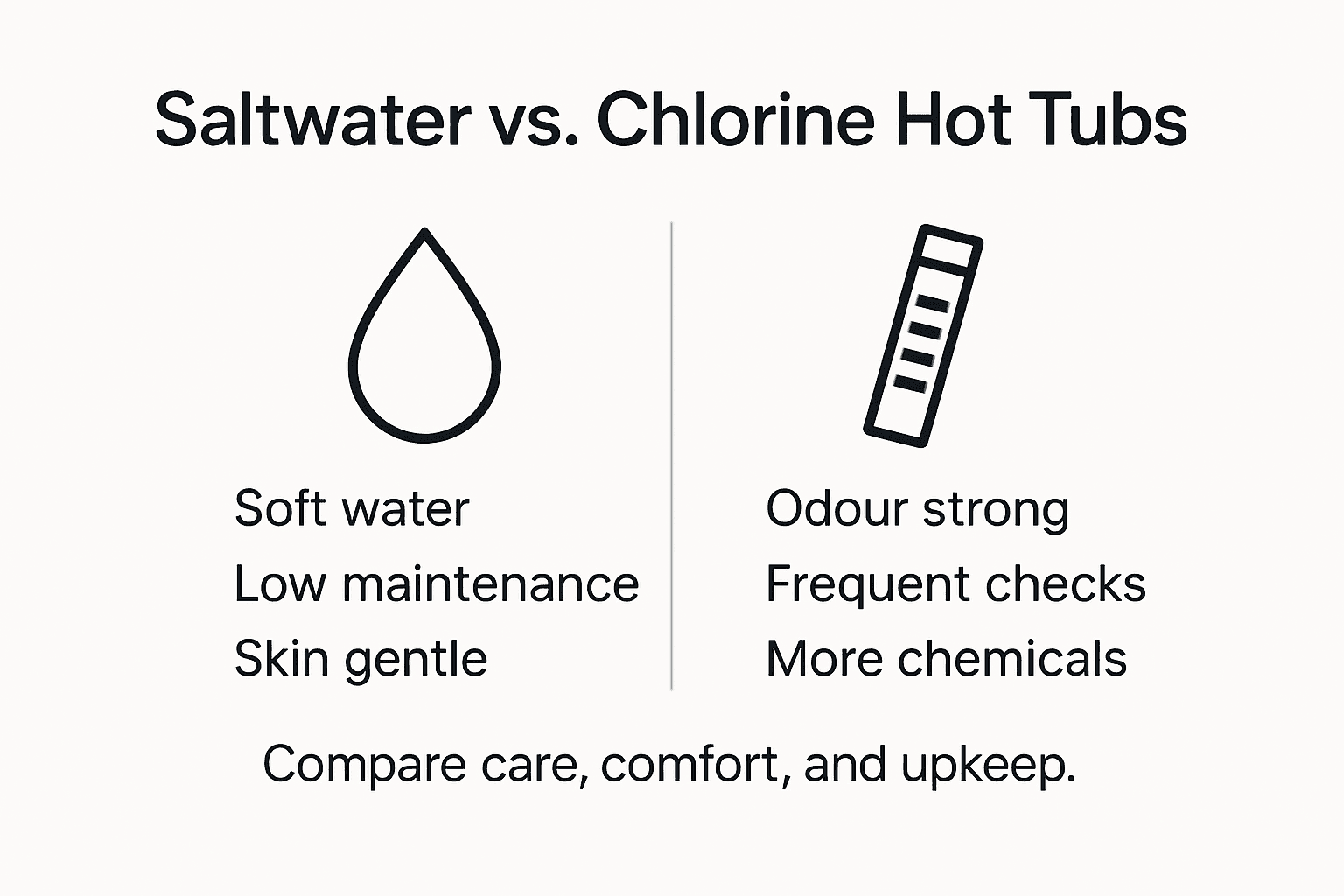
Here is a quick comparison of saltwater, traditional chlorine, and mineral hot tub systems:
| System Type | Main Sanitising Method | Typical Maintenance Level | Skin Sensitivity Impact |
|---|---|---|---|
| Saltwater | Electrolytic chlorine | Low (automated generation) | Reduced irritation risk |
| Traditional Chlorine | Manual chemical addition | Moderate to high (frequent) | Higher irritation possible |
| Advanced Mineral System | Mineral ionisation, UV, etc. | Low to moderate (blended tech) | Minimal irritation, very gentle |
Pro tip: Consider consulting a professional spa technician for a personalised assessment of whether a saltwater hot tub system suits your specific home and lifestyle requirements.
Types and technologies of saltwater systems
Saltwater hot tub systems encompass several distinct technological approaches, each offering unique methods for water sanitisation and maintenance. The primary categories include chlorine generation systems, which use electrolysis to convert salt into chlorine, and more advanced mineral-based sanitisation technologies that integrate multiple purification methods.
Spa-pool systems vary significantly in their design and operational technologies, with key differences emerging between domestic and commercial applications. Residential saltwater hot tubs typically feature smaller-scale electrolytic chlorine generators that produce sanitising agents through a low-voltage electrical process, while commercial systems often incorporate more robust multi-stage filtration and sanitisation technologies.
The core technologies in saltwater hot tubs can be categorised into three primary types: traditional salt chlorine generators, advanced mineral sanitisation systems, and hybrid technologies that combine salt generation with additional purification methods. Each approach offers distinct advantages, with salt chlorine generators providing consistent chlorine production, mineral systems reducing chemical dependency, and hybrid technologies offering comprehensive water treatment capabilities.
Key technological components across these systems include:
- Electrolytic cell for chlorine generation
- Salt sensor and concentration monitoring
- Advanced water flow control mechanisms
- Integrated pH and alkalinity balancing systems
Pro tip: Consult with a professional hot tub technician to determine which saltwater system technology best matches your specific water quality requirements and maintenance preferences.
How saltwater sanitisation actually works
Saltwater sanitisation is a sophisticated water treatment process that transforms ordinary salt into an effective sanitising agent through a precise electrolytic mechanism. The system relies on an electrolytic cell, which uses low-voltage electrical current to break down salt (sodium chloride) molecules, generating natural chlorine that effectively eliminates harmful microorganisms within the hot tub water.

Chlorine-based sanitisation works by systematically destroying harmful microorganisms through a controlled chemical process. The electrolysis mechanism generates free chlorine that actively attacks and neutralises bacteria, viruses, and other potentially dangerous pathogens. This approach provides continuous water purification without the need for frequent manual chemical additions, ensuring consistent water quality and hygiene.
The core sanitisation process involves several critical stages:
- Salt conversion through electrolytic cell
- Chlorine generation via electrical current
- Continuous water circulation and filtration
- Automatic monitoring of chlorine concentration
- pH level regulation and balance maintenance
Additionally, many advanced saltwater systems incorporate supplementary technologies such as UV disinfection and mineral purification to enhance water treatment capabilities. These integrated approaches provide multiple layers of water protection, reducing chemical dependency and improving overall water quality.
Pro tip: Regularly test your saltwater hot tub’s salt levels and chlorine concentration to maintain optimal sanitisation performance and prevent potential water treatment issues.
Health and maintenance benefits for UK homes
Saltwater hot tubs offer remarkable health and maintenance advantages specifically tailored to UK homeowners seeking a more sophisticated spa experience. Properly maintained systems provide significant therapeutic benefits while minimising chemical exposure, presenting a compelling alternative to traditional chlorinated hot tub treatments.
The health benefits of saltwater hot tubs extend far beyond simple water treatment. These systems provide hydrotherapy advantages, helping to alleviate muscle tension, improve circulation, and promote relaxation. By generating chlorine through natural electrolysis, saltwater hot tubs reduce skin and eye irritation commonly associated with traditional chemical treatments, making them particularly beneficial for individuals with sensitive skin or allergies.
Maintenance advantages for UK homes include:
- Reduced chemical storage requirements
- Lower ongoing chemical purchasing costs
- Simplified water treatment processes
- Minimised risk of chemical handling accidents
- More consistent water quality management
From a practical perspective, saltwater systems stabilise water chemistry more effectively, requiring less frequent interventions and providing a more stable, comfortable hot tub environment. This approach not only simplifies home spa maintenance but also contributes to a more environmentally conscious and health-focused wellness solution for British households.
Pro tip: Invest in a professional water testing kit specifically designed for saltwater systems to ensure optimal performance and maintain your hot tub’s health benefits.
Legal safety, risks, and running costs
Legal compliance is paramount for UK hot tub owners, with stringent regulations governing spa pool safety and operational standards. Health and safety requirements mandate comprehensive risk assessments and operational guidelines to prevent potential health hazards and ensure user protection.
Specifically, Legionnaires’ disease prevention forms a critical component of hot tub safety regulations, requiring meticulous water treatment and routine monitoring. Saltwater hot tub owners must implement systematic approaches to water management, including:
- Regular water quality testing
- Maintaining appropriate chemical balance
- Implementing effective filtration protocols
- Documenting maintenance procedures
- Ensuring proper system sanitisation
Running costs for saltwater hot tubs typically range between £300-£800 annually, factoring in electricity consumption, salt replacement, water treatment chemicals, and maintenance expenses. These costs can vary depending on usage frequency, system complexity, and local energy prices. The initial investment may be higher compared to traditional chlorine systems, but long-term savings emerge through reduced chemical purchasing and more efficient water treatment processes.
Owners should also consider potential legal liabilities, ensuring comprehensive insurance coverage and adhering to manufacturer guidelines to mitigate risks associated with hot tub ownership and operation.
The following table summarises key running costs and legal considerations for UK saltwater hot tubs:
| Cost/Compliance Aspect | Saltwater Hot Tub Estimate | Notes |
|---|---|---|
| Annual Running Cost | £300-£800 | Includes energy, salt, maintenance |
| Chemical Purchasing Cost | Lower than chlorine systems | Fewer chemicals required overall |
| Legal Monitoring Required | Regular water testing | Essential for compliance and health |
| Legionella Risk Management | Mandatory | Routine management by UK law |
Pro tip: Consult a professional hot tub technician annually to conduct a comprehensive safety audit and ensure full compliance with current UK health and safety regulations.
Saltwater hot tubs versus chlorine alternatives
Chlorine treatment methods have long dominated hot tub water management, but saltwater systems are rapidly transforming spa maintenance approaches for British households. Saltwater chlorination offers a more environmentally responsible alternative to traditional chemical treatments, providing a sophisticated approach to water sanitisation that minimises harsh chemical interactions.
The fundamental difference lies in chemical generation processes. Traditional chlorine systems require manual addition of chemical tablets or liquids, whereas saltwater hot tubs generate chlorine through electrolysis, creating a more consistent and controlled sanitisation environment. Stainless steel components in saltwater systems must be carefully selected to withstand the saline environment, which introduces unique engineering considerations not present in standard chlorine pools.
Key comparative aspects include:
- Chemical handling requirements
- User skin and eye sensitivity
- Ongoing maintenance complexity
- Environmental impact
- Long-term operational costs
Saltwater systems typically demonstrate superior performance across these parameters, offering reduced chemical storage needs, gentler water treatment, and more stable sanitisation levels. The initial investment might be marginally higher, but long-term benefits include lower chemical purchasing costs, reduced skin irritation, and more consistent water quality management.
Pro tip: Request a professional water analysis before transitioning between chlorine and saltwater systems to ensure optimal compatibility with your existing hot tub infrastructure.
Discover Easier and Healthier Hot Tub Care with ClearSpa
Maintaining the perfect saltwater hot tub water balance can feel challenging with all the technical terms like electrolytic cell, chlorine generation, and pH regulation. If you want to avoid skin irritation, reduce chemical handling, and enjoy consistent water quality, ClearSpa has the solutions tailored for you. Our high-quality water treatment products are designed to simplify your saltwater system maintenance and keep your spa experience safe and relaxing.
Take control of your hot tub care today. Visit ClearSpa to explore our carefully tested range of hot tub chemicals and spa essentials. With ClearSpa, enjoy expert-backed products that reduce your maintenance time and enhance your wellness journey. Don’t wait to create the healthier, easier spa routine your home deserves.
Frequently Asked Questions
What are the main benefits of saltwater hot tubs compared to traditional chlorine systems?
Saltwater hot tubs offer numerous benefits including reduced skin and eye irritation, consistent water quality management, and lower ongoing chemical purchasing costs. They also utilise automated chlorine generation, simplifying maintenance processes.
How does the sanitisation process work in saltwater hot tubs?
Saltwater hot tubs use an electrolytic cell to convert salt into chlorine through a process called electrolysis. This generates a continuous supply of chlorine that effectively sanitises the water without the need for frequent manual chemical additions.
Are there any health risks associated with saltwater hot tubs?
While saltwater hot tubs generally present fewer health risks due to reduced chemical exposure, maintaining proper water management and hygiene is crucial. Owners must regularly test water quality to prevent issues such as Legionnaires’ disease, as mandated by safety regulations.
What maintenance is required for a saltwater hot tub?
Saltwater hot tubs require low to moderate maintenance, primarily focused on regular water testing, monitoring salt and chlorine levels, and ensuring proper filtration. This automated system simplifies upkeep compared to traditional chlorine hot tubs, making it easier for users to maintain optimal conditions.