Why Use Non-Chlorine Shock in UK Hot Tubs
Non-chlorine shock for hot tubs explained: discover benefits, usage, comparisons with chlorine, and how it reduces irritation for UK spa owners.
Most British hot tub owners search for water care solutions that protect both their comfort and their health. With chemical irritation impacting nearly one in three spa users, finding an alternative to harsh traditional methods is no longer just a preference, it is a necessity. Non-chlorine treatments offer an advanced way to maintain crystal-clear water without the stinging smells or itchy skin. This guide reveals modern options that help you enjoy a gentle, more natural spa experience in the United Kingdom.
Table of Contents
- What Is Non-Chlorine Shock Treatment?
- How Non-Chlorine Shock Cleans Water Safely
- Types of Non-Chlorine Shock Products Explained
- Key Benefits for Sensitive Skin and Comfort
- Comparing Non-Chlorine Shock to Chlorine Treatments
- Choosing and Using Non-Chlorine Shock Safely
Key Takeaways
| Point | Details |
|---|---|
| Non-Chlorine Shock Treatment | A water purification method that uses potassium monopersulfate to eliminate organic contaminants without harsh chlorine compounds, making it suitable for sensitive skin. |
| Effective Water Management | It breaks down body oils, cosmetics, and sweat, enhancing the performance of existing sanitisation systems while ensuring a hygienic hot tub environment. |
| Product Types Available | Non-chlorine shock comes in granular, liquid, and pre-measured packets, catering to different maintenance needs and user preferences. |
| Safety and Application | Proper measurement, handling, and adherence to usage instructions are crucial for optimal performance and safety when using non-chlorine shock treatments. |
What Is Non-Chlorine Shock Treatment?
Non-chlorine shock treatment represents a sophisticated water purification method designed specifically for hot tub maintenance in the United Kingdom. Non-chlorine shock is a powerful oxidising agent composed primarily of potassium monopersulfate, engineered to eliminate organic contaminants without introducing harsh chlorine compounds.
At its core, non-chlorine shock acts as a critical water management tool for hot tub owners. The treatment focuses on breaking down problematic organic pollutants such as body oils, sunscreen residues, cosmetic products, and perspiration that accumulate during hot tub use. By targeting these microscopic contaminants, the shock treatment effectively liberates existing sanitisers, enabling them to concentrate more efficiently on eliminating harmful bacteria and microorganisms.
Unlike traditional chlorine-based treatments, non-chlorine shock offers several distinctive advantages for British hot tub enthusiasts. The treatment is odourless, reduces chemical irritation, and works harmoniously with various sanitisation systems. This makes it particularly attractive for individuals with sensitive skin or those seeking a gentler water treatment approach. Moreover, non-chlorine shock helps maintain crystal-clear water quality while minimising the environmental impact associated with harsh chemical treatments.
Hot Tub Pro Tip: Always dilute non-chlorine shock in a clean bucket of water before adding it to your hot tub to ensure even distribution and prevent potential damage to spa surfaces.
How Non-Chlorine Shock Cleans Water Safely
Non-chlorine shock operates as a sophisticated water purification mechanism that tackles organic contaminants with remarkable efficiency. Routine weekly maintenance becomes significantly more effective through this targeted cleaning process, which breaks down microscopic waste particles including body oils, sweat, cosmetic residues, and other accumulated organic materials that can compromise water quality.
The cleaning mechanism works by oxidation, where the potassium monopersulfate molecules aggressively target and disintegrate organic compounds. Unlike traditional chlorine treatments, this approach ensures a thorough cleansing without introducing additional harsh chemicals. The oxidation process effectively neutralises contaminants, preventing bacterial growth and maintaining a pristine water environment that remains safe and hygienic for hot tub users.
British hot tub owners particularly appreciate non-chlorine shock for its gentle yet powerful water treatment properties. The treatment not only eliminates organic waste but also enhances the performance of existing sanitisation systems. By freeing up sanitising chemicals to focus more directly on bacterial elimination, non-chlorine shock creates a more efficient water management strategy that minimises chemical usage and reduces potential skin irritation.
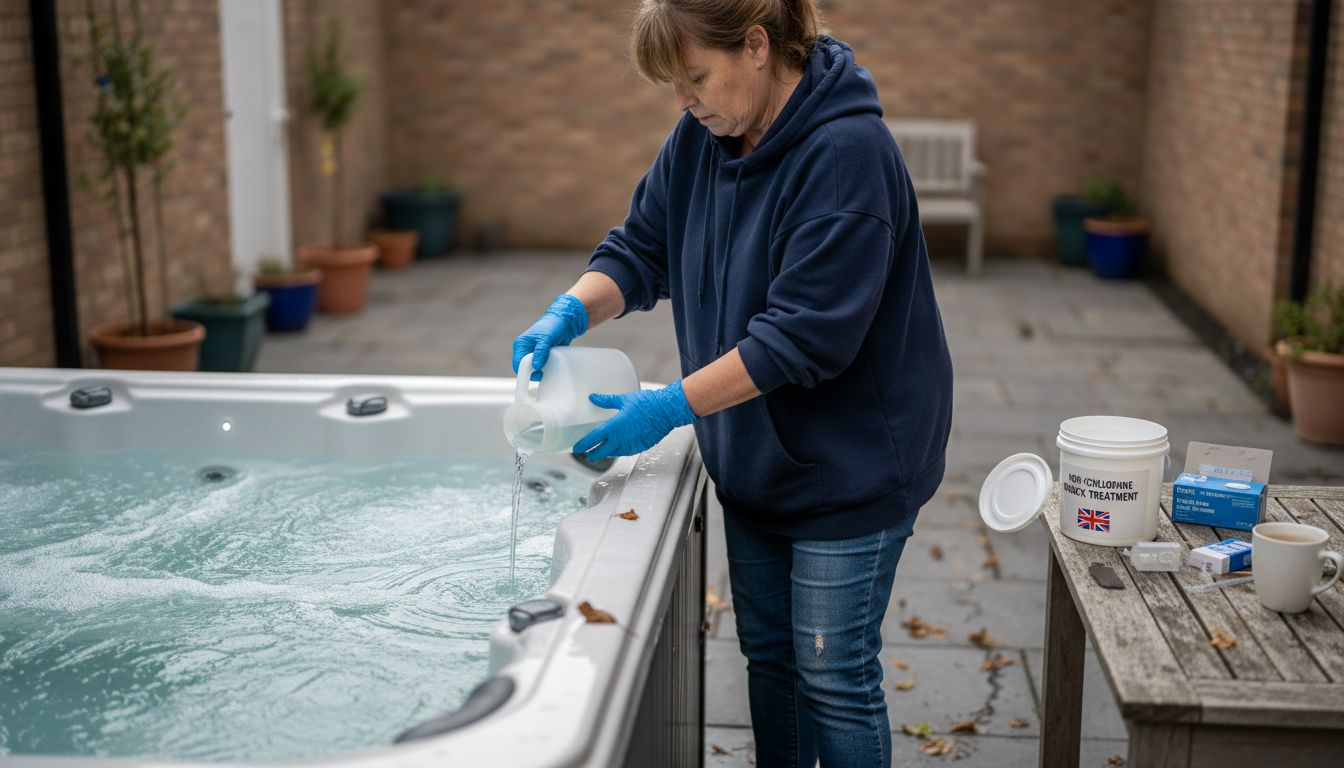
Hot Tub Pro Tip: Perform non-chlorine shock treatments during low-usage periods, preferably in the evening, to allow the oxidation process to work thoroughly without interruption from active hot tub use.
Types of Non-Chlorine Shock Products Explained
Non-chlorine shock products represent a sophisticated range of water treatment solutions designed specifically for hot tub maintenance. Non-chlorine shock formulations primarily contain potassium peroxymonosulfate, a powerful oxidising agent that effectively eliminates organic contaminants without introducing additional chlorine into the water system.
The market offers several distinct types of non-chlorine shock products, each tailored to meet specific hot tub maintenance requirements. Granular formulations remain the most common, available in varying particle sizes to accommodate different sanitisation systems. Liquid shock treatments provide an alternative for hot tub owners seeking more precise dosing, while pre-measured packet treatments offer convenience and eliminate the potential for measurement errors. Each variant contains the same core active ingredient but differs in application method and concentration.
UK hot tub enthusiasts can select from specialised non-chlorine shock products designed for specific water management needs. Some formulations are optimised for sensitive skin, featuring hypoallergenic ingredients that minimise potential irritation. Others focus on rapid oxidation, targeting complex organic compounds more aggressively. Professional-grade products often include additional minerals and stabilising agents that enhance water clarity and provide extended protection against microbial growth, making them particularly attractive for frequent hot tub users.
Below is a summary of common non-chlorine shock product types and their unique features:
| Product Type | Application Method | Best For |
|---|---|---|
| Granular | Scoop and dissolve | Most general maintenance needs |
| Liquid | Pour directly, measure | Precise dosing, quick action |
| Pre-measured packets | Drop-in convenience | Easy use, avoiding user error |
Hot Tub Pro Tip: Always check your specific hot tub manufacturer’s recommendations before selecting a non-chlorine shock product to ensure complete compatibility with your spa’s sanitisation system.
Key Benefits for Sensitive Skin and Comfort
Individuals with sensitive skin can find remarkable relief through non-chlorine shock treatments, which offer a gentler alternative to traditional chlorine-based water management. These innovative treatments dramatically reduce the likelihood of skin irritation, eliminating the harsh chemical interactions that typically cause discomfort during hot tub use. The odourless nature of non-chlorine shock means users can enjoy their spa experience without overwhelming chemical smells that often accompany traditional sanitisation methods.
The chemical composition of non-chlorine shock products provides multiple comfort-enhancing benefits beyond skin protection. By utilising potassium peroxymonosulfate as the primary active ingredient, these treatments create a more balanced water environment that minimises potential allergic reactions. The oxidation process effectively neutralises organic contaminants without introducing aggressive chemical compounds, resulting in a softer, more comfortable bathing experience that feels significantly more natural and less synthetic.
British hot tub enthusiasts with particularly sensitive skin will appreciate the nuanced approach of non-chlorine shock treatments. These specialised products work harmoniously with existing sanitisation systems, providing comprehensive water management without compromising user comfort. The hypoallergenic properties mean individuals prone to skin sensitivities can enjoy extended hot tub sessions without worrying about post-bathing skin irritation, rashes, or unexpected allergic reactions that often accompany more aggressive chemical treatments.
Hot Tub Pro Tip: Perform a small patch test with new non-chlorine shock products to ensure complete skin compatibility and monitor any potential sensitivity before full application.
Comparing Non-Chlorine Shock to Chlorine Treatments
British hot tub owners face a critical decision when selecting water treatment options, and understanding the distinctions between non-chlorine and chlorine shock treatments is paramount. Water treatment approaches reveal significant differences in effectiveness, user experience, and long-term spa maintenance. While chlorine remains a traditional sanitisation method, non-chlorine shock offers a nuanced alternative that addresses many limitations of conventional treatments.
Chlorine shock treatments excel in immediate bacterial elimination but come with notable drawbacks. These traditional methods introduce strong chemical odours, potentially cause skin irritation, and can create an uncomfortable bathing environment. Non-chlorine shock, by contrast, provides a more balanced approach to water management. The oxidation process effectively neutralises organic contaminants without the harsh side effects associated with chlorine-based treatments, making it particularly appealing for individuals with sensitive skin or those seeking a more gentle water treatment solution.
The comparative effectiveness of these treatments highlights the evolving landscape of hot tub maintenance. Chlorine remains essential for deep sanitisation, especially after heavy use or contamination, but non-chlorine shock proves superior for routine maintenance. Its ability to work alongside existing sanitisation systems without compromising water quality makes it an increasingly preferred option among discerning UK hot tub owners. The treatment’s capacity to break down organic compounds while maintaining a more natural water environment represents a significant advancement in spa water management technology.
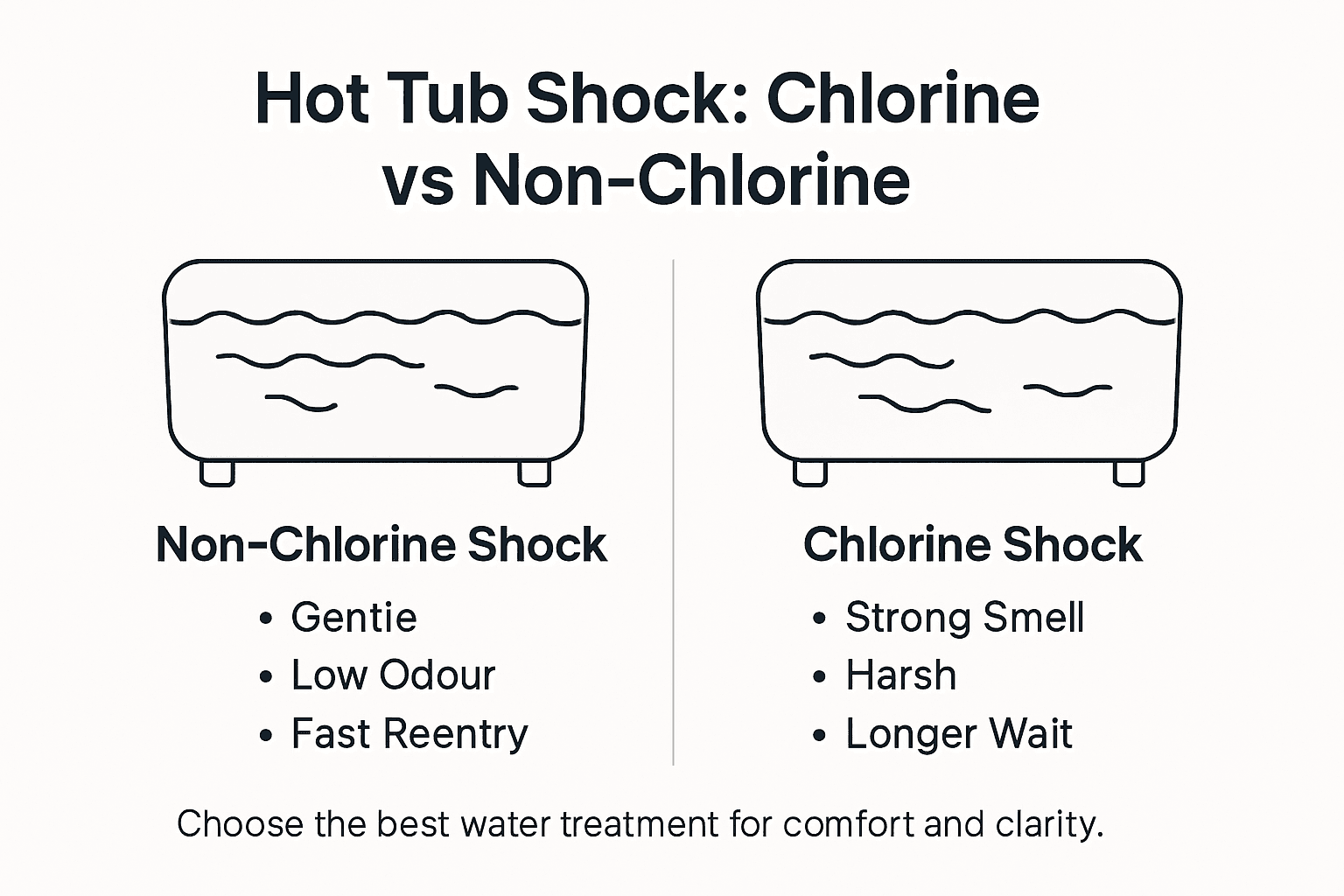
Here’s a quick comparison of non-chlorine shock and traditional chlorine shock for hot tub water care:
| Aspect | Non-Chlorine Shock | Chlorine Shock |
|---|---|---|
| Main action | Oxidises organic residues | Kills bacteria directly |
| Odour | Odourless | Strong chlorine smell |
| Skin comfort | Gentle, suitable for sensitivities | Can cause irritation |
| Environmental impact | Lower, fewer harsh chemicals | Higher, with chemical byproducts |
| Use frequency | Ideal for routine maintenance | Best for major sanitisation |
Hot Tub Pro Tip: Consider alternating between chlorine and non-chlorine shock treatments to optimise your hot tub’s water quality while minimising potential chemical buildup.
Choosing and Using Non-Chlorine Shock Safely
UK hot tub owners must approach non-chlorine shock treatments with precision and care. Weekly maintenance protocols are critical for ensuring optimal water quality and safety. Understanding the nuanced application process involves carefully measuring chemical levels, recognising appropriate treatment frequency, and following manufacturer-recommended dosing instructions to prevent potential water chemistry imbalances.
Safety begins with proper storage and handling of non-chlorine shock products. Hot tub owners should store these chemicals in a cool, dry location away from direct sunlight, ensuring containers are tightly sealed and kept out of reach of children and pets. When preparing to apply the treatment, protective gloves and eyewear are recommended to prevent potential skin or eye irritation. Users must carefully read and follow the specific instructions for their particular non-chlorine shock product, as dosage can vary significantly between different formulations and hot tub volumes.
Recognising the signs that indicate when non-chlorine shock treatment is necessary is crucial for maintaining a healthy hot tub environment. Cloudy water, unusual odours, or a noticeable decrease in water clarity are key indicators that a shock treatment is required. Hot tub owners should avoid combining different types of shock treatments, as this can create unpredictable chemical reactions. It is also essential to allow sufficient time for the chemicals to fully disperse before using the hot tub, typically waiting at least 15-20 minutes after treatment to ensure complete chemical integration and safety.
Hot Tub Pro Tip: Always keep a dedicated measuring cup for your non-chlorine shock treatments to ensure precise and consistent chemical application.
Elevate Your Hot Tub Care with ClearSpa’s Non-Chlorine Solutions
Maintaining crystal-clear, comfortable hot tub water without harsh chemicals can be challenging. The article “Why Use Non-Chlorine Shock in UK Hot Tubs” highlights how non-chlorine shock treatments effectively oxidise organic contaminants and enhance sanitiser performance while being gentle on sensitive skin. Many UK hot tub owners struggle with irritation and unpleasant odours caused by traditional chlorine shocks. ClearSpa understands these common pain points and offers a carefully curated range of water treatment products designed to support your hot tub’s health and your comfort.
Discover our superior selection of non-chlorine shock products and spa essentials at ClearSpa. Crafted to reduce skin sensitivity and maintain pristine water quality, our products empower you to perform routine weekly maintenance safely and easily. Don’t wait for cloudy water or chemical discomfort to spoil your relaxing spa time. Visit ClearSpa today to find the perfect solution and enjoy a gentler, more refreshing hot tub experience with expert-tested treatments tailored for British hot tubs.
Frequently Asked Questions
What is non-chlorine shock treatment for hot tubs?
Non-chlorine shock treatment is a powerful oxidising agent, primarily made of potassium monopersulfate, designed to eliminate organic contaminants in hot tubs without harsh chlorine compounds.
How does non-chlorine shock improve hot tub water quality?
Non-chlorine shock works by oxidising and breaking down organic pollutants like body oils, sweat, and sunscreen residues. This process frees up existing sanitisers to focus on killing harmful bacteria, ensuring cleaner, safer water.
Can non-chlorine shock be used with all sanitisation systems?
Yes, non-chlorine shock is compatible with various sanitisation systems, making it a versatile option for hot tub maintenance without compromising effectiveness or safety.
What are the benefits of using non-chlorine shock over traditional chlorine treatments?
Non-chlorine shock is odourless, reduces skin irritation, and provides a gentler water treatment experience compared to traditional chlorine treatments, making it ideal for those with sensitive skin.