How to Keep a Hot Tub Clean for Crystal Clear Water
Discover how to keep a hot tub clean naturally with ClearSpa. Follow this step-by-step guide for clear, inviting water and an easier maintenance routine.
Cloudy water and unclear surfaces can turn your dream hot tub in the United Kingdom into a constant frustration instead of a relaxing retreat. Understanding hot tub maintenance matters because regular care keeps the water not only inviting, but also safe for your family and friends. This guide offers clear, step-by-step strategies so you can confidently manage cleaning, water balancing, and long-term protection, helping you enjoy every soak without unexpected surprises or expensive repairs. For first-time owners, mastering these basics means less worry and more enjoyment of your spa.
Table of Contents
- Stage 1: Prepare Your Hot Tub For Cleaning
- Stage 2: Balance Water Chemistry With Natural Products
- Stage 3: Treat The Water And Filter Regularly
- Stage 4: Maintain Surfaces And Covers Properly
- Stage 5: Verify Water Clarity And Adjust As Needed
Quick Summary
| Key Point | Explanation |
|---|---|
| 1. Turn off systems before cleaning | Shutting down jets and pumps prevents contamination and allows for a focused cleaning process of your hot tub’s surfaces. |
| 2. Use natural products for water balance | Incorporating mineral-based and plant-derived solutions keeps your hot tub water clear while minimising harmful chemical usage. |
| 3. Regularly monitor water chemistry | Weekly water testing and routine maintenance ensure optimal chemical balance and prevent water quality issues over time. |
| 4. Maintain hot tub surfaces and covers | Regular cleaning and inspection of surfaces and covers protect your investment and enhance the lifespan of your hot tub. |
| 5. Verify water clarity consistently | Regular checks for clarity, odour, and colour help identify imbalances early, allowing for timely corrective actions to maintain quality. |
Stage 1: Prepare your hot tub for cleaning
Preparing your hot tub for cleaning requires strategic planning and careful attention to detail. Before diving into the cleaning process, you’ll want to ensure a thorough and safe approach that protects both your spa equipment and your health.
First, shut down all active systems by turning off jets and circulation pumps. This prevents potential contamination spread and allows you to focus on comprehensive cleaning. According to decontamination cleaning protocols, identifying potential hazards is crucial before beginning any cleaning procedure.
Your preparation checklist should include:
- Gather all necessary cleaning supplies
- Check filter condition
- Prepare disinfection solutions
- Wear appropriate protective equipment
- Ensure good ventilation in your cleaning area
Before starting, perform a preliminary inspection of your hot tub’s surfaces, looking for any signs of mineral buildup, biofilm, or potential damage. This initial assessment helps you target specific areas that might require extra attention during the cleaning process.
A systematic approach prevents cross-contamination and ensures a thorough clean.
Expert advice: Always consult your hot tub manufacturer’s specific cleaning guidelines to maintain warranty conditions and optimal performance.
Stage 2: Balance water chemistry with natural products
Balancing your hot tub’s water chemistry using natural products requires a strategic approach that maintains water quality while minimising harsh chemical interventions. Understanding the delicate balance of your spa’s ecosystem is crucial for achieving crystal-clear water without compromising environmental or personal health.
Start by testing your water’s current chemical composition using reliable testing strips. Natural alternatives can help regulate pH levels and mineral content effectively. Water chemistry testing techniques provide essential insights into your hot tub’s current state, enabling targeted treatment with natural solutions.
Natural water balancing options include:
- Using mineral-based clarifiers
- Incorporating enzyme treatments
- Applying plant-derived sanitising agents
- Implementing coconut husk filtration
- Utilising baking soda for pH adjustment
When selecting natural products, consider their origin and processing. Not all ‘natural’ products are created equal, and some may require careful application to ensure effectiveness. Natural ingredient standards emphasise the importance of understanding ingredient classifications and safety protocols.
Here is a summary of natural water balancing options and their primary advantages:
| Natural Product Type | Main Benefit | Typical Application |
|---|---|---|
| Mineral-based clarifier | Boosts clarity, reduces particles | Regular additive |
| Enzyme treatment | Breaks down organic waste | Weekly maintenance |
| Plant-derived sanitiser | Eco-friendly disinfection | Supplement to sanitiser |
| Coconut husk filtration | Removes fine impurities | Used in filtration media |
| Baking soda | Adjusts pH, gentle on skin | Occasional adjustment |
Natural does not automatically mean ineffective - it means thoughtful and targeted treatment.
Expert advice: Always perform a patch test with new natural water treatment products and monitor your hot tub’s response carefully.
The following table compares traditional versus natural hot tub maintenance approaches:
| Aspect | Traditional Methods | Natural Methods |
|---|---|---|
| Chemical intensity | High, can be harsh | Low, gentler ingredients |
| Environmental impact | Greater, more residues | Minimal, biodegradable |
| Ease of adjustment | Rapid and precise | May require patience |
| Skin sensitivity | May cause irritation | Less likely to irritate |
Stage 3: Treat the water and filter regularly
Regular water treatment and filter maintenance are the cornerstones of keeping your hot tub pristine and hygienic. By establishing a consistent maintenance routine, you’ll prevent potential water quality issues and extend the lifespan of your spa equipment.
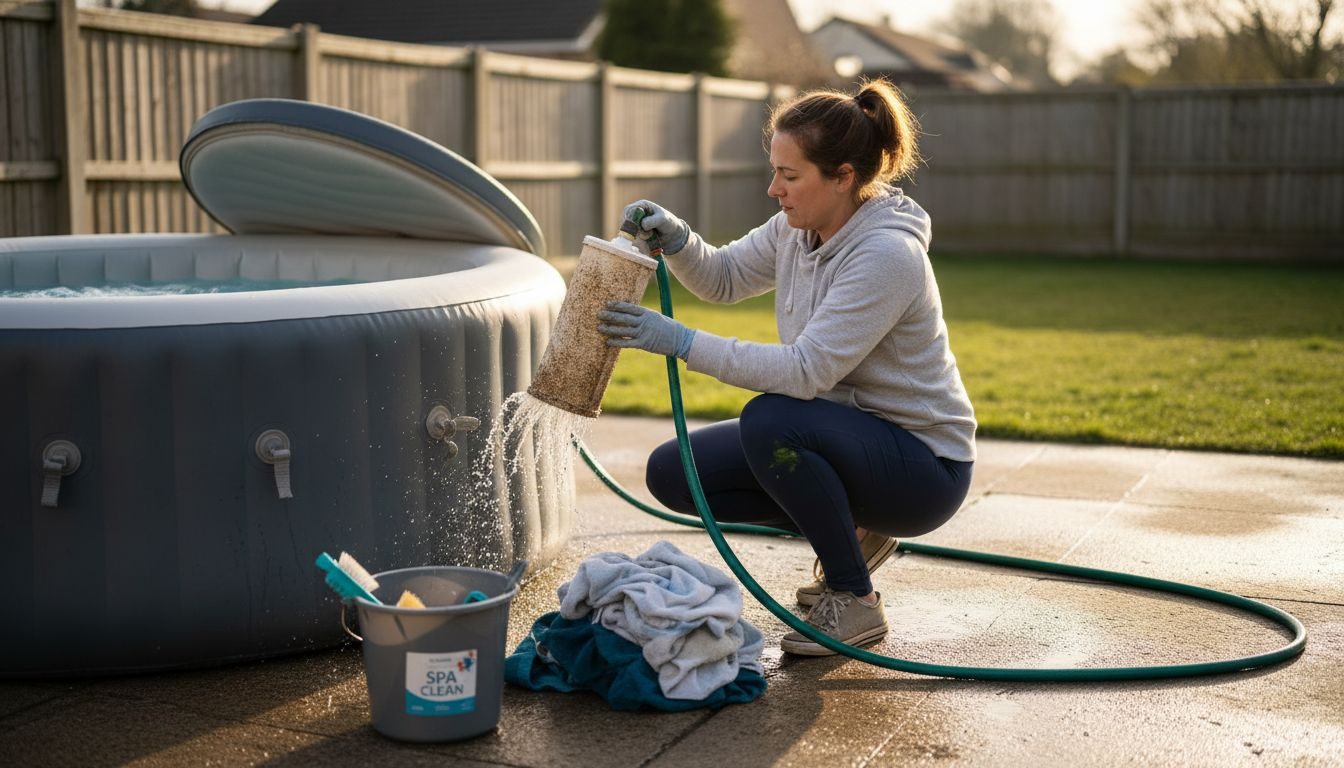
Water quality monitoring principles emphasise the critical importance of routine testing and treatment. Develop a systematic approach by checking your hot tub’s water chemistry at least once a week, using reliable testing strips to assess pH levels, sanitiser concentration, and overall water balance.
Essential hot tub water treatment steps include:
- Checking chemical balance weekly
- Cleaning filter cartridges every month
- Replacing filters every 12-18 months
- Shocking the water every 1-2 weeks
- Maintaining proper sanitiser levels
The frequency of filter maintenance directly impacts water clarity and equipment performance. Private water supply testing techniques highlight that ongoing monitoring prevents potential contamination and maintains optimal water conditions.
Consistent maintenance is your best defence against water quality deterioration.
Expert advice: Keep a maintenance log to track filter cleaning dates and water treatment schedules, ensuring you never miss a critical maintenance step.
Stage 4: Maintain surfaces and covers properly
Proper maintenance of your hot tub’s surfaces and covers is crucial for preserving both aesthetic appeal and long-term functionality. By implementing a regular care routine, you’ll protect your investment and prevent potential deterioration caused by environmental factors.
Algae prevention techniques are essential for keeping surfaces clean and safe. Pay special attention to the areas surrounding your hot tub, ensuring you remove debris, prevent moisture accumulation, and clean surfaces thoroughly to avoid slippery conditions and microbial growth.
Key surface and cover maintenance steps include:
- Cleaning surfaces weekly with appropriate cleaners
- Checking for signs of wear or damage
- Removing debris and organic matter
- Applying protective treatments
- Storing covers properly when not in use
Housing surface maintenance principles emphasise regular inspections to prevent material degradation. Inspect your hot tub cover for cracks, tears, or signs of UV damage, and address any issues promptly to maintain its protective capabilities.
Consistent care prevents expensive repairs and extends equipment lifespan.
Expert advice: Invest in a high-quality cover protectant and apply it quarterly to shield your hot tub cover from environmental damage.
Stage 5: Verify water clarity and adjust as needed
Maintaining pristine hot tub water requires more than just routine cleaning - it demands consistent and precise verification of water quality. Your goal is to create a crystal-clear environment that not only looks inviting but ensures safe and healthy spa experiences.
Water testing methodologies are critical for understanding your hot tub’s current chemical state. Use professional-grade testing strips that measure multiple parameters simultaneously, including pH, sanitiser levels, alkalinity, and potential contaminants.
Water clarity verification steps include:
- Checking water transparency visually
- Testing chemical balance weekly
- Measuring pH levels (ideal range 7.2-7.6)
- Assessing sanitiser concentration
- Identifying and addressing any unusual odours or discolouration
Water sample analysis techniques recommend systematic approaches to interpreting test results. When chemical levels deviate from optimal ranges, take immediate corrective actions such as adding balancing chemicals or shock treatments.
Small, consistent adjustments prevent major water chemistry problems.
Expert advice: Invest in a digital water testing device for more precise and consistent readings compared to traditional test strips.
Keep Your Hot Tub Crystal Clear with Expert Support from ClearSpa
Maintaining crystal-clear water and balancing your hot tub naturally demands the right treatment products and careful attention to water chemistry. The article highlights the challenges of regular water testing, balancing pH gently with natural solutions, and consistent filter care. These pain points can be overwhelming without trusted supplies tailored to support your weekly and monthly maintenance routines.
Enhance your spa experience by choosing from ClearSpa’s carefully tested selection of premium hot tub chemicals and spa essentials. Whether you need mineral-based clarifiers, gentle enzyme treatments, or effective sanitising agents, ClearSpa offers solutions designed to preserve water clarity and protect your hot tub’s surfaces and filters. Act now to maintain perfect water balance, prevent common hot tub issues, and extend your spa’s lifespan. Explore our range and find helpful guidance at ClearSpa - your trusted Spa Trade Group Brand for everything hot tub care.
Frequently Asked Questions
How often should I clean my hot tub to maintain clear water?
To keep your hot tub clean and ensure crystal clear water, you should perform a thorough cleaning every week. Regularly check chemical balances and clean filters to maintain hygiene and water clarity.
What steps should I follow to prepare my hot tub for cleaning?
Begin by turning off the jets and circulation pumps to prevent contamination. Next, gather your cleaning supplies, check the filter condition, and ensure good ventilation in the area before starting the cleaning process.
How do I balance the water chemistry in my hot tub with natural products?
Test your hot tub’s water using reliable testing strips and adjust pH levels and mineral content with natural alternatives like baking soda and enzyme treatments. Implement these adjustments weekly to maintain balanced water chemistry and prevent harsh chemical usage.
What maintenance is required for my hot tub’s filter?
Clean the filter cartridges every month and replace them every 12 to 18 months to ensure efficient filtration. Regular filter maintenance prevents potential contamination and helps maintain water clarity, so check your filters consistently.
How can I verify my hot tub water clarity?
Visually inspect the water for transparency and routinely test the chemical balance weekly. If water appears cloudy or discoloured, take corrective actions immediately, such as adding balancing chemicals or shock treatments.
What should I do if I notice mineral buildup or biofilm in my hot tub?
Perform a preliminary inspection to identify areas of concern, and focus your cleaning efforts on those spots. Use suitable cleaners and, if necessary, apply natural treatments to address mineral buildup and biofilm effectively.