How Do You Shock Your Hot Tub for Crystal Clear Water
Learn how to shock your hot tub with this step-by-step British guide. Achieve crystal clear, hygienic water using proven shock treatment methods.
Owning a hot tub in the United Kingdom brings relaxation, but keeping water crystal clear can be challenging when unclear chemical levels or frequent contamination threaten hygiene. Regular water quality monitoring, as highlighted by Cranfield University and Loughborough University, gives hot tub owners the confidence to maintain safe and balanced water conditions before any shock treatment. This guide offers step-by-step advice for assessing, measuring, and safely applying chemicals so you can enjoy clear, inviting water every time.
Table of Contents
- Step 1: Assess Water Quality Before Shocking
- Step 2: Gather And Measure Shock Treatment Products
- Step 3: Add Shock Chemicals Safely And Effectively
- Step 4: Circulate Water To Maximise Dispersion
- Step 5: Check Water Clarity And Test Chemical Balance
Quick Summary
| Key Point | Explanation |
|---|---|
| 1. Assess water quality first | Conduct comprehensive tests using strips or kits to check pH, alkalinity, sanitiser, and calcium levels before shocking. |
| 2. Gather proper shock treatment materials | Collect essential items such as shock chemicals, measuring tools, and protective equipment. Follow manufacturer guidelines for accurate dosing. |
| 3. Add chemicals safely | Always wear protective gear and add shock chemicals according to guidelines. Mix in a plastic bucket and pour evenly around the tub. |
| 4. Ensure thorough water circulation | Activate all jets and pumps to promote uniform distribution of shock chemicals. Run the system for at least 20-30 minutes. |
| 5. Test water clarity and balance | Wait 20 minutes after shocking, then test water parameters. Record results to maintain ideal conditions for safety and clarity. |
Step 1: Assess water quality before shocking
Before shocking your hot tub, understanding your water’s current condition is crucial for effective treatment. Water quality monitoring techniques enable you to determine the precise chemical balance and contamination levels that require shocking.
To assess your hot tub water quality, you’ll need to conduct a comprehensive test using reliable test strips or a digital water testing kit. Look for these critical parameters:
- pH levels: Ideal range between 7.2 and 7.6
- Total alkalinity: Target range 80-120 parts per million (ppm)
- Sanitiser levels: Chlorine or bromine concentration
- Calcium hardness: Recommended 150-250 ppm
Accurate water quality assessment prevents potential issues like bacterial growth, skin irritation, and ineffective chemical treatments. Water engineering research emphasises the importance of understanding specific water parameters before applying any treatment.
Here is a summary of hot tub water quality parameters and their impact:
| Parameter | Ideal Range | If Too Low | If Too High |
|---|---|---|---|
| pH Level | 7.2 - 7.6 | Corrosive, irritates skin | Scale build-up, cloudiness |
| Total Alkalinity | 80 - 120 ppm | pH instability | pH difficult to adjust |
| Sanitiser Level | Varies (type) | Bacterial contamination | Skin/eye irritation |
| Calcium Hardness | 150 - 250 ppm | Corrosion of components | Scale deposits, cloudy |
Once you’ve gathered your water quality data, you’ll be prepared to select the appropriate shocking method and chemical dosage for your specific hot tub conditions.
Expert tip: Always test your water at least twice weekly and immediately before shocking to ensure precise treatment.
Step 2: Gather and measure shock treatment products
Successfully shocking your hot tub requires precise preparation and careful handling of chemical treatments. Chemical safety assessment is critical to ensure you select and measure the right products for effective water treatment.
Before beginning, gather these essential items:
- Shock treatment chemicals: Chlorine or non-chlorine shock specific to hot tub use
- Measuring cup with clear markings
- Protective equipment: Rubber gloves and safety glasses
- Manufacturer’s instruction manual
- Digital scale (for precise measurements)
Always verify the specific shock treatment requirements for your particular hot tub model and water volume.
Chemical storage safety guidance emphasises the importance of reading product labels carefully and following exact manufacturer instructions. Measure your shock treatment precisely:
- Check your hot tub’s total water volume
- Consult the product label for recommended dosage
- Use a clean, dedicated measuring cup
- Measure chemicals at eye level for accuracy
- Never mix different types of shock treatments
Preparing your shock treatment with meticulous care ensures optimal water clarity and prevents potential chemical imbalances.
Compare the different types of shock treatments for hot tubs:
| Shock Type | Strengths | Best For |
|---|---|---|
| Chlorine-based shock | Powerful disinfection, fast action | Removing bacteria, heavy use |
| Non-chlorine shock | Less odour, quick re-entry | Regular maintenance, mild issues |
| Bromine-based shock | Stable at high temperatures | Spas with bromine systems |
Expert tip: Always wear protective gloves and measure chemicals in a well-ventilated area away from children and pets.
Step 3: Add shock chemicals safely and effectively
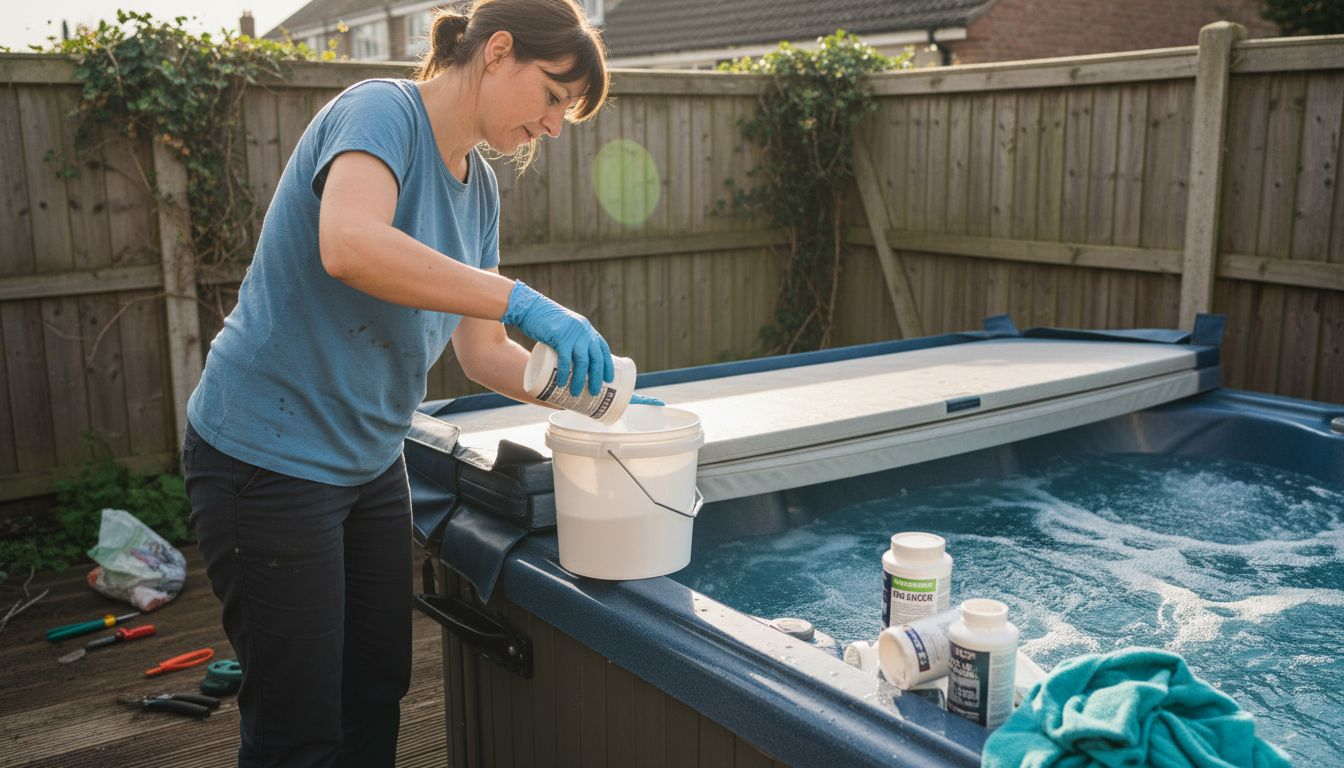
Adding shock chemicals to your hot tub requires precision and careful attention to safety protocols. Chemical handling guidance emphasises the critical importance of following manufacturer instructions and protecting yourself during the process.
Prepare for chemical addition by following these essential safety steps:
- Wear protective equipment: Safety goggles and chemical-resistant gloves
- Choose a calm, wind-free area for chemical mixing
- Keep children and pets away from the work area
- Ensure proper ventilation
Never add shock chemicals directly to a hot tub with people present.
To add shock chemicals effectively, follow these precise instructions:
- Dilute shock chemicals in a clean plastic bucket
- Add chemicals to water (not water to chemicals)
- Stir gently with a dedicated plastic mixing tool
- Pour mixture evenly around hot tub perimeter
- Run hot tub jets to circulate treatment
Safe chemical handling practices recommend maintaining a consistent and careful approach to prevent accidental chemical reactions or potential health risks.
Expert tip: Always read the specific product instructions carefully, as shock treatment requirements can vary between different chemical formulations.
Step 4: Circulate water to maximise dispersion
Properly circulating water after adding shock chemicals ensures complete and uniform treatment of your hot tub. Water circulation dynamics demonstrate how strategic movement helps distribute chemicals evenly throughout the entire water volume.
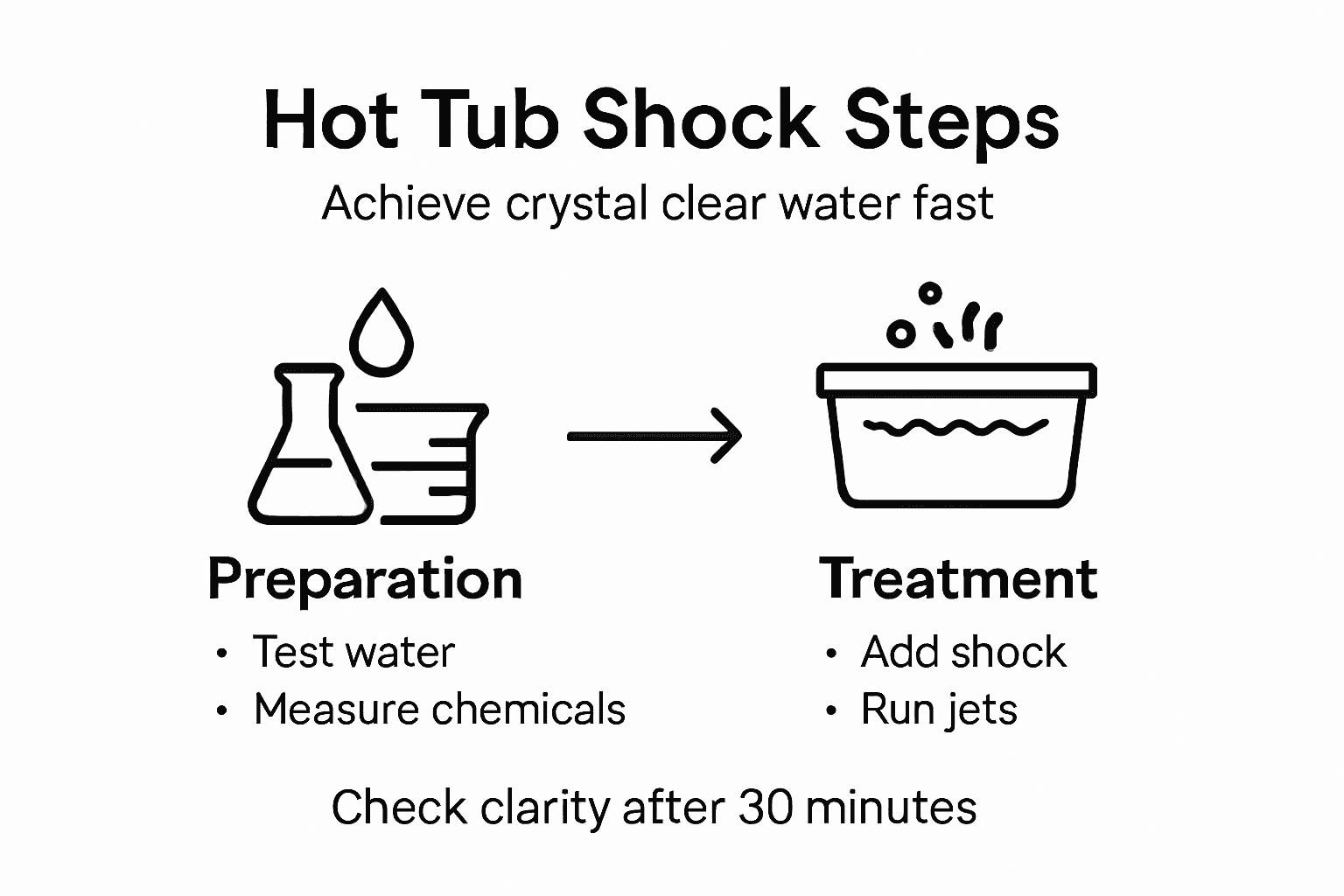
To achieve maximum chemical dispersion, activate your hot tub’s circulation system using these techniques:
- Turn on all available jets
- Run the main circulation pump at full speed
- Open all air valves to enhance water movement
- Ensure water flows through all pipe sections
Consistent water movement prevents chemical concentration in specific areas.
Your circulation strategy should include these specific steps:
- Activate the main circulation pump immediately after adding shock chemicals
- Run pumps for at least 20-30 minutes
- Alternate between high and low jet settings
- Observe water movement patterns
- Check that all areas receive uniform circulation
Dispersion modelling principles highlight the importance of consistent fluid movement to prevent chemical stratification and ensure comprehensive treatment.
Expert tip: Rotate your hot tub cover periodically during circulation to prevent heat loss and support more efficient chemical distribution.
Step 5: Check water clarity and test chemical balance
Water quality standards emphasise the critical importance of thorough post-shock water testing to ensure your hot tub remains safe and crystal clear. Proper testing helps you verify the effectiveness of your shock treatment and make necessary chemical adjustments.
To comprehensively assess your hot tub water, you’ll need these essential testing tools:
- Digital water testing kit
- pH testing strips
- Chlorine/bromine test strips
- Total alkalinity test strips
- Calcium hardness test kit
Visual clarity is just as important as chemical balance.
Follow this systematic testing approach:
- Wait 20 minutes after shock treatment
- Collect water sample in clean testing container
- Test pH levels first
- Check chlorine/sanitiser concentration
- Measure total alkalinity
- Verify calcium hardness
Water quality monitoring techniques recommend comparing your test results against ideal parameters to determine if further adjustments are needed.
Expert tip: Record your test results in a dedicated hot tub maintenance log to track water chemistry trends over time.
Achieve Crystal Clear Hot Tub Water with Expert Care and Quality Products
Maintaining the perfect water balance through effective shocking is essential to avoid issues like bacterial contamination, irritating skin, or cloudy water. The article highlights critical steps such as precise measurement of shock chemicals, careful addition, and thorough water circulation to ensure every drop of your hot tub water shines with clarity. Addressing these challenges requires not only knowledge but also reliable, high-quality products tailored to your needs.
Enhance your hot tub experience today with ClearSpa, a trusted Spa Trade Group Brand offering a wide range of premium hot tub chemicals and spa essentials. Our rigorously tested products help you maintain ideal pH levels, sanitiser balance, and calcium hardness to keep your spa safe and inviting. Take control of your hot tub care now and explore how our carefully crafted water treatment solutions make shocking your spa simple, safe, and effective. Visit ClearSpa to discover expert products designed for lasting water clarity and comfort.
Frequently Asked Questions
How do I assess my hot tub water quality before shocking?
Start by using reliable test strips or a digital water testing kit to measure critical parameters such as pH levels, total alkalinity, sanitiser levels, and calcium hardness. Ensure pH is between 7.2 and 7.6 and total alkalinity is between 80-120 parts per million for optimal treatment.
What type of shock treatment should I use for my hot tub?
Choose between chlorine-based shock, non-chlorine shock, or bromine-based shock based on your needs. For heavy usage or bacteria removal, chlorine-based shock is effective, while non-chlorine shock is suitable for regular maintenance and mild issues.
How do I safely add shock chemicals to my hot tub?
Always wear protective gloves and goggles when handling shock chemicals. Dilute the chemicals in a clean plastic bucket and pour the mixture evenly around the hot tub perimeter to ensure safe and effective distribution.
How long should I run the jets after shocking the water?
Run the hot tub jets for at least 20-30 minutes after adding the shock chemicals to promote complete circulation and chemical dispersion. This helps maintain water clarity and prevents chemical stratification.
What should I test for after shocking my hot tub?
Test for pH levels, sanitiser concentration, total alkalinity, and calcium hardness after waiting 20 minutes post-treatment. Aim for pH between 7.2 and 7.6 and calcium hardness between 150-250 parts per million to ensure optimal water balance.
How often should I shock my hot tub for best results?
Shock your hot tub at least once a week, or immediately after heavy use or when water clarity diminishes. Regular shocking helps maintain water clarity and sanitation, ensuring a safe and enjoyable hot tub experience.