How Do I Clean a Hot Tub for Crystal Clear Water
Discover how to clean a hot tub naturally with this step-by-step guide, ensuring sparkling water and a perfect spa experience for UK hot tub owners.
Cloudy water and uncertain maintenance routines can leave any spa owner feeling overwhelmed. Keeping your hot tub sparkling clean is more than just appearance. It directly affects hygiene, safety, and enjoyment. This step-by-step guide reveals practical cleaning solutions with a focus on safe preparation and effective cleaning techniques designed for British users, including essential protocols approved by NICE, to help transform your spa experience and tackle common clarity challenges with confidence.
Table of Contents
- Step 1: Prepare Your Hot Tub For Cleaning
- Step 2: Drain The Water Safely And Efficiently
- Step 3: Scrub All Surfaces Using Recommended Products
- Step 4: Clean And Rinse Filters Thoroughly
- Step 5: Refill And Balance Your Hot Tub Water
- Step 6: Verify Water Clarity And Chemical Levels
Quick Summary
| Important Insight | Explanation |
|---|---|
| 1. Prepare with essential cleaning supplies | Gather all necessary items like hot tub cleaner and testing strips before starting to ensure an efficient cleaning process. |
| 2. Drain water responsibly | Follow local regulations and choose appropriate drainage locations to protect the environment and avoid issues. |
| 3. Scrub with care and suitable products | Use non-abrasive cleaners and soft brushes to avoid damaging surfaces while effectively removing grime and deposits. |
| 4. Maintain and clean filters regularly | Clean filters thoroughly to ensure optimal water quality and extend the lifespan of your hot tub equipment. |
| 5. Balance water chemistry accurately | Regularly test and adjust your hot tub water chemistry to ensure safety and prevent damage to both users and equipment. |
Step 1: Prepare your hot tub for cleaning
Preparing your hot tub for a thorough cleaning requires strategic planning and attention to detail. The initial stages of preparation will set the foundation for achieving crystal-clear water and maintaining your spa’s optimal performance.
Before diving into the cleaning process, you’ll need to gather your essential equipment and create a safe, efficient workspace. This involves understanding cleaning preparation protocols, which includes several critical steps:
- Gather cleaning supplies: Hot tub cleaner, testing strips, filter cleaning solution, soft cloths, and protective gloves
- Check water chemistry: Ensure testing strips and pH adjustment chemicals are readily available
- Protect surrounding area: Lay down towels or waterproof covers to manage potential splashes
Before starting, you must disconnect electrical connections and drain the hot tub completely. This ensures safe access to all surfaces and prevents potential electrical hazards during the cleaning process.
A well-prepared cleaning environment is the key to achieving professional-level hot tub maintenance.
Safety precautions are paramount during this preparation phase. Always wear rubber gloves and ensure proper ventilation in your workspace. If you’re using chemical cleaning agents, read their instructions carefully and follow manufacturer recommendations.
Expert tip: Prepare a dedicated cleaning caddy with all necessary supplies before beginning to streamline your hot tub maintenance process.
Step 2: Drain the water safely and efficiently
Draining your hot tub requires careful planning and precise execution to ensure environmental responsibility and prevent potential water system damage. Understanding the correct drainage protocols will help you manage this process effectively.
Before beginning drainage, you’ll need to prepare your workspace and equipment. Follow these critical steps:
- Position drainage equipment: Place a garden hose or submersible pump strategically
- Select appropriate drainage location: Choose an area away from building foundations
- Check local water regulations: Ensure compliance with environmental guidelines
The drainage process involves several key actions:
- Turn off electrical power to the hot tub completely
- Locate the drain valve or connection point
- Attach your drainage hose securely
- Open the valve and allow water to flow steadily
Proper water disposal protects both your property and the surrounding environment.
When draining, be mindful of water volume and potential environmental impact. Avoid draining directly onto pavements or into storm drains, as this can cause ecological issues. Instead, direct water to an appropriate landscaped area that can absorb the drainage without causing erosion.
Expert tip: Consider using the drained water for garden irrigation to maximise water conservation and minimise waste.
Step 3: Scrub all surfaces using recommended products
Scrubbing your hot tub surfaces requires precision and care to eliminate grime, prevent bacterial growth, and maintain your spa’s pristine condition. Effective surface decontamination techniques will ensure a thorough and hygienic clean.
Prepare your cleaning arsenal with these essential tools and considerations:
- Soft-bristled scrubbing brush: Prevents surface scratching
- Non-abrasive cleaning solutions: Specifically designed for hot tub surfaces
- Microfibre cleaning cloths: For gentle yet effective wiping
- Protective gloves: To shield your hands from cleaning chemicals
Begin by focusing on different surface areas with targeted cleaning approaches:
- Start with the waterline, where grime and residue typically accumulate
- Use circular motions to lift and remove dirt effectively
- Rinse thoroughly after scrubbing each section
- Pay extra attention to jets and hard-to-reach crevices
Consistent and careful cleaning prevents long-term damage and maintains your hot tub’s aesthetic appeal.
Avoid harsh chemicals that might damage your hot tub’s delicate surfaces. Choose pH-neutral, spa-specific cleaners that are gentle yet effective. Look for products that can dissolve body oils, mineral deposits, and potential biofilm without compromising your spa’s materials.
Expert tip: Work in small sections and rinse frequently to prevent cleaning solution from drying on surfaces and leaving residue.
Step 4: Clean and rinse filters thoroughly
Maintaining pristine hot tub filters is crucial for ensuring water quality and optimal spa performance. Thorough filter maintenance techniques will help extend your equipment’s lifespan and keep your water crystal clear.
Your filter cleaning process requires systematic attention to detail:
- Remove filters carefully: Avoid damaging delicate filter materials
- Inspect for visible damage: Check for tears or excessive wear
- Select appropriate cleaning solution: Use spa-specific filter cleaners
- Prepare cleaning workspace: Have all materials ready before starting
Follow these comprehensive cleaning steps:
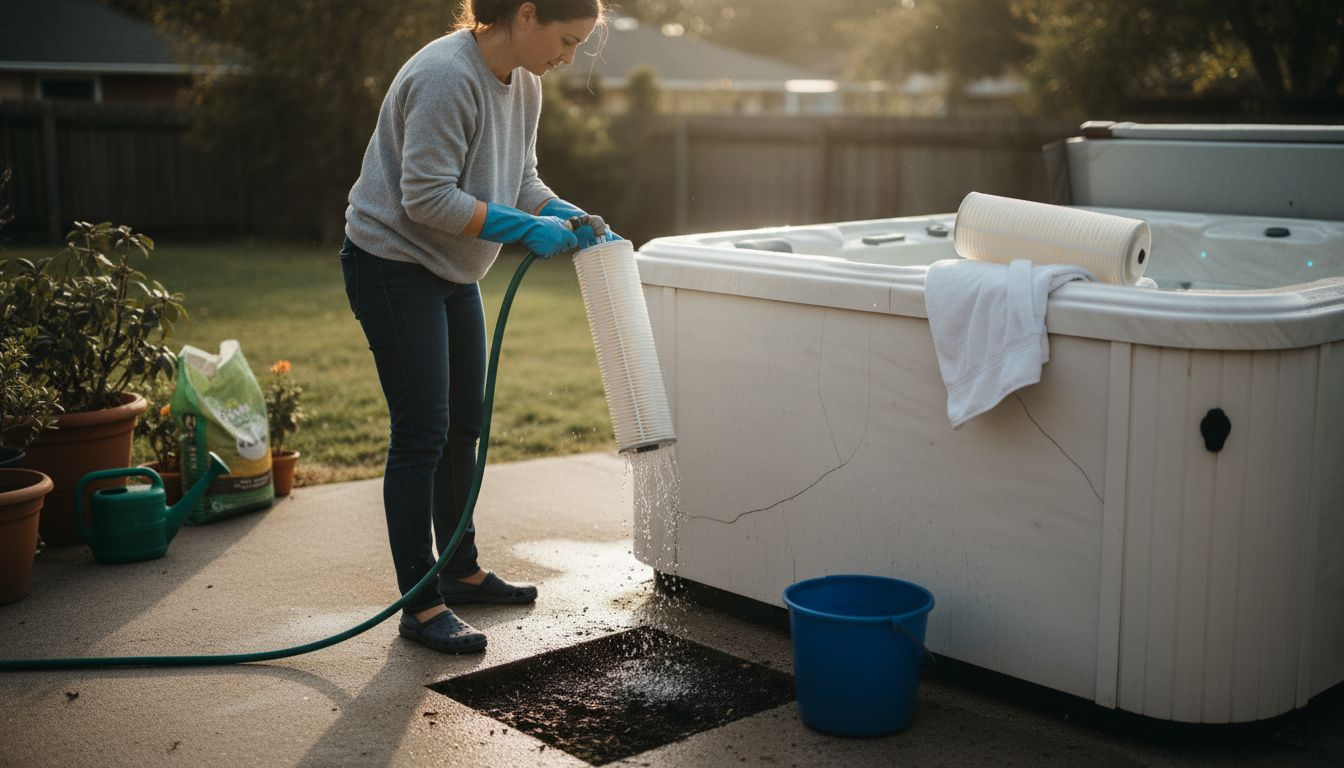
- Soak filters in specialised cleaning solution
- Gently brush away accumulated debris
- Rinse thoroughly with clean water
- Allow filters to air dry completely before reinstalling
Clean filters are the cornerstone of maintaining exceptional hot tub water quality.
Avoid high-pressure washing, which can damage filter fibres. Instead, use gentle water stream techniques that effectively remove contaminants without compromising the filter’s structural integrity. Consistent maintenance prevents potential bacterial growth and ensures optimal filtration performance.
Expert tip: Keep spare filters on hand so you can rotate them during the cleaning process, allowing each filter adequate time to dry completely.
Step 5: Refill and balance your hot tub water
Restoring your hot tub’s water chemistry is the final critical step in achieving sparkling clean and safe spa conditions. Water hygiene best practices ensure your spa remains a pristine and enjoyable environment.
Prepare for precise water balancing with these essential considerations:
- Test water chemistry: Use reliable testing strips
- Measure pH levels: Aim for 7.2-7.6 range
- Check total alkalinity: Maintain between 80-120 ppm
- Sanitiser concentration: Verify appropriate chlorine or bromine levels
Follow these systematic water balancing steps:
- Fill hot tub with fresh water
- Use testing strips to assess current water parameters
- Add chemicals incrementally
- Retest water after each chemical addition
- Allow water to circulate for even distribution
Balanced water protects both your hot tub equipment and your health.
Avoid adding chemicals randomly without proper measurement. Use a reliable water testing kit and add chemicals in small, controlled quantities. Understanding water chemistry is crucial for maintaining optimal spa conditions.
Expert tip: Always keep a log of your chemical additions and test results to track your hot tub’s water quality over time.
Step 6: Verify water clarity and chemical levels
Ensuring your hot tub water meets precise quality standards requires systematic testing and careful analysis. Water quality monitoring protocols help prevent potential health risks and maintain optimal spa performance.
Your comprehensive water verification process involves multiple critical steps:
- Use digital testing strips: Provides accurate chemical readings
- Check visual water transparency: Look for crystal-clear appearance
- Measure multiple chemical parameters: pH, sanitiser, alkalinity
- Record test results: Track water chemistry changes
Follow these detailed verification steps:
- Wait 15 minutes after chemical addition
- Dip testing strip into water
- Compare strip colours to reference chart
- Assess each chemical parameter individually
- Make incremental adjustments as needed
Consistent water testing is the foundation of a safe and enjoyable hot tub experience.
Avoid relying solely on visual inspection. While clear water looks appealing, water clarity testing reveals crucial chemical balance information invisible to the naked eye.
Expert tip: Invest in a digital water testing device for more precise and consistent measurements compared to traditional test strips.
The table below summarises common hot tub cleaning mistakes and how to avoid them:
| Mistake | Potential Consequence | How to Avoid |
|---|---|---|
| Skipping filter cleaning | Cloudy or unsafe water | Clean and rinse filters monthly |
| Using harsh chemicals | Damaged hot tub surfaces | Only use spa-specific products |
| Poor water disposal practice | Environmental harm | Follow local water guidelines |
| Incorrect chemical measurement | Unbalanced water quality | Always test and adjust gradually |
| Forgetting to disconnect power | Electrical hazard risk | Turn off and unplug first |
Here’s how hot tub cleaning steps relate to maintenance benefits:
| Cleaning Step | Main Outcome | Long-term Maintenance Benefit |
|---|---|---|
| Preparing for cleaning | Safe environment, proper equipment ready | Prevents accidents and missed steps |
| Draining water | Removes old, contaminated water | Reduces build-up and bacterial growth |
| Scrubbing surfaces | Removes biofilm and surface deposits | Prevents staining and material damage |
| Cleaning filters | Restores filtration efficiency | Prolongs filter and pump lifespan |
| Refilling and balancing | Optimal water chemistry | Protects against corrosion and scaling |
| Verifying clarity and chemicals | Ensures ongoing water safety | Minimises health risks for users |
Keep Your Hot Tub Crystal Clear with Expert Water Care
Cleaning your hot tub for crystal clear water is no easy feat. From preparing your spa safely to balancing complex chemical levels, every step requires attention to detail and the right products. If you find testing water chemistry, scrubbing surfaces without damaging materials, or maintaining filters challenging, you are not alone. These key tasks ensure your hot tub stays sparkling clean and safe for you and your loved ones.
Enhance your hot tub experience with ClearSpa’s premium range of water treatment products designed specifically to meet your spa’s needs. Our carefully formulated hot tub chemicals and spa essentials help you maintain perfect water balance and hygiene easily. Start achieving consistent crystal-clear water today by visiting ClearSpa. Discover trusted solutions that simplify your maintenance routine and protect your spa investment now.
Frequently Asked Questions
How do I prepare my hot tub for cleaning?
To prepare your hot tub for cleaning, gather all necessary supplies such as a hot tub cleaner, testing strips, and soft cloths. Lay down towels or waterproof covers to protect the surrounding area before you disconnect the electrical connections and drain the water completely.
What steps should I follow to drain my hot tub safely?
To drain your hot tub safely, start by turning off the electrical power and locating the drain valve. Attach a garden hose securely to the drain and direct the water to an area that can absorb it, such as a landscaped section away from building foundations.
How do I scrub the surfaces of my hot tub effectively?
Scrub the surfaces of your hot tub by using a soft-bristled brush with a non-abrasive cleaner specifically designed for hot tubs. Work in small sections using circular motions and rinse each area thoroughly to remove all cleaning solutions and grime.
How can I ensure my hot tub filters are clean?
To clean your hot tub filters, carefully remove them and soak them in a specialised cleaning solution. After soaking, gently brush away debris and rinse them thoroughly with clean water before allowing them to air dry completely.
What should I do after refilling my hot tub with water?
Once you refill your hot tub with fresh water, test the water chemistry using reliable testing strips. Aim to adjust the pH levels to between 7.2 and 7.6 and check alkalinity levels to ensure a safe and comfortable soaking experience for users.
How can I verify my hot tub water quality?
To verify your hot tub water quality, wait about 15 minutes after adding chemicals and then use a digital testing strip to check the water’s clarity and chemical levels. Record the results and make incremental adjustments as necessary to maintain optimal water conditions.