Step-by-Step Guide to Adding Chlorine to Hot Tub Safely
Follow this complete guide to adding chlorine to hot tub water for safe, clear results. Step-by-step process for effective sanitising and sparkling outcomes.
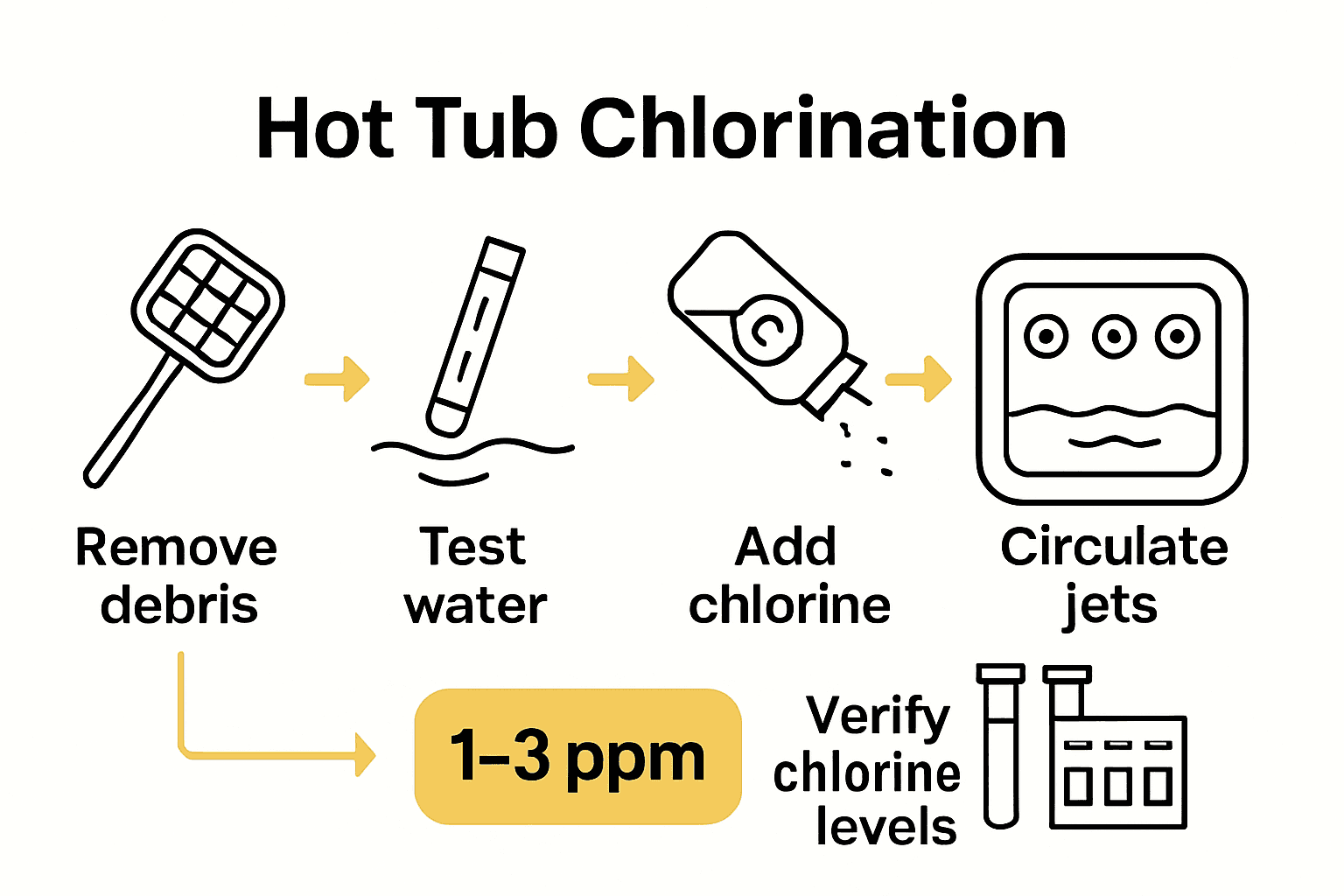
Crystal-clear water is not just about appearance, it is about safety and comfort too. Studies show that hot tubs with regular maintenance experience over 60 percent fewer issues with bacteria buildup. For anyone who wants a relaxing soak without health worries, keeping water balanced and free of debris is a must. This guide lays out simple steps that make hot tub chlorination stress free, so you get peace of mind every time you step in.
Table of Contents
- Step 1: Check Hot Tub Water And Remove Debris
- Step 2: Test And Balance Hot Tub Water Chemistry
- Step 3: Measure And Add The Correct Chlorine Amount
- Step 4: Disperse Chlorine Evenly And Circulate Water
- Step 5: Verify Chlorine Levels Before Use
Quick Summary
| Key Point | Explanation |
|---|---|
| 1. Clear debris from hot tub water | Regularly remove leaves and floating particles to ensure hygiene and safety in your hot tub. |
| 2. Test and balance water chemistry | Use a testing kit to check pH, alkalinity, and chlorination levels, adjusting as necessary for safety. |
| 3. Measure correct chlorine dosage | Calculate chlorine amount based on your hot tub’s capacity, ensuring proper sanitation for safe usage. |
| 4. Activate jets for even chemical distribution | Run jets at full power after adding chlorine to ensure thorough mixing and effective sanitisation. |
| 5. Verify chlorine levels before use | Test chlorine levels to ensure they are within the safe range of 3 to 5 parts per million before entering. |
 |
|
Step 1: Check hot tub water and remove debris
Preparing your hot tub for chlorine treatment starts with a thorough water inspection and debris removal. According to phta.org, regular maintenance is crucial for a safe and enjoyable hot tub experience.
Begin by visually scanning the water surface and interior of your hot tub. Look for leaves, insects, twigs, or any floating particles that might compromise water quality. Use a skimmer net to carefully remove these items, working systematically from one side of the tub to the other. Pay special attention to corners and areas near water jets where debris tends to accumulate. phta.org emphasises that keeping water free from debris is essential not just for hygiene but also for preventing potential safety issues.
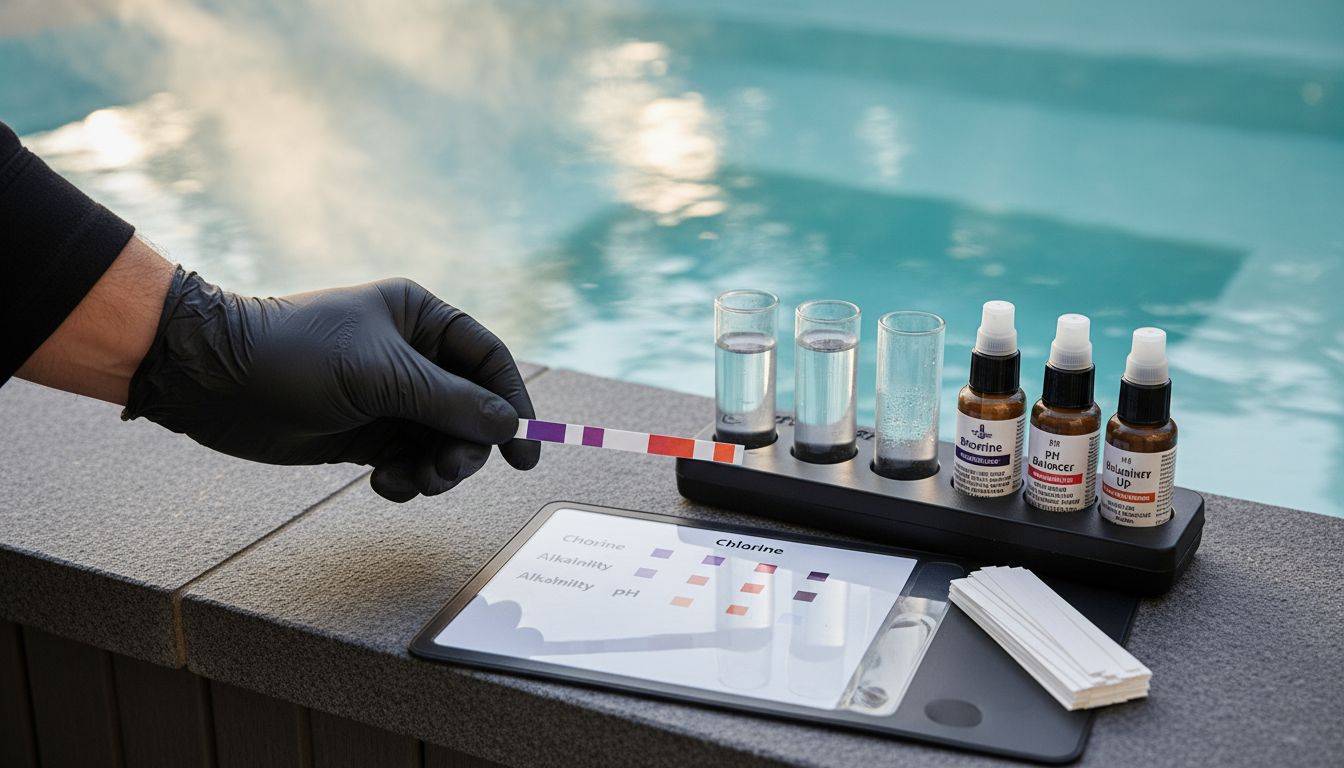
After removing visible debris, grab a clean pool testing strip to check the water chemistry. You want a clear baseline before adding chlorine. Gently dip the strip into the water, holding it just beneath the surface for a few seconds. Compare the strip colours to the chart provided with your testing kit to understand the current pH and sanitiser levels. This step ensures you add the right amount of chlorine for optimal water treatment.
Pro Tip: Always keep your skimmer net and testing strips easily accessible near your hot tub for quick maintenance.
You are now ready to move forward with adding chlorine to your hot tub, having established a clean water foundation.
Step 2: Test and balance hot tub water chemistry
After clearing debris, the next critical step is testing and balancing your hot tub water chemistry. phta.org emphasises that maintaining proper water chemistry is essential for creating a safe and comfortable hot tub environment.
To begin, use a comprehensive water testing kit designed for hot tubs. These kits typically measure several key parameters including pH levels, total alkalinity, calcium hardness, and sanitiser concentration. Carefully dip the test strip into the water, ensuring it is fully submerged for the recommended time frame typically around 15 seconds. Then compare the strip colours to the provided colour chart to determine your current water chemistry status. You will want to check levels for pH (ideal range 7.2 to 7.6), total alkalinity (80 to 120 parts per million), and sanitiser levels.
Balancing your water chemistry requires careful adjustment. If pH is too low, add a pH increaser. If it is too high, use a pH reducer. For total alkalinity, follow similar principles of adding alkalinity increasers or reducers as needed. phta.org notes that proper chemical balance prevents bacteria growth and protects your hot tub equipment from potential damage.
Pro Tip: Always add chemicals incrementally and retest after each adjustment to avoid overcorrection.
Once your water chemistry is balanced, you are now prepared for the next step of adding chlorine to your hot tub.
Step 3: Measure and add the correct chlorine amount
phta.org emphasises that sanitising your hot tub with the appropriate amount of chlorine is crucial for maintaining clean and bacteria-free water. Calculating the correct chlorine dosage depends on your hot tub’s water volume, which typically ranges between 300 to 500 gallons.
Begin by checking your hot tub’s specific volume capacity printed on the manufacturer’s label or in the user manual. Most standard home hot tubs require approximately 1 to 2 teaspoons of chlorine granules per 100 gallons of water. Use a reliable measuring spoon specifically designated for pool chemicals to ensure precision. Carefully sprinkle the chlorine granules across the water surface, ensuring even distribution. Allow the jets to run for several minutes to help circulate and dissolve the chlorine thoroughly.
As phta.org notes, maintaining proper chemical balance prevents bacteria growth and protects your equipment. After adding chlorine, wait approximately 20 to 30 minutes before retesting the water chemistry to confirm the sanitiser levels are within the recommended range of 3 to 5 parts per million.
Pro Tip: Always wear protective gloves and safety glasses when handling chlorine to prevent skin and eye irritation.
Your hot tub is now ready for safe and enjoyable use with properly balanced chlorine levels.
Step 4: Disperse chlorine evenly and circulate water
phta.org emphasises that proper circulation is crucial for maintaining water quality and ensuring even chemical distribution. The key to effective chlorine dispersal lies in understanding your hot tub’s jet system and water circulation mechanics.
Activate all water jets at full power after adding chlorine. This helps create a comprehensive water movement that spreads chemicals uniformly throughout the entire hot tub. Position yourself near the control panel and turn on the jets systematically. Some hot tubs have multiple jet settings, so experiment with different configurations to achieve the most thorough circulation. Move around the hot tub and observe water movement, ensuring no areas remain stagnant. The goal is to create a gentle but consistent water flow that helps dissolve and distribute chlorine evenly.
Pay special attention to areas around return jets and near the water surface. These locations are critical for achieving uniform chemical dispersion. Allow the jets to run for approximately 10 to 15 minutes, which provides sufficient time for complete chemical integration. phta.org recommends maintaining regular circulation to keep water quality consistently high.
Pro Tip: Run jets at different speeds to create varied water currents that maximise chemical distribution.
With chlorine now evenly dispersed, your hot tub is prepared for optimal sanitisation and enjoyment.
Step 5: Verify chlorine levels before use
phta.org emphasises that regularly testing water chemistry is essential to ensure your hot tub is safe and ready for use. Verifying chlorine levels is the final critical step before enjoying your sanitised hot tub.
Retrieve your water testing kit and carefully dip a fresh test strip into the water, holding it just below the surface for approximately 15 seconds. Move the strip through the water gently to ensure accurate chemical reading. Compare the test strip colours against the standardised colour chart provided with your testing kit. For chlorine, you are looking for a reading between 3 to 5 parts per million. If the colour indicates levels are too low, you will need to add more chlorine. Conversely, if levels are too high, allow the hot tub to sit with the cover open to help dissipate excess chlorine.
phta.org notes that maintaining proper chemical balance prevents bacteria growth and protects your equipment. A well-balanced hot tub not only ensures safe water but also extends the lifespan of your spa and its components.
Pro Tip: Always keep a log of your water test results to track chemical changes over time.
With chlorine levels verified, you are now ready to safely enjoy your hot tub.
Keep Your Hot Tub Sparkling Clean with ClearSpa
Maintaining perfect chlorine levels and balanced water chemistry can feel challenging and time-consuming. You want to ensure your hot tub water is not only safe but also inviting and comfortable every time you step in. ClearSpa understands these concerns and offers a carefully crafted selection of high-quality hot tub chemicals designed to support every step of the water care process from testing to treatment. Remove the guesswork and avoid overcorrection with products you can trust.
Explore our range of professional-grade products tailored to keep your chlorine levels just right and your water crystal clear. Visit ClearSpa today to find all the essentials you need for easy and effective hot tub maintenance. Don’t wait until your water chemistry is out of balance. Take control now for a safer and more relaxing soak every time.
Frequently Asked Questions
How often should I test the chlorine levels in my hot tub?
Testing chlorine levels should be done before each use and at least once a week during regular maintenance. Use a testing kit to verify that chlorine falls within the ideal range of 3 to 5 parts per million.
What should I do if my chlorine levels are too low?
If your chlorine levels are too low, you need to add more chlorine to the water. Measure and add approximately 1 to 2 teaspoons of chlorine granules per 100 gallons of water, then wait 20 to 30 minutes before retesting.
Can I add chlorine to my hot tub without testing the water first?
No, it’s essential to test the water chemistry before adding chlorine. This ensures you know the current levels and can add the correct amount of chlorine for optimal sanitization.
How can I ensure the chlorine is evenly distributed in my hot tub?
To ensure even chlorine distribution, activate all water jets at full power after adding chlorine. Run the jets for about 10 to 15 minutes to circulate the water and distribute the chemicals uniformly.
What should I do if my chlorine levels are too high?
If chlorine levels are too high, allow the hot tub to sit with the cover open to help dissipate excess chlorine. It may take a few hours to lower levels to the recommended range, so retest periodically.
Why is maintaining proper water chemistry important for my hot tub?
Maintaining proper water chemistry, including chlorine levels, is crucial for preventing bacteria growth and protecting your hot tub equipment. A well-balanced hot tub ensures a safe and enjoyable experience while extending the lifespan of your spa.